


Definition
SFS stands for “Shoutout for Shoutout.” It is a popular social media abbreviation used when one user promotes another account in exchange for a mutual promotion. This term is commonly seen on platforms like Instagram, Snapchat, and TikTok to help users grow their audience and increase engagement.
Scroll through Instagram or Snapchat, and you’ll likely spot “SFS?” in captions, stories, or direct messages. At first glance, it might look confusing, especially if you’re not familiar with internet slang. But in reality, SFS is one of the most widely used growth strategies in social media culture today.
You’re an influencer, small business owner, or casual user trying to gain followers, understanding what SFS means and how to use it effectively can make a noticeable difference in your online presence.
In this guide, you’ll learn everything about “what does SFS mean”, including its origin, real-life usage, tone variations, examples, comparisons, and even professional alternatives.
What Does SFS Mean in Social Media?
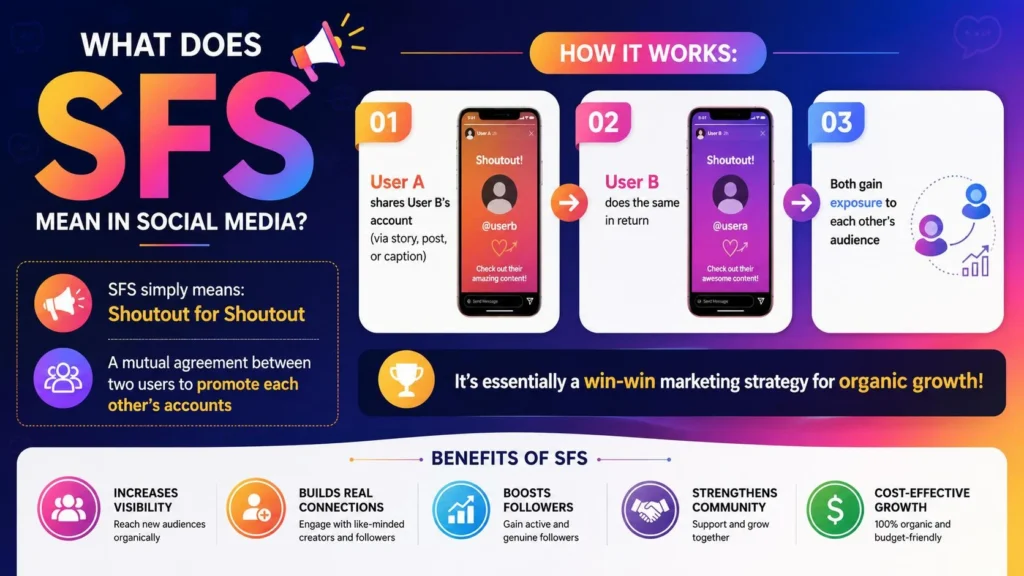
SFS simply means:
- Shoutout for Shoutout
- A mutual agreement between two users to promote each other’s accounts
How It Works:
- User A shares User B’s account (via story, post, or caption)
- User B does the same in return
- Both gain exposure to each other’s audience
It’s essentially a win-win marketing strategy for organic growth.
Origin and Popularity of SFS
Where Did SFS Come From?
The term SFS originated in the early days of Instagram and Snapchat, when users began looking for ways to grow their followers without paid promotions.
- Early influencers used it to cross-promote accounts
- Small creators adopted it for visibility
- Businesses started using it as a free marketing tactic
Why Did It Become Popular?
SFS gained popularity because:
- It’s simple and quick
- Requires no money
- Builds community connections
- Helps accounts grow organically
Today, SFS is widely used across:
- Instagram stories
- Snapchat streaks
- TikTok comments and DMs
How SFS Is Used in Real Life

SFS can appear in different formats depending on the platform and intent.
Common Usage Examples:
- “SFS?” (asking for a shoutout exchange)
- “Doing SFS all day!” (open to multiple exchanges)
- “SFS with active accounts only” (looking for engagement quality)
Examples of SFS in Different Contexts
Friendly Tone
- “Hey! Wanna do SFS? 😊”
- “SFS with me, let’s grow together!”
Neutral Tone
- “SFS available, DM if interested.”
- “Doing SFS today only.”
Slightly Dismissive or Selective Tone
- “SFS only if you have real followers.”
- “No SFS with inactive accounts.”
SFS Examples Table (With Context & Meaning)
| Phrase | Meaning | Tone | When to Use |
|---|---|---|---|
| SFS? | Asking for shoutout exchange | Casual | DM or comments |
| Doing SFS | Offering shoutouts | Friendly | Stories or captions |
| SFS ASAP | Urgent exchange request | Direct | Quick engagement |
| SFS with active users only | Selective promotion | Neutral | Filtering audience |
| No SFS | Refusing exchange | Firm | Setting boundaries |
Types of SFS (Different Variations You Should Know)
| Type | Meaning | Platform |
|---|---|---|
| Story SFS | Sharing via stories | Instagram, Snapchat |
| Post SFS | Permanent post shoutout | |
| DM SFS | Private request | All platforms |
| Paid SFS | Paid promotion exchange | Influencer marketing |
Why People Use SFS (Benefits Explained)
1. Grow Followers Quickly
SFS exposes your account to a new audience.
2. Increase Engagement
More views, likes, and interactions.
3. Build Online Relationships
Connect with similar creators or brands.
4. Free Promotion
No cost involved compared to ads.
Comparison: SFS vs Similar Social Media Terms
Understanding SFS becomes easier when compared with similar abbreviations.
Comparison Table
| Term | Full Form | Meaning | Key Difference |
|---|---|---|---|
| SFS | Shoutout for Shoutout | Mutual promotion | Equal exchange |
| L4L | Like for Like | Mutual likes | Focus on engagement |
| F4F | Follow for Follow | Mutual follows | Focus on followers |
| CF | Close Friends | Private sharing group | Not for promotion |
| Promo | Promotion | One-way shoutout | Not always mutual |
Alternate Meanings of SFS
While “Shoutout for Shoutout” is the most common meaning, SFS can have other interpretations depending on context:
- Snap for Snap (Snapchat)
- Spam for Spam (engagement boosting)
- Sorry for Spam (apology after multiple messages)
Important Tip:
Always check the context before assuming the meaning.
When Should You Use SFS?
Use SFS when:
- You want to grow your audience organically
- You have quality content to showcase
- You’re collaborating with similar accounts
- You want to build social connections
Avoid overusing it, as it may look spammy or reduce credibility.
Professional or Polite Alternatives to SFS
If you’re managing a brand or business account, SFS might sound too casual. Here are better alternatives:
- “Let’s collaborate for mutual promotion.”
- “Interested in a cross-promotion partnership?”
- “Would you like to feature each other’s content?”
These sound more professional and brand-friendly.
Best Practices for Using SFS Effectively

Do’s
- Choose accounts with similar niche
- Check engagement quality
- Use clear communication
- Keep content attractive
Don’ts
- Avoid fake or inactive accounts
- Don’t spam SFS requests
- Don’t ignore your audience quality
Real-Life Example Table (How SFS Works Step-by-Step)
| Step | Action | Example |
|---|---|---|
| 1 | Request SFS | “Hey, SFS?” |
| 2 | Agreement | “Sure!” |
| 3 | Share account | Story mention |
| 4 | Return shoutout | Mutual story post |
| 5 | Gain followers | New audience |
Common Mistakes People Make with SFS
- Using SFS with irrelevant accounts
- Focusing only on follower count, not engagement
- Overusing SFS in every post
- Ignoring content quality
FAQs
What does SFS mean on Instagram?
SFS on Instagram means “Shoutout for Shoutout,” where two users promote each other to gain followers and engagement. It is commonly used in stories, captions, and DMs.
What does SFS mean in Snapchat?
On Snapchat, SFS usually means “Snap for Snap” or “Shoutout for Shoutout,” depending on context. Both involve mutual interaction or promotion.
Is SFS good for growing followers?
Yes, SFS can help grow followers if done with the right accounts that have active and engaged audiences. However, it works best when combined with quality content.
Is SFS spam?
SFS is not spam if used properly, but excessive or random use can appear spammy and may harm your account credibility.
What is the difference between SFS and F4F?
SFS focuses on promotion through shoutouts, while F4F (Follow for Follow) focuses only on gaining followers without content promotion.
Can businesses use SFS?
Yes, businesses can use SFS, but it’s better to use professional terms like “collaboration” or “cross-promotion” for a more polished image.
Does SFS still work in 2026?
Yes, SFS is still effective in 2026, especially for small creators and niche communities, although algorithms now favor authentic engagement.
What should I check before doing SFS?
Before doing SFS, check the account’s engagement rate, audience quality, niche relevance, and authenticity to ensure a beneficial exchange.
What Is SFS in Text and Social Media?
SFS commonly stands for “Shoutout for Shoutout,” a social media practice where two users promote each other’s accounts to gain more followers and engagement.
Conclusion
SFS, or “Shoutout for Shoutout,” remains one of the simplest and most effective ways to grow on social media without spending money. It thrives on mutual support, collaboration, and smart audience targeting. While it may seem like a small abbreviation, its impact can be significant when used correctly. sfs meaning.
The key is to focus on quality over quantity, choose the right partners, and maintain authenticity in your content. You’re a beginner trying to gain traction or a creator looking to expand your reach, understanding what SFS means and how to use it strategically can give you a real advantage in today’s competitive digital space. sfs full form.
Discover More Related Articles:
- “DND” Meaning in Slang: What It Really Means in Messages In 2026
- “PFP” Meaning in Texting: What You Should Know Today In 2026
- “KYS” Meaning : Internet Slang You Should Be Careful With In 2026