
Definition
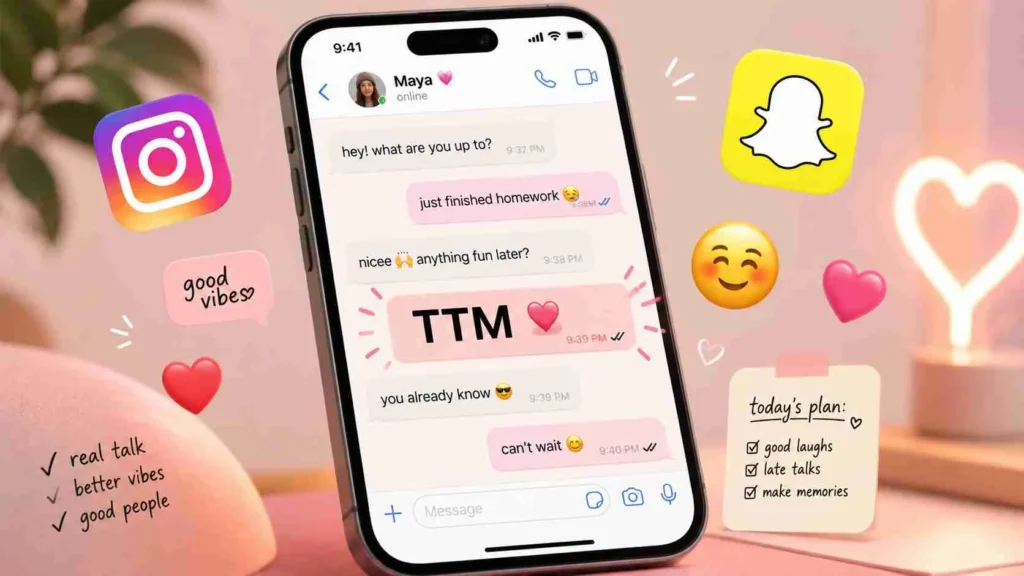
TTM in text means “Talk To Me.” It is a casual internet slang abbreviation used in texting, social media, and online chats to invite someone to start a conversation or respond quickly. Depending on context, it can sound friendly, urgent, flirty, or even slightly demanding.
If you’ve ever received a message saying “TTM” and paused for a second wondering what it meant, you’re not alone. Internet slang evolves fast, and abbreviations like TTM have become part of everyday digital communication especially among younger audiences and on platforms like Snapchat, Instagram, and WhatsApp.
But here’s the interesting part: TTM is more than just a shortcut for “Talk To Me.” Its tone, intent, and meaning can shift depending on who uses it, how it’s written, and the situation in which it appears.
In this detailed guide, you’ll learn exactly what TTM means in text, where it comes from, how to use it correctly, real-life examples, tone variations, alternatives, and even how to respond naturally. You’re writing for SEO, improving communication, or just trying to stay updated with texting slang, this article has you covered.
What Does TTM Mean in Text?
At its core, TTM stands for “Talk To Me.”
It’s used when someone wants:
- A reply
- Attention
- A conversation
- Clarification
- Emotional connection
Simple Explanation:
- “TTM” = “Start talking to me” or “Reply to me”
Origin and Popularity of TTM
The abbreviation TTM originated from early texting culture when people needed to type faster using fewer characters. With SMS limitations and the rise of instant messaging apps, abbreviations like “LOL,” “BRB,” and “TTM” became widely used.
Why TTM Became Popular:
- Faster typing on mobile devices
- Popular among Gen Z and millennials
- Common on social media platforms
- Fits casual and informal communication
Today, TTM is widely used in:
- Snapchat chats
- Instagram DMs
- WhatsApp conversations
- Online gaming chats
- Casual texting between friends
How TTM Is Used in Real Conversations
The meaning of TTM stays the same, but the tone changes depending on context. It can be friendly, urgent, flirty, or even slightly impatient.
Common Situations:
- Asking someone to reply
- Starting a conversation
- Checking if someone is available
- Expressing boredom
- Seeking attention
Examples of TTM in Text Messages
Here are some realistic examples with different tones:
Friendly Tone 😊
- “Hey, it’s been a while! TTM.”
- “I’m free right now, TTM!”
Casual Tone 😎
- “TTM when you’re online.”
- “Bored… TTM.”
Flirty Tone 😉
- “Miss you… TTM ❤️”
- “Why you ignoring me? TTM 😏”
Urgent Tone ⚡
- “TTM ASAP.”
- “Something important TTM now.”
Slightly Demanding Tone 😐
- “I’ve been texting you… TTM.”
- “Don’t ignore me. TTM.”
Example Table: TTM in Different Contexts
| Situation | Example Message | Tone Type | Meaning |
|---|---|---|---|
| Friendly chat | “Hey! TTM 😊” | Friendly | Let’s talk |
| Boredom | “Nothing to do… TTM” | Casual | Entertain me |
| Romantic/flirty | “Thinking about you, TTM ❤️” | Flirty | I want to connect |
| Urgent matter | “TTM ASAP!” | Urgent | Reply immediately |
| Ignored feeling | “Why aren’t you replying? TTM” | Slightly annoyed | Respond now |
Tone Matters: How TTM Can Change Meaning
The same abbreviation can feel completely different based on punctuation, emojis, or context.
Tone Breakdown Table
| Version | Tone | Interpretation |
|---|---|---|
| TTM | Neutral | Talk to me |
| TTM 😊 | Friendly | Let’s chat casually |
| TTM ASAP | Urgent | Reply quickly |
| TTM 😏 | Flirty | Come talk to me |
| TTM. | Serious | I need a response |
When Should You Use TTM?
TTM works best in informal conversations. It’s perfect for:
- Friends
- Close colleagues
- Social media chats
- Casual texting
Avoid Using TTM In:
- Professional emails
- Formal communication
- Academic writing
- Business discussions
Table: Where TTM Is Appropriate
| Platform | Use TTM? | Notes |
|---|---|---|
| Yes | Very common | |
| Instagram DM | Yes | Often used casually |
| Snapchat | Yes | Extremely popular |
| No | Too informal | |
| Workplace chat | Sometimes | Only in casual teams |
Comparison: TTM vs Similar Slang Terms
There are many abbreviations similar to TTM, but each has a slightly different meaning.
Comparison Table
| Abbreviation | Full Form | Meaning | Difference from TTM |
|---|---|---|---|
| TTM | Talk To Me | Start a conversation | Direct invitation |
| HMU | Hit Me Up | Contact me later | Less immediate |
| WYO | What You On | What are you doing | Question-based |
| WYD | What You Doing | Asking current activity | More casual |
| MSG | Message | Send a message | General request |
| DM Me | Direct Message | Message privately | Platform-specific |
Key Insight:
- TTM is more direct than HMU
- TTM is less questioning than WYD
- TTM feels more immediate
Alternate Meanings of TTM
While “Talk To Me” is the most common meaning, TTM can have other interpretations depending on context:
Less Common Meanings:
- Time To Market (business context)
- Trailing Twelve Months (finance context)
- Through The Mail (hobby/trading communities)
Important Tip:
Always rely on context to understand the correct meaning.
Polite or Professional Alternatives to TTM
If you want to sound more professional or polite, here are better alternatives:
Professional Alternatives:
- “Please get in touch with me.”
- “Let’s discuss this.”
- “Could you respond when available?”
- “Feel free to reach out.”
Friendly Alternatives:
- “Text me!”
- “Call me when you can.”
- “Let’s chat.”
- “Message me 😊”
How to Respond to TTM
When someone sends you “TTM,” your response depends on the situation.
Example Responses:
If you’re available:
- “Hey! What’s up?”
- “I’m here 😊”
You’re busy:
- “Can I text you later?”
- “I’ll talk in a bit.”
If you’re confused:
- “What’s going on?”
Common Mistakes When Using TTM
Avoid these common errors:
- Using it in formal emails
- Sounding too demanding without context
- Overusing it in conversations
- Misinterpreting tone
SEO Keyword Variations (Used Naturally)
To help this article rank better, here are related keyword variations included naturally:
- what does ttm mean in texting
- ttm meaning in chat
- ttm slang meaning
- ttm abbreviation meaning
- what is ttm in social media
- ttm full form in text
FAQs
What does TTM mean in texting?
TTM means “Talk To Me.” It’s used to invite someone to start a conversation or respond, usually in a casual or informal setting.
Is TTM rude or polite?
TTM is not inherently rude, but it can feel demanding depending on tone and context. Adding emojis or polite phrasing can make it friendlier.
What is the difference between TTM and HMU?
TTM means “talk to me now,” while HMU means “contact me later.” TTM is more immediate and direct.
Can I use TTM in professional messages?
No, TTM is informal slang and should not be used in professional or business communication.
What does TTM mean on Snapchat or Instagram?
On platforms like Snapchat and Instagram, TTM simply means “Talk To Me” and is commonly used to start conversations.
How do I reply to TTM?
You can reply with something like “Hey, what’s up?” or “I’m here, tell me!” depending on your availability and mood.
Does TTM have other meanings?
Yes, in different contexts it can mean “Trailing Twelve Months” or “Time To Market,” but in texting it usually means “Talk To Me.”
Is TTM used in romantic conversations?
Yes, TTM can be used in a flirty or romantic way, especially when paired with emojis like ❤️ or 😏.
Conclusion
TTM is a simple yet powerful piece of texting slang that stands for “Talk To Me.” While its core meaning stays consistent, its tone can shift from friendly and casual to urgent or even slightly demanding depending on how it’s used.
Understanding when and how to use TTM correctly can improve your digital communication and help you sound more natural in conversations. The key is context knowing your audience, your relationship with them, and the situation.
In casual chats, TTM works perfectly to start conversations or grab attention. However, in professional settings, it’s best to stick with more formal alternatives. By using it thoughtfully, you can keep your communication clear, engaging, and appropriate.
Discover More Related Articles:
- “A Burger and a Grape Snow Cone” Mean: in Social Media Slang Guide In 2026
- “Diddy” Meaning in Texting: When & How It’s Used In 2026
- “SMH” Mean in Text: Don’t Misuse This Acronym In 2026