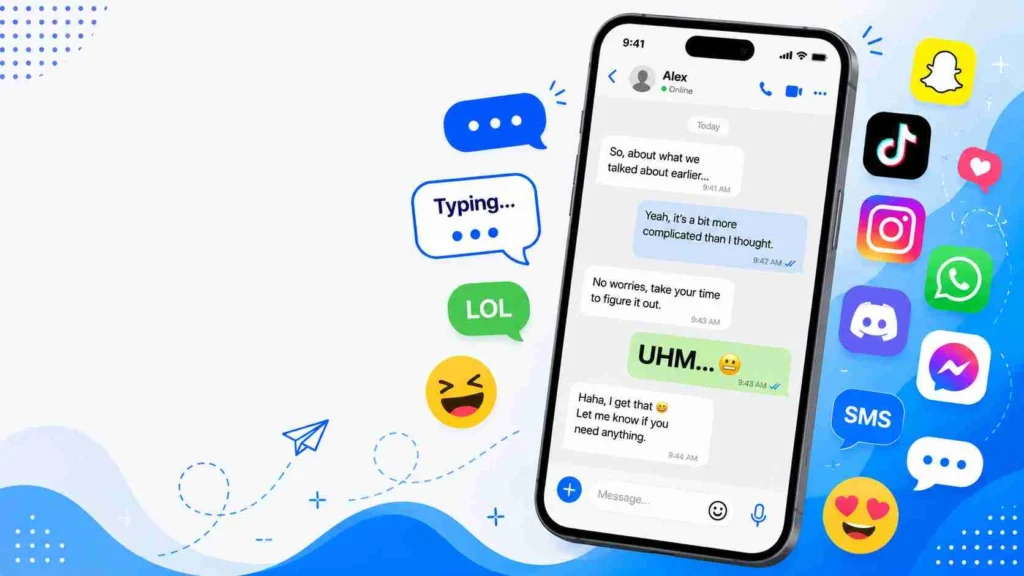

UHM meaning in text refers to a written hesitation sound people use when they’re thinking, unsure, surprised, or choosing their words carefully. It isn’t an abbreviation but a conversational filler that makes text messages sound more natural and human.
Have you ever received a message that simply said “uhm…” and wondered what the sender actually meant? You’re not alone. This tiny word appears in millions of text messages every day, yet its meaning isn’t always obvious. Sometimes it signals hesitation. Other times it expresses surprise, confusion, or even polite disagreement. Everything depends on the conversation and the tone behind it.
Unlike many texting terms, UHM isn’t an acronym. It doesn’t stand for a hidden phrase or secret internet code. Instead, it’s the written version of the sound people naturally make while thinking about what to say next. In face-to-face conversations, you hear people say “uhm” or “um” before answering a difficult question or introducing a new idea. Online, people type the same sound to make digital conversations feel more human.
You’ll see UHM everywhere. Friends use it in casual texts. People add it to comments on social media. Gamers type it in Discord chats. It even appears in WhatsApp conversations, Snapchat replies, Instagram DMs, and Facebook Messenger threads.
Understanding the UHM meaning in text helps you recognize the emotion behind a message instead of focusing only on the words themselves. A single “uhm” can completely change how a sentence feels.
In this guide, you’ll learn exactly what UHM means, why people use it, when it sounds friendly, when it can seem awkward, and how to interpret it across different messaging platforms.
What Does UHM Mean in Text?
The simplest definition is this:
UHM is a written hesitation sound that shows someone is thinking, uncertain, surprised, or choosing their words carefully.
Rather than delivering a direct response, the sender pauses for a moment. That pause often reveals emotion. It might show uncertainty, disbelief, nervousness, curiosity, or even excitement.
Imagine someone asks:
“Did you tell everyone my secret?”
Instead of replying immediately with “No,” the other person writes:
“Uhm… no.”
That small hesitation changes the tone. It suggests they needed a moment to think or felt uncomfortable answering.
Quick Definition Table
| Text | Typical Meaning |
|---|---|
| Uhm… | I’m thinking before I answer. |
| Uhm? | I’m confused or didn’t understand. |
| Uhm, okay. | I’m unsure but willing to continue. |
| Uhm, no. | A polite or hesitant disagreement. |
| Uhm lol | Mild awkwardness or playful hesitation. |
Although the spelling varies, the purpose stays the same. The sender wants to recreate natural speech instead of sounding robotic.
UHM Is About Tone More Than Meaning
One reason people search for what does UHM mean in text is because the word doesn’t have one fixed definition.
Instead, it acts as a conversational cue.
Think about real conversations. Before answering a difficult question, someone might pause for a second and quietly say:
“Uhm…”
That pause tells you they’re thinking.
Text messages don’t include facial expressions or body language, so people often type “uhm” to replace those missing signals.
For example:
Message
Uhm… are you serious?
Possible meaning:
- Surprise
- Disbelief
- Mild shock
Another example:
Message
Uhm, that’s interesting.
Possible meaning:
- Careful thinking
- Uncertainty
- Polite response
Notice how the surrounding words determine the final meaning.
UHM Creates More Natural Conversations
Without filler words, text messages sometimes feel cold or abrupt.
Compare these two replies:
Reply 1
No.
Reply 2
Uhm… no.
The second version feels softer and less confrontational. The sender appears to pause before answering, which makes the conversation sound more natural.
People unconsciously recreate spoken language while texting. They don’t only type words—they type pauses, reactions, emotions, and personality.
That’s exactly where UHM fits.
Common Meanings of UHM in Text Messages
Depending on the situation, UHM can express many different emotions.
- Hesitation before answering.
- Thinking carefully.
- Mild confusion.
- Surprise.
- Disbelief.
- Awkwardness.
- Embarrassment.
- Gentle disagreement.
- Uncertainty.
- Nervousness.
- Curiosity.
Because it covers so many emotions, context always matters.
Is UHM an Abbreviation or Slang?
Many people assume UHM is another texting abbreviation like “LOL,” “BRB,” or “IMO.” That’s a common misconception.
The truth is much simpler.
UHM is not an abbreviation.
It doesn’t stand for any words, letters, or hidden phrase. You can’t expand it into a longer sentence because there isn’t one.
Instead, UHM is an interjection—a word people use to express emotion or manage the flow of conversation.
What Is an Interjection?
An interjection is a short expression that communicates emotion rather than factual information.
Examples include:
- Oh
- Ah
- Oops
- Wow
- Hey
- Hmm
- Uh
- Um
- Uhm
These words help conversations feel natural because they reflect how people actually speak.
UHM Is Also a Filler Word
Another way to describe UHM is as a filler word.
Filler words don’t usually add new information. Instead, they buy the speaker time to think.
Examples include:
- Um
- Uh
- Like
- Well
- So
- You know
In texting, filler words serve a slightly different purpose.
Instead of filling silence, they communicate emotion.
For example:
Uhm… I don’t know.
The “uhm” tells readers the person hesitated before answering.
Without it, the sentence feels much more direct.
Is UHM Considered Slang?
Yes—but only in a broad sense.
Many websites describe UHM as texting slang because it’s commonly used in online conversations.
However, it isn’t slang in the traditional sense.
True slang usually creates a new meaning for an existing word or invents a completely new expression.
For example:
- Ghosting
- Flex
- Stan
- Rizz
Those words carry meanings that differ from standard English.
UHM doesn’t.
It simply represents a natural sound people make while speaking.
That’s why many language experts classify it as:
- An interjection
- A filler word
- A hesitation marker
- A discourse marker
Each description is more accurate than calling it an abbreviation.
Why People Mistake UHM for an Acronym
There are two main reasons.
First, people often see UHM written in capital letters, which makes it resemble abbreviations such as “OMG” or “LOL.”
Second, search engines are filled with pages explaining abbreviations. As a result, readers naturally assume every unusual texting term must stand for something.
In reality, UHM has no expanded form.
It simply mirrors natural speech.
Quick Comparison
| Term | Is It an Acronym? | Purpose |
|---|---|---|
| LOL | Yes | Expresses laughter. |
| BRB | Yes | Says you’ll return soon. |
| IMO | Yes | Shares an opinion. |
| UHM | No | Shows hesitation or thoughtful pause. |
Understanding this difference helps prevent confusion. Once you know UHM isn’t an abbreviation, its role in conversations becomes much easier to recognize.
Why Do People Type “UHM” in Messages?
People rarely add “uhm” by accident. Most of the time, they choose it because they want their message to sound more natural or emotionally accurate.
Digital conversations lack facial expressions, voice inflection, and body language. As a result, small words like UHM help fill those gaps.
It Shows Someone Is Thinking
One of the most common reasons people type UHM is to signal that they’re considering their response.
Imagine receiving this question:
“Do you want to move to another city?”
Instead of giving an instant answer, someone might reply:
“Uhm… let me think.”
That brief pause tells you the decision isn’t simple.
It Softens a Difficult Response
Direct answers sometimes feel harsh.
Compare these two replies:
No.
and
Uhm… I don’t think so.
The second response sounds gentler because the hesitation makes it feel less abrupt.
People often use UHM before declining invitations, disagreeing with friends, or correcting someone politely.
It Expresses Surprise
Sometimes UHM appears because the sender didn’t expect what they just read.
Example:
Uhm… what?
That short reply often communicates genuine surprise without requiring a longer explanation.
It Creates Suspense
Writers, influencers, and everyday users frequently type:
Uhm…
before revealing unexpected news.
The pause naturally builds curiosity and encourages the reader to keep reading.
For example:
Uhm… you’ll never believe who I just met.
That tiny hesitation creates anticipation before the exciting part of the message.
It Reflects Real Conversation
One of the biggest reasons UHM remains popular is simple: people write the way they talk.
When texting feels too formal, conversations lose warmth. Adding natural speech patterns—including pauses like “uhm”—makes messages sound more authentic and relatable.
As digital communication continues to evolve, words like UHM remind us that even short messages can carry emotion, personality, and subtle meaning far beyond the letters themselves.
What Does UHM Mean Depending on the Situation?
The meaning of UHM changes with the conversation. Unlike abbreviations that have one fixed definition, UHM expresses emotion, hesitation, or tone. The surrounding words, punctuation, and relationship between the people chatting determine what it really means.
Think of UHM as the digital version of a facial expression. By itself, it doesn’t say much. Combined with the rest of a message, it can reveal uncertainty, surprise, disbelief, or careful thinking.
Let’s look at the most common situations where people use it.
UHM Before a Question
When UHM appears before a question, it usually signals confusion or disbelief. The sender needs a moment to process what they just read before asking for clarification.
Examples
Uhm… what do you mean?
Uhm, are you serious?
Uhm… why would you do that?
In these cases, UHM often means:
- The person is confused.
- They didn’t expect the message.
- They’re asking for more information.
- They’re questioning what was said.
The hesitation makes the question sound more natural than jumping straight into it.
UHM Before Saying No
Many people dislike giving blunt answers. Adding UHM softens the response and makes it feel more polite.
Instead of writing:
No.
Someone may write:
Uhm… I don’t think so.
or
Uhm, probably not.
The hesitation suggests the person considered the request before declining it. Although the answer is still negative, it feels less harsh.
UHM Before Sharing an Opinion
People often pause before expressing an opinion, especially when discussing sensitive topics.
For example:
Uhm… I actually liked the movie.
Uhm, I see your point, but I disagree.
Here, UHM shows that the sender is choosing their words carefully. They may want to avoid sounding rude or argumentative.
UHM When Someone Is Surprised
Unexpected news often triggers a quick “UHM.”
Imagine receiving this message:
I just quit my job today.
A natural reply might be:
Uhm… wow.
The hesitation communicates surprise before the reaction.
UHM During Awkward Moments
Sometimes people simply don’t know what to say.
Examples include:
Uhm…
Uhm… okay.
Uhm… that’s awkward.
This usually indicates:
- Embarrassment
- Nervousness
- Social discomfort
- Uncertainty
Rather than filling the silence, the sender types the hesitation itself.
UHM to Buy Time
In spoken conversation, people naturally pause while thinking. Texting allows more time to reply, yet many people still type UHM because it signals they’re processing the conversation.
Example:
Uhm… let me think about it.
This tells the other person that a thoughtful answer is coming instead of an immediate reaction.
UHM as a Playful Reaction
Among friends, UHM often adds humor.
Example:
Uhm… who told you that?
Depending on the conversation, this can sound teasing instead of serious.
Friends frequently use exaggerated spellings like:
- Uhhhhm
- Ummmm
- UHM?!
- Uhm 😂
These variations emphasize emotion rather than changing the meaning.
How Punctuation Changes the Meaning
The punctuation after UHM matters almost as much as the word itself.
| Expression | Typical Meaning |
|---|---|
| Uhm | Brief hesitation |
| Uhm… | Thinking or uncertainty |
| Uhm? | Confusion |
| UHM?! | Shock or disbelief |
| Uhm! | Sudden realization |
| Uhm lol | Playful awkwardness |
Even a few dots or an exclamation mark can completely change the tone.
UHM vs. UM vs. UMM vs. UH
Many people assume these expressions mean exactly the same thing. While they’re closely related, each one creates a slightly different impression.
The differences aren’t official grammar rules. Instead, they reflect common texting habits.
Comparison Table
| Expression | Typical Meaning | Tone | Common Use |
|---|---|---|---|
| Uh | Very short pause | Quick | Brief hesitation |
| Um | Normal thinking pause | Neutral | Everyday conversation |
| Uhm | Slightly longer hesitation | Conversational | Texting and chat |
| Umm | Extended uncertainty | More emotional | Dramatic or hesitant replies |
UH
UH usually represents the shortest pause.
Example:
Uh… maybe.
The speaker hesitates only briefly before continuing.
UM
UM is the most common filler word in English conversation.
Examples:
Um, I forgot.
Um… give me a second.
It’s neutral and doesn’t carry much emotional weight.
UHM
UHM often feels slightly more intentional than UM.
People commonly use it when:
- They’re surprised.
- They’re uncomfortable.
- They’re carefully choosing words.
- They’re reacting emotionally.
Because of that, UHM appears frequently in text messages and online chats.
UMM
Adding extra letters stretches the hesitation.
Example:
Ummmmm…
The longer spelling usually suggests:
- Greater uncertainty
- Awkward silence
- Deep thinking
- Playful exaggeration
Many people type additional “m” letters simply for dramatic effect.
Which Version Is Correct?
The truth is that all of them are acceptable in informal communication.
There isn’t one official spelling because these words imitate spoken sounds.
Some people naturally write:
- Um
- Uhm
- Umm
- Ummm
- Uhhhhm
Each version reflects a slightly different style rather than a different definition.
Why Do People Choose Different Spellings?
Several factors influence the spelling someone chooses.
These include:
- Personal texting habits
- Regional preferences
- Social media trends
- The amount of hesitation they want to express
- Their writing style
Because these words represent speech, there’s plenty of flexibility.
Is UHM Rude in Text Messages?
One of the most common questions people ask is UHM sounds rude.
The short answer is usually not.
Most of the time, it’s simply a natural hesitation.
However, context changes everything.
When UHM Sounds Friendly
In casual conversations, UHM often makes messages feel warmer and more human.
Examples include:
Uhm… that’s actually funny.
Uhm, thanks!
Uhm lol.
These replies sound relaxed rather than offensive.
When UHM May Sound Rude
Problems arise when the hesitation appears sarcastic or dismissive.
For example:
Uhm… no.
UHM?!
Uhm, obviously.
These responses may suggest impatience or disbelief.
they’re rude depends largely on the relationship between the people chatting.
Friends might laugh.
A stranger may feel offended.
Tone Matters More Than the Word
Unlike offensive slang, UHM has no negative meaning by itself.
Instead, readers interpret the emotion from the surrounding message.
Compare these examples.
Friendly
Uhm… I think you’re right.
Neutral
Uhm, I’m not sure.
Awkward
Uhm… okay.
Dismissive
Uhm, no.
The same word creates four very different impressions.
Consider the Conversation
Before assuming someone is being rude, consider:
- What happened earlier in the conversation?
- Are they joking?
- Do they usually text this way?
- Did they add emojis?
- Is the discussion serious or casual?
These clues provide a much clearer picture than focusing on UHM alone.
Does Capitalization Change the Meaning?
Sometimes it does.
| Version | Possible Tone |
|---|---|
| uhm | Relaxed and casual |
| Uhm | Standard conversation |
| UHM | Strong emphasis |
| UHM?! | Shock or disbelief |
Capital letters naturally draw attention, making the reaction appear more intense.
The Bottom Line
In everyday texting, UHM is rarely offensive. It’s simply a written hesitation that helps conversations sound more natural.
Only when paired with sarcasm, harsh wording, or exaggerated punctuation does it risk sounding dismissive. In most cases, it’s better to read the entire message before deciding what the sender intended.
What Does UHM Mean From a Girl?
Many people search for phrases like “what does UHM mean from a girl” because they hope the word reveals hidden feelings or intentions. In reality, UHM doesn’t have a gender-specific meaning. A girl can use it for the same reasons anyone else would use it to pause, think, soften a reply, or react to something unexpected.
The key is to focus on the entire conversation instead of one word.
For example, if a girl replies:
Uhm… maybe.
She’s most likely expressing uncertainty rather than sending a secret message. She may need more time to decide, or she may be trying to avoid giving a direct “no.”
Likewise, if she writes:
Uhm, that’s actually funny.
The word simply creates a conversational pause before her reaction.
Common Reasons a Girl Might Type UHM
- Thinking before answering.
- Feeling unsure about a decision.
- Expressing surprise.
- Politely disagreeing.
- Making the conversation sound more natural.
- Reacting to unexpected news.
Examples
| Message | Possible Meaning |
|---|---|
| Uhm… I don’t know. | Genuine uncertainty. |
| Uhm, sure. | Hesitant agreement. |
| Uhm… what happened? | Confusion or concern. |
| Uhm lol. | Playful awkwardness. |
| Uhm… really? | Mild disbelief. |
Remember that emojis, punctuation, and previous messages usually reveal much more than UHM alone.
What Does UHM Mean From a Guy?
Just like with girls, UHM doesn’t carry a special meaning when a guy uses it. It reflects the conversation rather than the sender’s gender.
For example:
Uhm… I’ll think about it.
This often means he hasn’t made a decision yet.
Another example:
Uhm, that’s interesting.
Here, he may simply be choosing his words carefully.
Common Reasons a Guy Might Use UHM
- Thinking before replying.
- Avoiding a blunt response.
- Showing uncertainty.
- Reacting with surprise.
- Softening criticism.
- Making the conversation feel casual.
Trying to interpret UHM as a hidden relationship signal usually leads to overthinking. The surrounding conversation provides a much more reliable clue.
UHM Meaning on Snapchat
Snapchat conversations are usually quick, casual, and spontaneous. Because of that, UHM often appears as an immediate reaction rather than a carefully planned response.
Someone might reply to a Snap with:
Uhm… 😂
This could mean they found something surprising, funny, or slightly awkward.
If someone sends:
Uhm?
They’re probably asking for clarification because they didn’t understand the photo, video, or message.
Common Snapchat Uses
- Reacting to surprising snaps.
- Expressing confusion.
- Showing playful disbelief.
- Starting a conversation naturally.
- Responding to unexpected news.
Because Snapchat focuses on informal communication, UHM almost always carries a relaxed tone.
UHM Meaning on TikTok
On TikTok, UHM often appears in comments, captions, and reaction videos.
Unlike private texting, TikTok users frequently type UHM for dramatic effect.
Examples include:
UHM WHAT?!
Uhm… excuse me?
UHM I’M OBSESSED.
These reactions exaggerate surprise, excitement, or disbelief.
Creators also use UHM at the beginning of captions to grab attention before revealing something interesting.
Examples:
UHM… you need to see this.
UHM, this ending shocked me.
In these situations, UHM acts as a storytelling device that builds curiosity.
UHM Meaning on Instagram
Instagram conversations happen through direct messages, comments, stories, and reels.
The meaning of UHM remains consistent across all of them.
Someone replying to a story may write:
Uhm… where is this?
They’re simply asking a question after pausing to process what they saw.
Another example:
Uhm that’s gorgeous!
Here, UHM emphasizes admiration and surprise.
Common Instagram Uses
- Reacting to photos.
- Replying to stories.
- Commenting on reels.
- Starting casual conversations.
- Expressing amazement.
The tone usually stays friendly and conversational.
UHM Meaning on WhatsApp
WhatsApp conversations often resemble face-to-face discussions because people use the app to communicate with family, friends, and coworkers.
As a result, UHM frequently mirrors natural speech.
Examples include:
Uhm… can we talk later?
Uhm, I’m not sure.
Uhm… I forgot.
Each example reflects a brief pause before continuing.
Unlike abbreviations such as “LOL” or “BRB,” UHM doesn’t shorten the message. Instead, it adds emotion and realism.
UHM Meaning on Discord
Discord communities move quickly, especially during live discussions or gaming sessions.
Members often type UHM when reacting to unexpected events.
Examples include:
Uhm… did that really happen?
UHM WHAT?!
Uhm guys…
Gamers also use it before explaining mistakes or asking questions.
Because Discord conversations feel conversational, UHM fits naturally into both text and voice-inspired chats.
UHM Meaning on Facebook Messenger
Facebook Messenger supports conversations between friends, relatives, classmates, and coworkers.
The meaning of UHM doesn’t change on the platform.
Instead, it reflects the sender’s emotional state.
Examples include:
Uhm… thanks.
Uhm, I wasn’t expecting that.
Uhm… okay.
The surrounding conversation determines these messages sound surprised, uncertain, or hesitant.
Examples of UHM in Text Messages
Seeing UHM in context makes it much easier to understand.
The examples below show how one small word can express several different emotions.
| Text Message | Meaning |
|---|---|
| Uhm… are you serious? | Surprise or disbelief. |
| Uhm, maybe later. | Uncertainty. |
| Uhm okay. | Hesitant agreement. |
| Uhm… I forgot. | Admitting a mistake. |
| Uhm, no thanks. | Polite refusal. |
| Uhm, that’s interesting. | Thinking before responding. |
| Uhm lol. | Playful awkwardness. |
| Uhm… what happened? | Confusion or concern. |
| Uhm, really? | Mild disbelief. |
| Uhm… I need a minute. | Thinking carefully. |
| Uhm, sure. | Reluctant agreement. |
| Uhm… that’s unexpected. | Surprise. |
| Uhm, I disagree. | Gentle disagreement. |
| Uhm… can you explain? | Requesting clarification. |
| Uhm, that’s funny. | Amused reaction. |
| Uhm… wow. | Shock or amazement. |
| Uhm, I’ll let you know. | Delaying a decision. |
| Uhm… I’m not sure. | Honest uncertainty. |
| Uhm, good point. | Acknowledging another opinion. |
| Uhm… let’s think about it. | Careful consideration. |
What These Examples Teach
A clear pattern emerges from these conversations.
UHM rarely changes the factual meaning of a sentence. Instead, it changes the tone. It makes messages feel more thoughtful, natural, and emotionally expressive.
Without UHM, many of these replies would sound abrupt or overly direct. By adding a brief written pause, the sender creates the same conversational rhythm people naturally use when speaking face to face.
When Should You Use UHM in Texting?
Although UHM is a simple expression, knowing when to use it can make your messages sound more natural. It helps recreate the rhythm of face-to-face conversations by adding pauses and emotion that plain text often lacks.
Most people use UHM instinctively. They type it when they’re thinking, surprised, or trying to soften what they’re about to say. Used in the right context, it makes conversations feel genuine rather than robotic.
Here are the situations where UHM fits naturally.
Casual Conversations
The most common place to use UHM is in everyday chats with friends and family.
Examples include:
- “Uhm… what are you doing later?”
- “Uhm, I totally forgot about that.”
- “Uhm… that’s actually a great idea.”
These messages sound conversational because they mirror the way people speak.
Before Giving an Opinion
Sometimes you need a moment to organize your thoughts before responding. Adding UHM creates that pause.
For example:
Uhm… I think the first option is better.
This approach sounds more thoughtful than immediately stating an opinion.
When You’re Unsure
If you honestly don’t know the answer, UHM can communicate hesitation.
Examples include:
- Uhm… I’m not sure.
- Uhm… maybe.
- Uhm… let me check.
The hesitation tells the reader you’re considering the question instead of guessing.
To React Naturally
Unexpected messages often trigger spontaneous reactions.
For example:
Uhm… wow.
Uhm, seriously?
Uhm… that’s crazy.
These short replies feel authentic because they capture immediate emotion.
To Soften Difficult Responses
Turning someone down isn’t always easy.
Instead of saying:
No.
You could say:
Uhm… I don’t think I can.
The second version sounds gentler and more considerate.
When Should You Avoid Using UHM?
Even though UHM works well in casual conversations, it doesn’t belong everywhere.
In some situations, it can make you appear uncertain or unprofessional.
Professional Emails
Business communication should be clear and direct.
Instead of writing:
Uhm… I think the report is ready.
Write:
The report is ready for review.
The second sentence sounds more confident and polished.
Job Applications
Employers expect confidence.
Adding conversational fillers can weaken your message.
Avoid:
Uhm… I’d like to apply.
Use:
I’d like to apply for the position.
Academic Writing
Research papers, essays, and reports should remain formal.
Because UHM imitates spoken language, it rarely belongs in academic work.
Customer Support
When helping customers, clarity matters.
Instead of saying:
Uhm… let me see.
Try:
Let me check that for you.
This wording inspires more confidence.
Formal Announcements
Official notices should communicate information directly.
Filler words can distract readers from the main message.
Common Misunderstandings About UHM
Because UHM appears so frequently online, several myths have developed around it.
Let’s separate fact from fiction.
Myth: UHM Is an Acronym
This is probably the biggest misunderstanding.
Fact: UHM doesn’t stand for anything.
It’s simply a written hesitation sound.
Myth: UHM Always Means Someone Is Lying
Some people assume hesitation equals dishonesty.
That’s not true.
People pause for countless reasons.
They may be:
- Thinking
- Surprised
- Nervous
- Choosing polite wording
- Processing new information
Without additional context, UHM tells you nothing about honesty.
Myth: UHM Is Always Rude
Not at all.
Most conversations use UHM in a friendly, conversational way.
Tone depends on:
- Context
- Punctuation
- Relationship
- Surrounding words
Myth: Only Teenagers Use UHM
People of every age use conversational fillers.
Parents, teachers, professionals, and students all type UHM because it’s part of natural communication.
Myth: UHM and UM Have Completely Different Meanings
They’re extremely similar.
Most people choose one spelling over another based on personal preference.
Neither version changes the core meaning.
Similar Texting Expressions
If you’ve seen UHM, you’ve probably also noticed several related expressions.
Each serves a slightly different purpose.
| Expression | Typical Meaning | Common Use |
|---|---|---|
| Uh | Quick hesitation | Brief pause before speaking |
| Um | Natural thinking pause | Everyday conversation |
| Uhm | Thoughtful hesitation | Casual texting |
| Umm | Longer hesitation | Greater uncertainty |
| Hmm | Considering something | Reflecting or analyzing |
| Oh | Realization | Discovering new information |
| Ah | Understanding | Suddenly recognizing something |
| Eh | Indifference or uncertainty | Casual opinions |
| Well | Transition into an answer | Introducing a response |
| Like | Conversational filler | Informal speech |
Although these expressions are similar, each creates a slightly different tone.
For example:
Hmm…
suggests deep thought.
Meanwhile,
Uhm…
usually signals hesitation before speaking.
FAQs
What does UHM mean in text?
UHM is a written hesitation sound that shows someone is thinking, choosing their words carefully, feeling uncertain, or reacting to something unexpected. It isn’t an abbreviation. Instead, it helps text conversations sound more like natural speech.
What does UHM mean in texting?
In texting, UHM usually indicates a pause before answering. Depending on the situation, it may express confusion, surprise, hesitation, disbelief, or polite disagreement. The surrounding conversation determines its exact meaning.
Is UHM an abbreviation?
No. UHM isn’t an abbreviation or acronym because it doesn’t stand for any words. It’s an interjection and a conversational filler that imitates the sound people make while thinking.
Is UHM a slang word?
Many people describe UHM as texting slang because it’s common in digital communication. Technically, it’s better classified as a filler word or hesitation marker rather than traditional slang.
Why do people type UHM?
People type UHM to make messages sound more natural. It communicates hesitation, careful thinking, uncertainty, surprise, or a gentle transition into what they’re about to say.
Is UHM rude in messages?
Usually, no. UHM is generally friendly and conversational. It may only seem rude if it’s paired with sarcastic wording, excessive punctuation, or a dismissive tone.
Does UHM mean someone is thinking?
Yes. One of the most common meanings of UHM is that the sender is taking a moment to think before replying. It often signals careful consideration rather than immediate certainty.
What does UHM mean on Snapchat?
On Snapchat, UHM carries the same meaning as in regular texting. Users often type it when reacting to surprising snaps, asking questions, or expressing playful disbelief.
What does UHM mean on TikTok?
TikTok users frequently write UHM in captions and comments to exaggerate surprise, excitement, or disbelief. It’s often used humorously to grab attention.
What does UHM mean on Instagram?
On Instagram, UHM commonly appears in comments, story replies, and direct messages. It usually introduces a reaction, question, or thoughtful response.
What does UHM mean on WhatsApp?
In WhatsApp conversations, UHM simply mirrors spoken conversation. It helps messages sound more conversational by showing hesitation or careful thinking.
Is UHM the same as UM?
Yes, for most practical purposes. Both represent hesitation sounds. UHM often feels slightly more expressive, but the difference is based on personal writing style rather than a strict language rule.
Can UHM show hesitation?
Absolutely. Hesitation is one of the primary purposes of UHM. It tells readers the sender paused before responding instead of replying immediately.
How do you use UHM in a sentence?
You can place UHM at the beginning of a sentence before your main thought. For example: “Uhm… I’m not sure that’s the best idea.” This creates a natural conversational pause.
Does punctuation change the meaning of UHM?
Yes. “Uhm,” “Uhm…,” “Uhm?” and “UHM?!” each create different emotional tones. Dots usually suggest hesitation, question marks express confusion, and capital letters often emphasize surprise or disbelief.
Conclusion
Although UHM looks simple, it plays an important role in modern digital communication. It isn’t an abbreviation, a secret code, or a hidden slang term. Instead, it’s the written version of a natural hesitation sound that people use every day in conversation.
Someone types “Uhm… I’m not sure,” “Uhm, really?” or “UHM WHAT?!”, the purpose remains the same. It adds emotion, personality, and conversational rhythm to text messages that would otherwise feel plain or overly direct.
The next time you see UHM in a text, don’t search for a hidden definition. Instead, look at the surrounding words, punctuation, and context. In most cases, you’ll find that it simply reflects a brief pause before the sender shares what they’re really thinking.
Discover More Related Articles:
- “XD” Slang Meaning Explained: Why People Use XD Online In 2026
- HMU Meaning In Chat: Internet Slang & Everyday Usage In 2026
- “Pendejo” Mean: Definition, Usage & Cultural Context Explained In 2026