
Customer churn rarely happens without warning. A subscriber starts using a product less often. A previously active customer stops opening emails. Support complaints increase, purchases become less frequent, or an account quietly shifts toward inactivity.
The difficulty is spotting these signals early enough to do something about them.
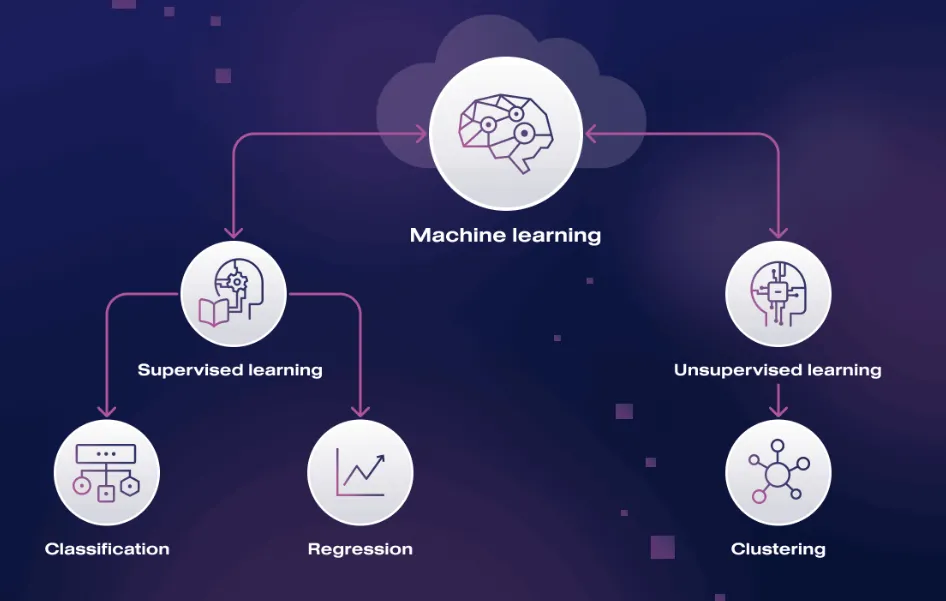
Machine learning makes that possible by analyzing customer behavior across many variables and estimating which accounts are most likely to leave. But useful churn prediction requires more than training a classification model. Companies need reliable customer data, thoughtful feature engineering, integration with existing CRM and marketing systems, and a way to turn predictions into retention actions.
The following machine learning development companies offer capabilities relevant to churn prediction, customer analytics, segmentation, personalization, and predictive modeling.
What should you look for in a churn prediction development company?
A churn model is only valuable when its predictions lead to better decisions. Accuracy matters, but so do the data pipeline and the workflow surrounding the model.
A capable development partner should be able to combine information from sources such as CRM platforms, transaction histories, subscriptions, product usage, support interactions, and marketing systems. The team should also understand how to distinguish meaningful churn indicators from ordinary fluctuations in customer behavior.
Another consideration is deployment. Ideally, churn scores should flow into systems that customer success, sales, or marketing teams already use. A company may, for example, automatically flag high-risk customers in a CRM or trigger different retention campaigns according to churn probability and customer value.
With those requirements in mind, here are ten companies worth considering.
What are the best machine learning companies for churn prediction?
1. Tensorway
Tensorway develops custom machine learning solutions for businesses that need predictive models integrated into real operational systems. Its ML services cover custom model development, predictive analytics, advanced data management, implementation, optimization, monitoring, and ongoing model retraining.
Those capabilities make the company relevant to churn and retention projects where customer behavior changes over time. Instead of treating prediction as a one-off data science exercise, businesses can build a system that continuously evaluates customer signals and updates risk estimates.
Tensorway also works with customer behavior prediction and personalized customer experiences, which can support broader retention strategies. For companies that want churn scoring connected with segmentation, recommendations, targeted campaigns, or other customer analytics, having these capabilities under one development team can simplify implementation.
2. AltexSoft
AltexSoft is a technology consulting and software engineering company with substantial experience in data science, machine learning, and analytics.
Its capabilities are particularly relevant when churn prediction is part of a broader data modernization initiative. Customer information is often fragmented between billing platforms, CRM software, websites, mobile applications, support systems, and analytics tools. Before an effective predictive model can be built, those sources frequently need to be consolidated and cleaned.
AltexSoft can therefore be considered by organizations that need both the analytical layer and the data engineering behind it.
3. Addepto
Addepto specializes in AI, machine learning, data engineering, and business intelligence. Its work focuses heavily on turning enterprise data into operational insights.
For retention analytics, this can mean moving beyond a simple churn/no-churn prediction. Businesses may want to identify different customer groups, determine which behaviors correlate with attrition, estimate customer lifetime value, or prioritize high-value accounts for intervention.
That combination of predictive analytics and data engineering makes Addepto a potential fit for organizations with large or complex customer datasets.
4. DataArt
DataArt is a global software engineering company with expertise spanning data, analytics, cloud technologies, and AI.
One advantage of working with a larger engineering organization is the ability to connect machine learning with the rest of a company’s technology stack. Churn prediction may require integration with customer portals, internal dashboards, CRM platforms, subscription systems, or marketing applications.
DataArt is therefore worth considering when retention analytics is one component of a wider digital product or enterprise software project rather than a standalone ML experiment.
5. Itransition
Itransition provides software engineering, data analytics, and AI development services across a range of industries.
For churn projects, its broader development capabilities can be useful when predictions must become part of an operational workflow. A model might identify a customer as high risk, for example, but the business still needs rules determining what happens next: create a CRM task, send an offer, alert an account manager, or place the customer into a specific campaign.
Itransition may suit companies looking to combine predictive analytics with custom software and business process integration.
6. ScienceSoft
ScienceSoft has experience in data science, analytics, business intelligence, and custom software development. The company works with organizations that need to extract practical insights from large datasets and incorporate analytics into business applications.
This makes it relevant to retention initiatives where decision-makers want more than raw prediction scores. Churn probabilities can be surfaced through dashboards, connected with customer profiles, and analyzed alongside revenue, engagement, or service metrics.
Organizations with established enterprise systems may also value the company’s experience integrating analytics into existing technology environments.
7. Tooploox
Tooploox works across machine learning, AI, product development, and data-related engineering.
The company may appeal particularly to digital businesses where churn signals come directly from product behavior. SaaS platforms, mobile applications, marketplaces, and subscription products can generate detailed behavioral data including session frequency, feature usage, time spent in the product, and changes in engagement.
These signals can provide useful inputs for churn models, especially when conventional customer information alone does not explain why users leave.
8. Sigmoidal
Sigmoidal focuses strongly on AI consulting and machine learning development, making it an interesting option for companies with technically demanding predictive analytics projects.
A useful churn system often requires considerable experimentation. Teams may compare algorithms, engineer behavioral features, deal with class imbalance, adjust probability thresholds, and determine which metrics actually reflect business value.
Sigmoidal’s ML-focused positioning makes it suitable for businesses that need a specialized data science partner rather than a general software outsourcing provider.
9. Avenga
Avenga provides technology consulting and engineering services with capabilities in AI, data, cloud, and software development.
The company can be considered for enterprise retention projects involving multiple systems and substantial amounts of customer data. This is important because churn prediction frequently becomes an integration problem as much as a modeling problem.
For example, a company might need to combine transactional records with customer service history, application activity, account information, and marketing engagement before meaningful risk patterns become visible.
10. Innowise
Innowise offers software development services covering AI, machine learning, data analytics, and business intelligence.
Its broad engineering capabilities can support organizations that want to incorporate churn analytics into existing applications rather than operate another isolated analytics tool. Potential projects can include predictive models, customer segmentation systems, analytics dashboards, and automated workflows driven by customer risk scores.
This makes Innowise a practical option for companies seeking both machine learning expertise and the software engineering resources required to operationalize the results.
How does machine learning predict customer churn?
Most churn prediction systems begin with historical examples of customers who stayed and customers who left. Machine learning algorithms search those records for patterns associated with attrition.
Useful variables depend heavily on the business. A SaaS company might examine login frequency, feature adoption, subscription changes, support tickets, and billing events. A retailer may care more about purchase frequency, average order value, returns, loyalty activity, and time since the last transaction.
The model then produces a churn probability or risk category for current customers.
More sophisticated systems can combine this with customer lifetime value or segmentation. That distinction matters because a customer with a 70% churn probability is not automatically the highest retention priority. A slightly lower-risk customer with much greater expected lifetime value may deserve attention first.
How can companies use churn predictions to improve retention?
The strongest implementations connect prediction directly with action.
High-value accounts showing unusual drops in engagement might be assigned to customer success representatives. Price-sensitive customers could receive a targeted offer. Users struggling with a particular feature could receive onboarding assistance instead of a discount. Other customers may simply need a well-timed reminder.
This is also why model monitoring matters. Customer behavior changes as products, prices, competitors, and market conditions evolve. A model trained on last year’s customers may gradually become less reliable, so teams need to track performance and retrain models when necessary.
How do you choose the right machine learning partner for retention analytics?
Start with the business decision you want to improve rather than the algorithm you want to build.
Ask potential vendors how they would define churn, which data they would need, how predictions would reach employees or customer-facing systems, and how model performance would be monitored after deployment. It is also worth discussing false positives. Aggressively targeting customers who were never going to leave can waste retention budgets and create unnecessary discounts.
The right partner should therefore understand the complete chain from customer data to prediction to intervention.
For smaller projects, a focused machine learning specialist may provide the quickest route to a proof of concept. Enterprises with fragmented data or complicated legacy systems may benefit more from a provider that combines data engineering, ML development, software integration, and ongoing support.
Ultimately, the most useful churn model is not necessarily the most technically complex one. It is the model that identifies the right customers early enough for the business to respond—and fits naturally into the way retention teams already work.