
Choosing beds for growing kids in Australia involves more than picking the right current size. The most practical approach considers the full growth arc: which bed configuration will serve the Australian child not just now but across the next five to eight years of primary and secondary school development, what structural quality will withstand that full service period, and when a size or configuration upgrade is genuinely warranted versus premature. This guide covers every major Australian kids bed type with the practical assessment framework that helps Australian families make the most confident and cost-effective decision for each stage of childhood.
What Makes a Bed Suitable for Growing Australian Children?
What qualities should a kids bed have to serve a growing Australian child well?
A bed that genuinely serves growing Australian children well has five qualities: structural durability in solid timber or quality engineered timber construction that withstands 8 to 12 years of active Australian children’s bedroom use; correct Australian standard dimensions that accept the full range of standard Australian mattresses at each size; non-toxic finish certifications for the surfaces Australian children contact daily; a design that remains aesthetically appropriate as the child moves from toddler to primary school to secondary school without requiring furniture replacement on styling grounds alone; and a quality mattress in the correct firm-to-medium-firm specification for the Australian child’s developing body weight.
Single Beds
Why is the single bed the most practical starting point for most Australian children?
The standard Australian single at 92 x 188 cm is the most broadly appropriate starting point for growing Australian children because it serves the full primary school age range from the toddler transition at approximately 18 months to three years through to approximately age 10 to 12, when taller Australian children begin to approach the mattress length limits. The standard single’s 8 to 10 year typical Australian service period, the widest availability of Australian standard single mattresses at every quality tier, and the lowest frame price point of any full-size Australian kids bed make it the most cost-effective configuration for the first major kids bed investment for most Australian families.
King Single Beds
When does the king single make more sense than a standard single for an Australian child?
The king single at 107 x 203 cm makes more practical sense than a standard single for Australian children at two specific stages. First, for Australian children aged 8 to 10 who are in the upper height percentile for their age and are genuinely approaching the standard single mattress limits: the king single purchase at this stage avoids a near-term size change from standard single to king single. Second, for Australian families purchasing the kids bed that will serve through the secondary school years: the king single’s greater dimensions provide adequate sleeping space for the Australian teenager’s growing body through to early adulthood, making it the final frame purchase before adult bedroom furniture for most Australian families.
Double Beds
Is a double bed appropriate for a growing Australian child?
A full double at 138 x 188 cm is appropriate for growing Australian children from approximately age 14, when body dimensions are approaching adult ranges and the king single is becoming genuinely limiting. For most Australian families, the double bed is more commonly the adult bedroom configuration rather than the final kids bed, with the king single serving the majority of the Australian secondary school years adequately. Australian bedrooms must be assessed for the 3 square metre minimum footprint plus clearance that the double requires before purchasing for an Australian teenager’s bedroom.
Bunk Beds
When are bunk beds the most practical option for growing Australian children?
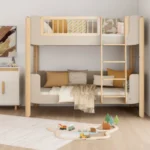
Bunk beds are the most practical option for growing Australian children when two children are sharing a bedroom, providing two full-size sleep surfaces within the footprint of one standard Australian single bed and freeing the remaining Australian bedroom floor space for the play zone, storage, and study areas that two growing Australian children require simultaneously. All Australian bunk beds must comply with AS/NZS 4220 for guard rail heights and top berth mattress depth limits. The top berth is recommended for Australian children aged six and above. Quality Australian bunk beds separate into two independent single beds when the shared room arrangement ends, extending the total investment value beyond the bunk configuration years.
Loft Beds
What growing Australian children benefit most from a loft bed?
A loft bed, a single elevated sleeping berth with functional space beneath the raised platform, benefits growing Australian children in two specific situations. First, a single Australian child in a small bedroom who needs both sleep and dedicated study space within the one frame footprint: the desk or study zone beneath the loft provides a dedicated homework area without requiring a separate desk in the already limited floor space. Second, Australian children aged six to twelve who want the adventurous elevated sleeping experience and the bedroom floor space that the loft configuration creates for active play. Loft beds are not appropriate for Australian children under six due to the elevated berth safety requirements.
Storage Beds
When do storage beds make sense for growing Australian children?
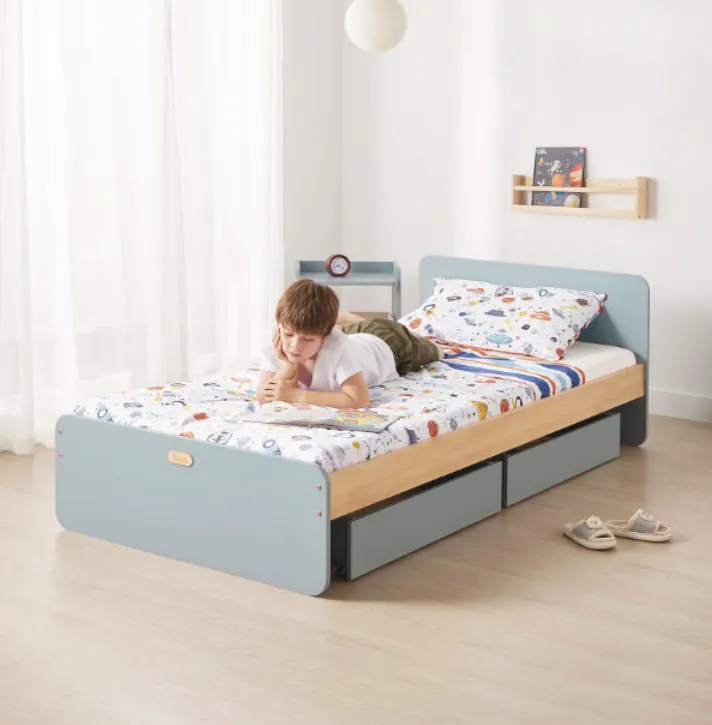
Storage beds, single or king single frames with integrated under-bed drawers or pull-out storage, make practical sense for growing Australian children in bedrooms where floor space limits the placement of a separate chest of drawers or wardrobe. The under-bed storage of a quality Australian children’s storage bed typically provides two to three deep drawers equivalent to a small chest of drawers within the bed footprint, freeing the remaining Australian bedroom floor for the wardrobe, desk, and active floor space that growing Australian children need. The quality of drawer slides and the drawer depth are important specifications to confirm, as drawers used daily by growing Australian children must withstand heavy loading across the full service years.
Comparison Table: Australian Kids Bed Types for Growing Children
| Bed Type | Australian Age Range | Floor Space | Best For | Not Ideal For |
| Standard single | 18 months to 12 years | Minimal | Most growing AU children; first bed | AU children in upper height percentile from age 8+ |
| King single | 8 to 18+ | Slightly larger | Older growing AU children; final teen bed | Very young AU children who don’t need the size |
| Double | 14+ | 3+ sqm required | AU teens approaching adult dimensions | Most Australian bedrooms under 12 sqm |
| Bunk single/single | 5+ (top berth) | One bed footprint for two AU children | Two growing AU children in shared bedroom | Single-child AU bedrooms |
| Loft with desk | 6 to 12 | One bed footprint; desk below | Growing AU child needing study space | AU children under 6; adults |
| Storage single | Any age | Standard; no extra storage footprint | Small AU bedrooms needing drawer storage | Large AU bedrooms with adequate wardrobe space |
Which Option Works for Different Australian Situations?
| Australian Family Situation | Best Bed Type | Reason |
| First AU kids bed after cot; average bedroom | Standard single | 8-10 year service; most cost-effective |
| Two AU children sharing from age 5+ | Bunk bed (AS/NZS 4220 compliant) | Two sleep surfaces; one AU bedroom footprint |
| One growing AU child; small bedroom, needs desk | Loft bed with desk | Study + sleep in single AU frame footprint |
| Growing AU child with lots of clothing; no space for chest | Storage bed | Under-bed drawers within AU bed footprint |
| AU child aged 8+ in upper height percentile | King single | Final bed frame through AU secondary school |
| AU teenager approaching adult body size | King single or double | Appropriate Australian sleep surface for growing teen |
Frequently Asked Questions
How often should an Australian family expect to upgrade kids bed sizes?
Most Australian families expect one or two kids bed size upgrades across the full childhood: from the cot to a standard single at approximately age 18 months to three years, and from the standard single to a king single at approximately age 8 to 12 depending on the Australian child’s height and the family’s preference for a single longer-term investment. Families who purchase a king single at the first transition bypass the intermediate standard single entirely.
Do Australian growing children need a firmer mattress?
Australian children’s mattresses should be medium-firm rather than firm (the infant cot specification) or soft (the adult comfort preference). Medium-firm provides the spinal alignment appropriate for the lighter body weights of growing Australian children while offering adequate pressure relief at hips and shoulders during the side sleeping that is most common among Australian school-age children. As Australian children grow toward teenager and adult body weights, the appropriate firmness transitions toward the adult medium specification.
Can a growing Australian child’s bed be too big?
A standard single at 92 x 188 cm is not too large for an Australian toddler transitioning from a cot; the additional space is beneficial and the Australian child will grow into it over the service years. A king single at 107 x 203 cm may have excess space for a very young Australian child but presents no developmental concern. The bed size that is genuinely too large is one that exceeds the Australian bedroom floor space to the point where clearance around the bed is inadequate for safe access and the remaining floor area is insufficient for the wardrobe, desk, and play zone the Australian child needs.
What should Australian parents look for in a quality kids bed frame?
Quality indicators in an Australian kids bed frame include: solid hardwood or quality engineered timber primary structural members rather than particle board or low-density MDF; mechanical joinery with bolted connections at all structural nodes rather than glue-only assembly; a slat base with no more than 6 to 8 cm spacing; explicit non-toxic finish certifications; and a brand that provides clear Australian Consumer Law warranty coverage and has a track record of serving Australian children’s bedrooms across the full primary school service years.
Final Thoughts
The most practical Australian kids bed for a growing child is one that is sized correctly for the next 8 to 10 years of development, constructed in quality solid timber that withstands active Australian children’s bedroom use across that period, and designed with the classic lines that remain appropriate as the Australian child moves from toddler to primary school to secondary school without requiring a furniture replacement on styling grounds. Australian families can compare current options at boori.com.au/collections/kids-bed