
Buying a bunk bed for a British shared children’s bedroom is a more considered decision than buying a standard single kids bed, because the elevated sleeping configuration introduces safety requirements, ceiling height constraints, and structural quality considerations that do not apply to ground-level beds. British Standard BS EN 747 governs all bunk beds sold in the UK, and understanding its requirements is the starting point for any British family’s bunk bed purchase. This guide covers everything UK parents need to know, from the mandatory British safety standard through to the practical questions of ceiling clearance, mattress selection, and ladder design that determine whether a bunk bed works well in a specific British home.
What Is a Bunk Bed?
What defines a bunk bed in the UK children’s furniture market?
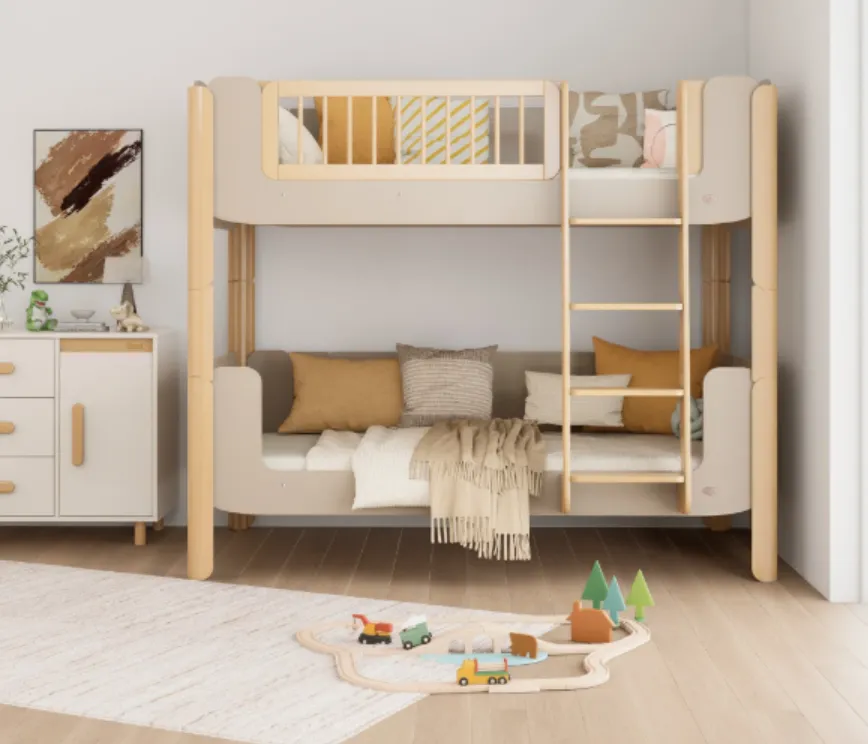
A bunk bed is a tiered bed frame with two or more sleeping berths stacked vertically, allowing two British children to sleep within the floor footprint of a standard single bed. The upper berth requires a fixed access ladder and guard rails on the open sides of the elevated sleeping surface. In the UK, all bunk beds must comply with British Standard BS EN 747, which governs the specific structural safety requirements of the elevated sleeping configuration including guard rail height, maximum mattress depth for the top berth, ladder safety, and structural load ratings.
Who Are Bunk Beds Suitable For in the UK?
Which British families benefit most from a bunk bed?
Bunk beds are best suited to British families with two or more children sharing a bedroom, where the floor space efficiency of two sleeping surfaces within one bed footprint provides meaningful benefit for the shared British room’s remaining functional space. The minimum recommended age for the top berth of a UK bunk bed is six years, when most British children have developed the physical coordination and sleep movement awareness for the elevated position. British families in compact housing — the terraced houses, semis, and flats that characterise much of British urban and suburban housing stock — benefit most from the bunk bed’s floor space liberation, which can transform a marginal shared bedroom into one with adequate space for study, storage, and play for both British children.
UK Bunk Bed Safety: BS EN 747
What does British Standard BS EN 747 require of UK bunk beds?
British Standard BS EN 747 is the mandatory UK safety standard governing all bunk beds sold in Britain. Its requirements cover: minimum guard rail height above the top berth mattress sleep surface; guard rail coverage on both long sides of the top berth with a specified gap at the ladder side; maximum mattress depth for the top berth to maintain safe guard rail clearance; structural load ratings for each berth position under static and dynamic loading; ladder rung spacing, depth, and secure attachment to the frame; and an absence of entrapment hazards or sharp protrusions on all accessible surfaces. British parents should confirm explicit BS EN 747 compliance from the UK retailer before purchasing any bunk bed.
| BS EN 747 Requirement | UK Specification | Why It Matters for British Children |
| Guard rail height | Minimum above mattress surface (varies by frame) | Prevents top berth occupant rolling off during British children’s sleep |
| Guard rail coverage | Both long sides; specified gap at ladder side | Covers all fall-risk surfaces on elevated UK berth |
| Maximum mattress depth | Frame-specific; confirm before purchasing | Deeper mattress reduces guard rail clearance below BS EN 747 minimum |
| Structural load rating | Documented for each UK berth position | Confirms frame is safe for specific British child body weights |
| Ladder rung specification | Spacing and depth for safe British child foot placement | Prevents slip during daily climbing in British bedroom |
| No entrapment hazards | No protrusions on any accessible UK surface | Prevents injury during British children’s climbing access |
Ceiling Height Requirements for UK Bunk Beds
How much ceiling clearance does a bunk bed need in a British bedroom?
A minimum of 90 cm clearance between the top berth sleeping surface — the top of the mattress — and the ceiling above is required for comfortable and safe British bunk bed use. To calculate the minimum ceiling height needed: take the total bunk frame height from the British floor to the top of the upper berth slat base, add the mattress depth, and add 90 cm clearance. For example, a frame with the upper slat base at 155 cm, used with a 14 cm mattress, requires a minimum of 155 + 14 + 90 = 259 cm ceiling height. Standard British residential ceilings of 240 cm may not provide adequate clearance for some bunk configurations, making the ceiling height calculation essential before purchasing for any specific British bedroom.
Mattress Requirements for UK Bunk Beds
What mattress is required for the top berth of a British bunk bed?
The top berth mattress must be within the maximum safe depth specified for the particular UK bunk bed frame, to maintain the guard rail clearance required by BS EN 747. This maximum depth varies by frame model and must be confirmed with the British retailer before purchasing any top berth mattress. Within the safe depth range, the mattress should be medium-firm, carry explicit non-toxic certifications for British children’s sleep products, and use the correct UK standard single dimensions of 90 x 190 cm for a standard single bunk berth. A breathable waterproof protector fitted from the first night protects the bunk mattress and is particularly practical on the top berth where sheet changing is more physically demanding than on a ground-level British bed.
Construction Quality for British Bunk Beds
What structural quality is needed in a UK bunk bed?
UK bunk beds require higher structural quality than standard single beds because the elevated top berth configuration produces racking forces on the frame joints significantly greater than those a ground-level bed experiences under comparable loading. Solid hardwood, particularly European beech, provides the highest joint strength and dimensional stability for British bunk bed frames under these racking forces across the full primary school service years in British bedroom conditions. Mechanical joinery with bolted connections at all primary structural nodes is the most reliable joint quality indicator. Particle board and low-density MDF are not appropriate primary structural materials for UK bunk beds.
UK Bunk Bed Buying Checklist
- BS EN 747 compliance confirmed in writing from UK retailer
- Guard rail height above mattress surface confirmed for the specific UK frame
- Maximum top berth mattress depth confirmed before purchasing mattress
- Ceiling height in the specific British bedroom confirmed adequate: frame height + mattress depth + 90 cm
- Structural load rating for both berths confirmed in UK frame documentation
- Ladder rung depth, spacing, and attachment security assessed before purchase
- Solid timber or quality engineered timber construction confirmed
- Non-toxic finish certifications explicitly named on product documentation
- Separation to two independent UK single beds confirmed as future option
Frequently Asked Questions
Can a UK bunk bed be placed against the wall in a British bedroom?
Yes. Placing the wall side of the UK bunk bed against the British bedroom wall is acceptable, with the wall itself providing fall protection on that face. The open side or sides must retain full BS EN 747-compliant guard rail coverage regardless of wall placement. Confirm the specific wall placement guidance for the particular UK bunk frame with the British retailer.
What weight limit applies to the top berth of a UK bunk bed?
The weight limit for the top berth of a British bunk bed is specified in the BS EN 747-compliant frame documentation for the specific model. Confirm the exact top berth weight limit with the UK retailer before purchasing, particularly if the British child using the top berth is in the heavier range for their age or if the top berth will be used by an older, heavier teenager.
At what age can a British child use the top bunk?
The minimum recommended age for the top berth of a UK bunk bed is six years, when most British children have developed the physical coordination, sleep movement awareness, and ability to safely climb the ladder in both directions — including when waking in the night in low light — that safe top bunk use requires. The specific British child’s physical competence and behaviour is a more reliable readiness indicator than age alone.
How do UK bunk beds separate into two individual beds?
Quality UK bunk beds from specialist British children’s furniture brands are designed to separate into two independent single beds by disassembling the upright connection posts and removing the guard rail from the top berth configuration. Confirm that the specific UK bunk frame separates into two functioning independent UK single beds before purchasing, and that all components required for the separated configuration are included with the original British purchase.
Final Thoughts
A quality UK bunk bed that complies with BS EN 747, is built in solid timber with mechanical joinery, and is correctly sized for the specific British bedroom ceiling height is the most space-efficient sleep solution for shared British children’s bedrooms. British families comparing current UK bunk bed options can browse boori.co.uk/collections/kids-bunk-beds.