Quick Answer 🔥
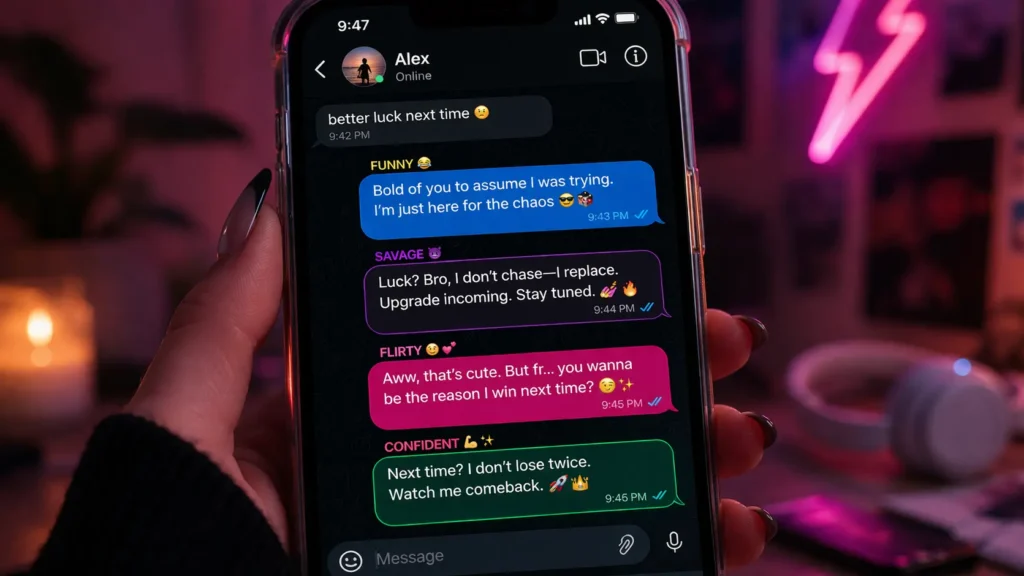
When someone says “better luck next time,” your reply can flip the vibe completely. You want to be funny, confident or a little savage, the right comeback shows your personality instantly.
Top alternatives: I make my own luck, Watch me prove you wrong, Luck is overrated, I’m just getting started, Next time is mine
We’ve all heard it. That slightly smug “better luck next time” after losing a game, missing an opportunity, or even in playful banter. It pops up in texts, DMs, friend groups, work chats, and even from your crush. Sometimes it’s harmless, sometimes it stings a little.
But here’s the thing. Your reply matters more than their comment. The way you respond can make you look confident, witty, unbothered, or even charming. You want to clap back, flirt, or keep it cool, having the right response ready is a social superpower.
Let’s turn that phrase into your moment to shine.
Funny Responses
- I’ll bring extra luck next time, just in case.
Example: After losing a casual game with friends.
Meaning: You’re joking and keeping things lighthearted. - I think my luck got stuck in traffic.
Example: When things didn’t go your way unexpectedly.
Meaning: You’re playfully blaming bad luck. - Plot twist, I win next time.
Example: Said after a friendly competition.
Meaning: You’re teasing with confidence. - Next time I’m upgrading to premium luck.
Example: In a playful chat after failure.
Meaning: You’re making fun of the situation. - I was just giving you a head start.
Example: After losing on purpose vibes.
Meaning: You’re jokingly acting strategic. - My luck took a day off today.
Example: When everything went wrong.
Meaning: You’re being humorous about failure. - Don’t worry, I’ll reboot and try again.
Example: Techy joke in chats.
Meaning: You’re keeping things playful. - I’m collecting losses for character development.
Example: After repeated fails.
Meaning: You’re self-aware and funny. - Even legends lose sometimes.
Example: After a silly mistake.
Meaning: You’re jokingly hyping yourself. - Next time I’m bringing cheat codes.
Example: Gaming or competition context.
Meaning: You’re being playful and witty. - That was just my warm-up round.
Example: After losing early.
Meaning: You’re confident and funny. - I let you win, be grateful.
Example: Friendly banter with friends.
Meaning: You’re jokingly cocky. - I blinked at the wrong time.
Example: After missing a chance.
Meaning: You’re humorously blaming timing. - Luck and I are currently not speaking.
Example: When things go wrong repeatedly.
Meaning: You’re making a relatable joke. - Next time, I’m bringing backup luck.
Example: After a playful loss.
Meaning: You’re staying positive and fun.
Savage Responses
- Luck had nothing to do with it.
Example: When someone tries to downplay your effort.
Meaning: You’re asserting confidence. - I don’t rely on luck, I create results.
Example: In a competitive setting.
Meaning: You’re showing self-belief. - Keep talking, I’ll keep improving.
Example: When someone is teasing you.
Meaning: You’re focused and unbothered. - Next time, I won’t be so generous.
Example: After losing to someone cocky.
Meaning: You’re flipping the narrative. - Enjoy this moment, it won’t last.
Example: Competitive banter.
Meaning: You’re confident and bold. - That was your peak? Cute.
Example: When someone celebrates too early.
Meaning: You’re being savage and dismissive. - Luck favors me eventually.
Example: After a setback.
Meaning: You’re confident in the long run. - You needed luck, I didn’t.
Example: When someone brags.
Meaning: You’re asserting superiority. - I’m just getting started.
Example: After losing round one.
Meaning: You’re determined. - Watch the comeback carefully.
Example: Competitive moment.
Meaning: You’re warning them playfully. - This isn’t over.
Example: After a loss.
Meaning: You’re serious and driven. - You won the moment, not the game.
Example: Long-term competition.
Meaning: You’re thinking bigger. - I don’t repeat mistakes.
Example: After losing once.
Meaning: You’re confident in growth. - Next time won’t be this easy for you.
Example: Competitive setting.
Meaning: You’re signaling improvement. - I’ll remember this.
Example: After a teasing comment.
Meaning: You’re hinting at a comeback.
Flirty Responses
- Maybe I just needed you on my team.
Example: Light flirting after losing.
Meaning: You’re turning it into connection. - Guess I’ll need your luck next time.
Example: Playful chat with crush.
Meaning: You’re creating closeness. - Only if you’re there to cheer me on.
Example: Flirty texting.
Meaning: You’re inviting attention. - I’d win if you distracted me less.
Example: Teasing someone attractive.
Meaning: You’re flirting playfully. - Next time, I’m stealing your luck.
Example: Cute banter.
Meaning: You’re being playful and engaging. - I lose focus when you’re around.
Example: Light romantic teasing.
Meaning: You’re subtly complimenting. - Better luck if you’re my reward.
Example: Flirty situation.
Meaning: You’re charming and bold. - I’ll try harder if you watch.
Example: Playful moment.
Meaning: You’re inviting attention. - You’re my lucky charm anyway.
Example: Sweet flirting.
Meaning: You’re giving them importance. - I’d rather win you than the game.
Example: Romantic tone.
Meaning: You’re prioritizing them. - Guess I need a kiss for good luck.
Example: Bold flirting.
Meaning: You’re playful and confident. - You distracted me, not my fault.
Example: Teasing crush.
Meaning: You’re blaming them in a cute way. - Next time, sit closer to me.
Example: Subtle flirt.
Meaning: You want closeness. - I’ll win if you believe in me.
Example: Soft flirting.
Meaning: You’re seeking emotional connection. - Let’s call it a tie and hang out instead.
Example: Flirty redirection.
Meaning: You’re shifting to connection.
Polite Responses
- Thanks, I’ll do better next time.
Example: Professional or respectful setting.
Meaning: You’re accepting feedback gracefully. - I appreciate that.
Example: Casual polite reply.
Meaning: You’re acknowledging without tension. - I’ll keep improving.
Example: Growth mindset moment.
Meaning: You’re focused on progress. - That’s kind of you to say.
Example: Friendly interaction.
Meaning: You’re staying respectful. - I’ll take that as motivation.
Example: After losing.
Meaning: You’re turning it positive. - Noted for next time.
Example: Work or serious tone.
Meaning: You’re being professional. - I’ll come back stronger.
Example: After failure.
Meaning: You’re determined politely. - Appreciate the encouragement.
Example: When someone means well.
Meaning: You’re acknowledging support. - I’ll keep trying.
Example: Simple response.
Meaning: You’re staying consistent. - That’s fair, I’ll improve.
Example: Constructive feedback.
Meaning: You’re mature. - I’ll learn from this.
Example: Reflective moment.
Meaning: You value growth. - Thanks for the reminder.
Example: Subtle polite tone.
Meaning: You’re calm and composed. - I’ll get it next time.
Example: Casual positivity.
Meaning: You’re optimistic. - Working on it already.
Example: Confident polite reply.
Meaning: You’re proactive. - I’ll prove it next time.
Example: Determined tone.
Meaning: You’re focused on results.
Confident Responses
- Luck isn’t my strategy.
Example: Competitive environment.
Meaning: You rely on skill. - Next time is already mine.
Example: Bold reply.
Meaning: You’re certain of success. - I don’t miss twice.
Example: After a mistake.
Meaning: You’re confident in improvement. - Watch the upgrade.
Example: After losing.
Meaning: You’re evolving. - I’ll handle it next round.
Example: Calm confidence.
Meaning: You’re in control. - I’m not worried at all.
Example: Pressure situation.
Meaning: You’re unbothered. - This is part of the plan.
Example: Strategic mindset.
Meaning: You’re composed. - I learn fast.
Example: After a mistake.
Meaning: You’re growth-focused. - Next time is different.
Example: Determined tone.
Meaning: You’re improving. - I know my potential.
Example: Self-assured reply.
Meaning: You believe in yourself. - I’ll show you.
Example: Short confident reply.
Meaning: You’re ready to prove it. - No luck needed.
Example: Strong mindset.
Meaning: You trust your skills. - I’ll outperform next time.
Example: Competitive scenario.
Meaning: You’re aiming higher. - Just wait.
Example: Minimal but powerful.
Meaning: You’re confident quietly. - Game on.
Example: Ready for rematch.
Meaning: You’re excited and confident.
Chill And Casual Responses
- It happens.
Example: After a small loss.
Meaning: You’re relaxed. - No big deal.
Example: Casual situation.
Meaning: You’re unbothered. - Next time maybe.
Example: Light response.
Meaning: You’re easygoing. - We’ll see.
Example: Neutral reply.
Meaning: You’re open-ended. - All good.
Example: Friendly tone.
Meaning: You’re calm. - I’m cool with it.
Example: After losing.
Meaning: You’re okay with outcome. - It is what it is.
Example: Accepting result.
Meaning: You’re laid-back. - Maybe next time.
Example: Casual reply.
Meaning: You’re relaxed. - No stress.
Example: Chill conversation.
Meaning: You’re not worried. - I’ll try again.
Example: Simple tone.
Meaning: You’re easygoing. - All part of the game.
Example: Competitive setting.
Meaning: You accept ups and downs. - Just another day.
Example: Routine failure.
Meaning: You’re unfazed. - I’m vibing anyway.
Example: Social setting.
Meaning: You’re still enjoying. - We move.
Example: Modern slang.
Meaning: You’re moving on. - Still a good day.
Example: Positive mindset.
Meaning: You’re optimistic.
Clever Responses
- Luck is just preparation meeting timing.
Example: Thoughtful reply.
Meaning: You value effort. - I’ll adjust the variables next time.
Example: Analytical tone.
Meaning: You’re strategic. - Every loss is data.
Example: Reflective mindset.
Meaning: You learn from failure. - I’m optimizing for the next round.
Example: Smart tone.
Meaning: You’re improving. - Iteration makes perfection.
Example: Growth mindset.
Meaning: You believe in progress. - Next time, better execution.
Example: Performance focus.
Meaning: You’re refining skills. - I’ll recalibrate.
Example: Calm reply.
Meaning: You’re adjusting approach. - Not luck, just timing.
Example: Thoughtful tone.
Meaning: You’re analyzing. - I’ll refine the strategy.
Example: Competitive moment.
Meaning: You’re planning ahead. - Learning curve unlocked.
Example: Playful intelligence.
Meaning: You’re growing. - Next time, improved version.
Example: Self-growth tone.
Meaning: You’re evolving. - I’ll upgrade the method.
Example: Strategic reply.
Meaning: You’re improving systems. - Better execution incoming.
Example: Confident tone.
Meaning: You’re focused on results. - Data collected successfully.
Example: Humorous smart tone.
Meaning: You’re learning. - Next round is optimized.
Example: Clever tone.
Meaning: You’re ready.
Sweet Responses
- Better luck next time, I’m rooting for you.
Example: Said to a friend after they didn’t succeed.
Meaning: You’re showing support and encouragement. - You’ll get it, I believe in you.
Example: When someone feels down after a loss.
Meaning: You’re boosting their confidence. - Next time will be your moment.
Example: Encouraging a teammate.
Meaning: You’re giving positive motivation. - Don’t worry, you’re doing great.
Example: After a small failure.
Meaning: You’re reassuring them kindly. - I know you’ll bounce back.
Example: When someone is upset.
Meaning: You’re expressing trust in them. - Every try brings you closer.
Example: After repeated attempts.
Meaning: You’re highlighting progress. - Keep going, you’ve got this.
Example: Encouraging message.
Meaning: You’re being uplifting. - Your time is coming soon.
Example: Supportive moment.
Meaning: You’re building hope. - I’m proud of your effort.
Example: When someone tries hard.
Meaning: You’re appreciating their effort. - Next time, we celebrate together.
Example: Friendly encouragement.
Meaning: You’re including yourself in their success. - You’re stronger than this.
Example: After disappointment.
Meaning: You’re empowering them. - Just a small setback, that’s all.
Example: After a minor failure.
Meaning: You’re keeping things positive. - Better days are ahead.
Example: In a tough moment.
Meaning: You’re giving hope. - I’m cheering for your comeback.
Example: Supportive tone.
Meaning: You’re emotionally invested. - You inspire me to try harder too.
Example: Appreciating someone’s effort.
Meaning: You’re sharing admiration.
Dramatic Responses
- This is not the end of my story.
Example: After a loss.
Meaning: You’re being intense and determined. - The comeback will be legendary.
Example: Dramatic tone.
Meaning: You’re hyping your return. - Watch history rewrite itself.
Example: After failure.
Meaning: You’re being theatrical. - I refuse to end like this.
Example: Competitive moment.
Meaning: You’re showing strong emotions. - This loss fuels my rise.
Example: After a setback.
Meaning: You’re turning pain into power. - Next time, I dominate.
Example: Bold dramatic tone.
Meaning: You’re confident and intense. - Mark my words.
Example: Dramatic statement.
Meaning: You’re making a strong promise. - The story continues.
Example: After losing.
Meaning: You’re keeping it epic. - This isn’t defeat, it’s a setup.
Example: Strategic dramatic tone.
Meaning: You’re reframing the loss. - I rise stronger every time.
Example: After setbacks.
Meaning: You’re resilient. - You haven’t seen my final form.
Example: Playful dramatic tone.
Meaning: You’re hinting at improvement. - This only makes me stronger.
Example: After failure.
Meaning: You’re motivated. - The game is not over.
Example: Competitive setting.
Meaning: You’re still in control. - I’ll return and change everything.
Example: Determined tone.
Meaning: You’re promising impact. - This was just act one.
Example: Dramatic response.
Meaning: You’re framing the situation as a story.
Clever Responses
- Better luck next time is just feedback in disguise.
Example: After losing or failing.
Meaning: You’re reframing the comment intelligently. - Luck is overrated anyway.
Example: Smart comeback.
Meaning: You value skill over chance. - I prefer skill over luck.
Example: Competitive setting.
Meaning: You’re highlighting ability. - Every result teaches something.
Example: Reflective moment.
Meaning: You’re focused on learning. - Next time, I’ll adjust the outcome.
Example: Strategic thinking.
Meaning: You’re confident in improvement. - Failure is just data collection.
Example: Analytical tone.
Meaning: You’re learning from mistakes. - I’ll refine and repeat.
Example: Growth mindset.
Meaning: You’re focused on progress. - Success is coming, just delayed.
Example: Optimistic tone.
Meaning: You believe in timing. - That’s part of the process.
Example: Calm reply.
Meaning: You accept growth steps. - I’m building something bigger.
Example: Long-term thinking.
Meaning: You’re playing the long game. - One step closer each time.
Example: Progress mindset.
Meaning: You value consistency. - I’ll optimize next time.
Example: Smart tone.
Meaning: You’re improving strategy. - Learning never stops.
Example: Reflective response.
Meaning: You value growth. - Better outcome loading…
Example: Tech-style humor.
Meaning: You’re playful and clever. - Next attempt will be calculated.
Example: Analytical tone.
Meaning: You’re strategic and focused.
Emotional Responses
- Yeah, I really wanted that one.
Example: After losing something important.
Meaning: You’re expressing disappointment. - That one hurts a bit.
Example: Personal loss.
Meaning: You’re being honest with feelings. - I’ll be better next time, I promise.
Example: After a mistake.
Meaning: You’re showing commitment. - I gave it my best.
Example: After effort.
Meaning: You’re accepting outcome. - It means a lot to me.
Example: Emotional context.
Meaning: You’re expressing depth. - I won’t give up.
Example: After failure.
Meaning: You’re determined. - That wasn’t my best moment.
Example: Reflective tone.
Meaning: You acknowledge imperfection. - I’ll come back stronger, for real.
Example: Emotional determination.
Meaning: You’re committed. - I’m learning from this.
Example: After setback.
Meaning: You’re growing emotionally. - It’s okay, I’ll keep trying.
Example: Self-reassurance.
Meaning: You’re staying positive. - I needed that experience.
Example: Reflective mindset.
Meaning: You see value in failure. - Next time will be different.
Example: Emotional hope.
Meaning: You’re optimistic. - I’m not giving up on this.
Example: Determined tone.
Meaning: You’re persistent. - This is just part of my journey.
Example: Life perspective.
Meaning: You’re reflective. - I’ll keep pushing forward.
Example: Emotional strength.
Meaning: You’re resilient.
Creative Responses
- Better luck next time? Nah, better story next time.
Example: After a loss.
Meaning: You’re reframing the situation creatively. - This just adds to my highlight reel.
Example: After a fail.
Meaning: You’re making it part of your story. - Plot twist, I win the sequel.
Example: Fun banter.
Meaning: You’re turning it into a story. - Every failure writes a better chapter.
Example: Reflective creative tone.
Meaning: You’re storytelling. - This is just scene one.
Example: Dramatic creative tone.
Meaning: You’re framing life like a movie. - Stay tuned for the comeback arc.
Example: Social media style.
Meaning: You’re teasing improvement. - The best version of me is coming.
Example: Creative expression.
Meaning: You’re evolving. - Let the sequel begin.
Example: After a loss.
Meaning: You’re turning it into a story. - This is my origin story.
Example: Motivational tone.
Meaning: You’re framing failure as growth. - Chapter one didn’t go as planned.
Example: Reflective storytelling.
Meaning: You’re narrating your journey. - The comeback will be cinematic.
Example: Dramatic creative reply.
Meaning: You’re making it epic. - This is just the trailer.
Example: Creative tone.
Meaning: You’re teasing future success. - Every ending is a new beginning.
Example: Reflective.
Meaning: You’re hopeful. - I’m just getting started.
Example: Motivational.
Meaning: You’re building momentum. - Watch this story unfold.
Example: Creative confidence.
Meaning: You’re engaging attention.
FAQs
What does “better luck next time” mean?
It’s usually a polite or teasing way of saying you didn’t succeed this time but might in the future.
Can it be flirty?
Yes, in playful contexts it can be used teasingly to create attraction and banter.
Is it rude or insulting?
It depends on tone. It can be supportive or slightly sarcastic depending on delivery.
What should I say if I don’t agree with it?
Go for confident replies like “I make my own luck” or “watch me next time.”
Is humor a good response?
Absolutely. Funny replies keep things light and make you more likable.
Conclusion
“Better luck next time” doesn’t have to be the end of the conversation. It can actually be your moment to stand out. You choose humor, confidence, sass, or charm, your reply shapes how people see you. A clever comeback can turn a loss into a win socially.
So next time someone drops that phrase, don’t just nod and move on. Pick a response that fits your vibe and own it. Save your favorites, try different tones, and keep your replies fresh.
Now go ahead and turn every “next time” into your moment.
Discover More Related Articles:
- 450 Reply to “I’m All Yours”: That Will Make Them Blush In 2026
- 550 Replies for When Someone Wakes Up from a “Nap”: Are Too Real In 2026