
Definition
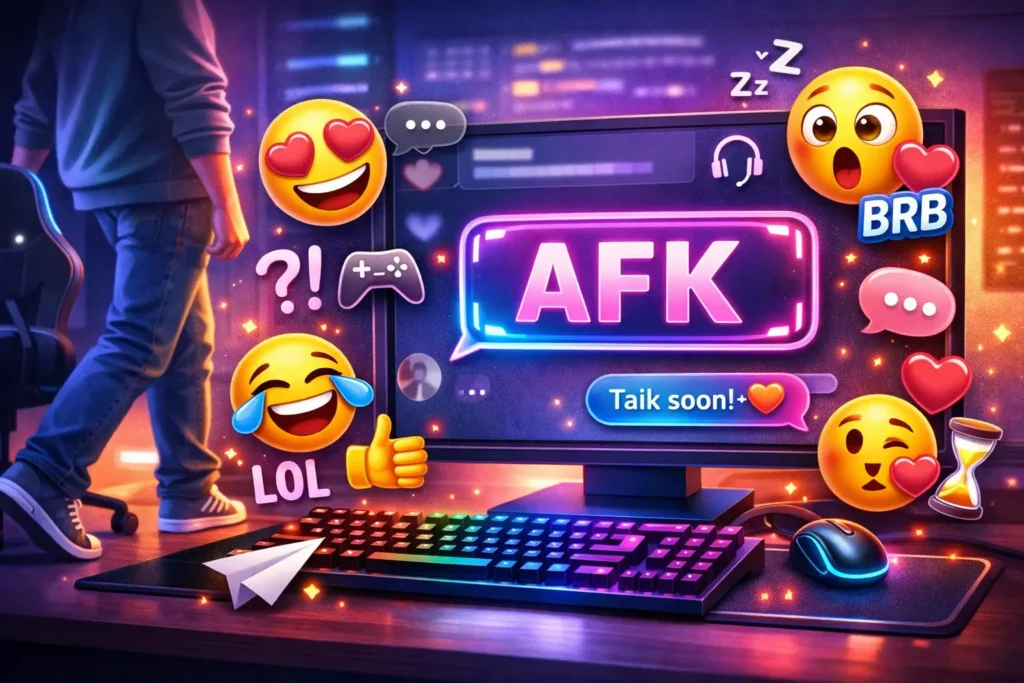
AFK meaning: AFK stands for “Away From Keyboard.” It is commonly used in online chats, gaming, and messaging to indicate that someone is temporarily unavailable or not actively present at their device.
If you’ve ever been chatting in a group, playing an online game, or texting someone who suddenly disappears with a quick “AFK,” you’ve probably wondered what it actually means. In today’s fast-paced digital world, abbreviations like AFK have become a natural part of how we communicate.
From gamers to office workers to social media users, AFK is one of the most widely used internet slang terms. It helps people quickly explain their temporary absence without typing long explanations like “I’ll be right back.”
In this guide, we’ll break down everything you need to know about AFK its meaning, origin, usage, examples, alternatives, and even its tone in different contexts. Let’s dive in.
Origin and History of AFK
The abbreviation AFK originated in the early days of online communication, especially in:
- Internet Relay Chat (IRC)
- Online multiplayer games
- Early messaging systems
Back when people were more often physically sitting at computers, “away from keyboard” was a literal and necessary phrase. If someone stepped away from their computer even for a few minutes they would type “AFK” to let others know they were not ignoring the conversation.
Over time, AFK became:
- A global internet slang term
- Widely used in gaming communities
- Adopted into everyday texting and messaging
Today, even though most people use smartphones, AFK still remains relevant as a quick way to say, “I’m not available right now.”
How AFK Is Used in Real Life
AFK is commonly used in casual conversations across platforms like:
- Messaging apps (WhatsApp, Messenger, Telegram)
- Online gaming platforms
- Social media chats
- Workplace communication (informal settings)
Common Situations Where People Use AFK:
- Taking a short break
- Answering the door or phone
- Getting food or water
- Attending to something urgent
- Stepping away from the device temporarily
Examples of AFK in Different Contexts
Here are some real-life examples showing how AFK is used with different tones:
1. Friendly Tone
- “AFK for 5 mins, brb 😊”
- “Gotta go AFK, grabbing snacks!”
2. Neutral Tone
- “AFK, will reply in a bit.”
- “Going AFK for a meeting.”
3. Gaming Context
- “AFK for a sec, don’t kick me!”
- “Player is AFK, wait before starting.”
4. Slightly Negative / Annoyed Tone
- “You went AFK again during the match?!”
- “AFK players ruin the game sometimes.”
Labeled Example Table of AFK Usage
| Situation | Example Sentence | Tone |
|---|---|---|
| Casual chat | “AFK, be right back!” | Friendly |
| Work setting | “I’ll be AFK for a quick meeting.” | Professional |
| Gaming | “Don’t start yet, I’m AFK.” | Neutral |
| Frustration | “Why is everyone AFK?” | Negative |
| Social media | “AFK for a while, taking a break.” | Informal |
Why AFK Became So Popular
Several reasons explain the popularity of AFK:
- Speed and convenience: Quick to type
- Universal understanding: Used globally
- Gaming culture influence: Heavy usage in multiplayer games
- Rise of texting culture: Short forms are preferred
- Internet slang evolution: Part of digital communication trends
Today, AFK is not just a gaming term it’s a general part of internet language.
AFK in Gaming Culture
AFK is especially important in gaming communities. In multiplayer games, being AFK can:
- Affect team performance
- Delay gameplay
- Cause frustration among players
Common Gaming Uses:
- “He went AFK mid-match.”
- “AFK farming is allowed in this game.”
- “Report AFK players.”
In competitive games, AFK behavior may even lead to penalties or bans if it affects others.
AFK in Professional and Work Contexts
Although AFK is mostly informal, it can sometimes be used in work-related chats (especially remote work or tech environments).
However, it’s important to understand the tone:
- ✅ Acceptable in informal teams
- ⚠️ Not suitable for formal emails
- ⚠️ Better replaced with professional phrases in corporate settings
Professional Alternatives:
- “I’ll be away from my desk briefly.”
- “I’m stepping away for a moment.”
- “Currently unavailable, will respond shortly.”
Comparison: AFK vs Similar Abbreviations
| Abbreviation | Meaning | Usage Context | Example |
|---|---|---|---|
| AFK | Away From Keyboard | General / Gaming | “AFK for 5 mins” |
| BRB | Be Right Back | Short absence | “BRB, one sec” |
| TTYL | Talk To You Later | Ending conversation | “TTYL, gotta go” |
| OOO | Out Of Office | Work environment | “I’m OOO today” |
| GTG | Got To Go | Leaving conversation | “GTG now, bye!” |
AFK is more focused on physical absence from the device, while BRB and GTG are more about conversation flow.
Alternate Meanings of AFK
Although “Away From Keyboard” is the primary meaning, AFK can sometimes have alternate interpretations depending on context, such as:
- “Away From Keys” (less common)
- “Away From Knowledge” (rare and humorous)
- Used playfully or sarcastically in memes
However, these are not widely recognized and should not be used in serious communication.
Tone and Context: How AFK Changes Meaning
The meaning of AFK can slightly change depending on tone:
- Friendly AFK: Indicates politeness and respect
- Neutral AFK: Purely informative
- Annoyed AFK: Suggests frustration or interruption
- Gaming AFK: Often associated with inactivity issues
Tone is often conveyed using:
- Emojis (😊, 😅, 😡)
- Punctuation (!)
- Context of the conversation
Polite and Professional Alternatives to AFK
If you’re communicating in a formal or professional setting, consider using:
- “I’ll be away briefly.”
- “I’ll respond as soon as I return.”
- “Currently unavailable.”
- “Away for a short time.”
These alternatives sound more professional and are suitable for emails or workplace chats.
When Should You Use AFK?
Use AFK when:
- Chatting with friends or online communities
- Playing online games
- Sending quick messages
- Informal conversations
Avoid using AFK when:
- Writing formal emails
- Communicating with clients or supervisors
- Preparing professional documents
FAQs
What does AFK mean in texting?
AFK means “Away From Keyboard” and is used to tell others that you are temporarily not available or not actively responding to messages.
Is AFK only used in gaming?
No, AFK is widely used in everyday texting, social media, and casual communication, although it is especially popular in gaming communities.
Is AFK rude to use?
AFK is not rude when used appropriately. However, in formal or professional communication, it may seem too casual.
What does AFK mean in WhatsApp or chat apps?
In apps like WhatsApp, AFK simply means the person is away and will respond later, similar to saying “I’ll be back shortly.”
Can AFK have different meanings?
Yes, but the most common meaning is “Away From Keyboard.” Other meanings are rare and usually used humorously or informally.
What is the difference between AFK and BRB?
AFK refers to being away from the device, while BRB (Be Right Back) is a general phrase meaning you’ll return shortly, even if you’re still near the device.
How long does AFK usually mean?
AFK can mean anything from a few seconds to several hours, depending on the context of the conversation.
What should I say instead of AFK in formal communication?
You can say “I’ll be away briefly” or “I’m currently unavailable,” which sound more professional and suitable for work environments.
Conclusion
Understanding AFK meaning helps you communicate more clearly in digital conversations. It stands for “Away From Keyboard” and is widely used to indicate temporary absence.
While it’s perfect for casual chats, gaming, and social media, it should be avoided in formal communication where more professional alternatives are preferred.
As internet slang continues to evolve, AFK remains one of the most recognizable and useful abbreviations. Using it correctly can make your conversations faster, smoother, and more relatable in today’s digital world.
Discover More Related Articles:
- 289 Best Reply To “Oh I See”: Without Killing the Conversation In 2026
- 465 Respond to “What Are You Thinking About”: That Spark Attraction In 2026
- 500 Best Ways to Respond to “Are You Single”: That Set Boundaries In 2026