Quick Answer 🔥
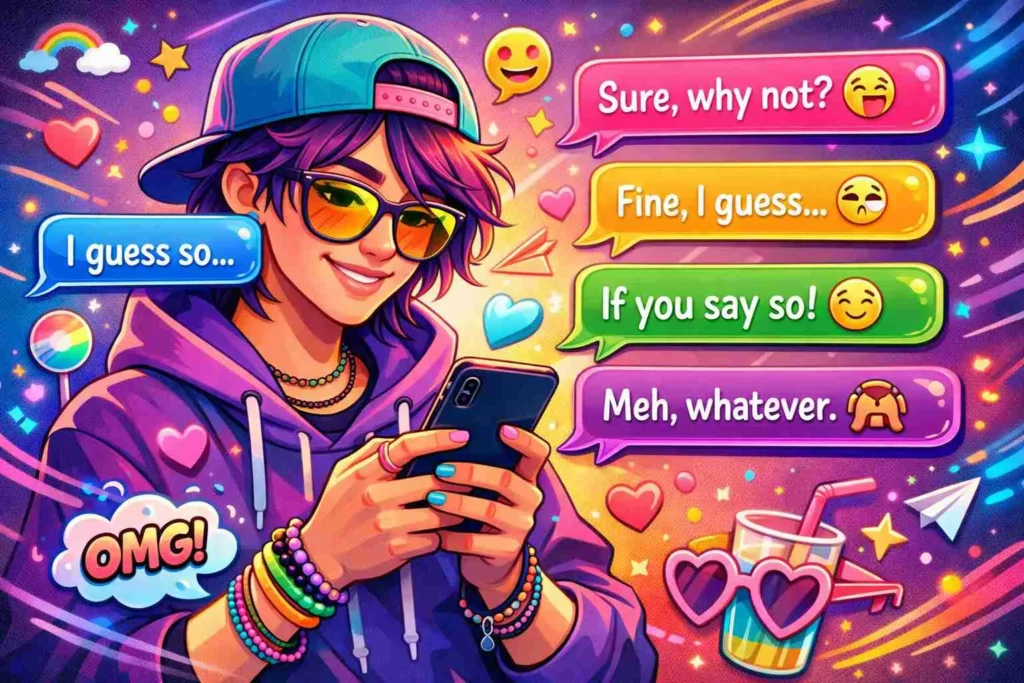
When someone says “I guess so,” it often means they’re unsure, low-energy, or open-ended, so your reply should add energy, curiosity, or direction to keep the conversation alive.
Best quick replies include: “Tell me more,” “What makes you say that,” “Let’s fix that,” “I like your vibe,” “You’re not sounding convinced.”
You know that moment when someone replies with “I guess so” and suddenly the chat feels like it hit a pause button? Yeah, we’ve all been there. It’s a crush, a friend, or even a coworker, that phrase can feel like a mix of uncertainty, hesitation, or low effort. And if you leave it hanging, the conversation can die faster than a low battery phone at 1 percent. Best replies to i guess so that keep chat going.
That’s why knowing the best replies to “I guess so that keep chat going” is actually a lowkey superpower. The right response can turn a dry chat into something fun, flirty, or even meaningful. It shows confidence, social awareness, and that you actually care about keeping the vibe alive. Best replies to i guess so that keep chat going.
Instead of awkward silence, you get momentum. Instead of “k,” you get connection. Let’s turn that “I guess so” into something way more interesting. Best replies to i guess so that keep chat going.
Funny Responses
- “That sounded like a ‘meh’ with extra steps.”
Example: When you want to tease them in a lighthearted chat.
Meaning: Adds humor and points out their low enthusiasm. - “Wow, confident and decisive, I see.”
Example: When they give a very unsure answer.
Meaning: Playful sarcasm to lighten the mood. - “Should I take that as a yes, a no, or a vibe?”
Example: When the reply is unclear.
Meaning: Encourages clarification in a funny way. - “That was the most dramatic ‘I guess so’ ever.”
Example: When they sound overthinking.
Meaning: Jokingly exaggerates their response. - “You just said nothing with confidence.”
Example: When they avoid giving a real answer.
Meaning: Light roast to keep the chat entertaining. - “I respect the uncertainty energy.”
Example: Casual banter with friends.
Meaning: Funny acknowledgment of indecision. - “That’s the most mysterious answer I’ve heard today.”
Example: When they keep things vague.
Meaning: Adds playful curiosity. - “You okay or just vibing in confusion?”
Example: When they sound unsure or distracted.
Meaning: Shows humor with concern. - “I guess so… the sequel nobody asked for.”
Example: When they repeat the phrase.
Meaning: Adds a meme-style joke. - “That answer needs a director’s cut.”
Example: When their reply feels incomplete.
Meaning: Encourages more explanation with humor. - “Short, simple, and suspicious.”
Example: When they give a minimal reply.
Meaning: Playfully hints at suspicion. - “I’m going to need subtitles for that.”
Example: When their message feels unclear.
Meaning: Light sarcasm for clarity. - “That sounded like you didn’t try.”
Example: When their response lacks effort.
Meaning: Gentle teasing to push engagement. - “Are you guessing or confessing?”
Example: When unsure tone feels flirty.
Meaning: Adds humor with curiosity. - “That’s a very ‘I woke up and chose confusion’ answer.”
Example: When they seem off.
Meaning: Meme style funny response.
Flirty Responses
- “You guess, I impress.”
Example: When chatting with a crush.
Meaning: Adds playful confidence and flirtation. - “I’d rather hear what you really think.”
Example: When they’re being shy.
Meaning: Invites deeper connection. - “Guessing isn’t very you, I expected better.”
Example: When flirting lightly.
Meaning: Teasing with admiration. - “Careful, you might start sounding mysterious.”
Example: Playful romantic tone.
Meaning: Builds intrigue. - “I like it when you’re a little unsure.”
Example: Subtle flirting in conversation.
Meaning: Shows attraction in a playful way. - “Say something bold, I dare you.”
Example: When encouraging them to open up.
Meaning: Invites confidence and energy. - “Guessing makes you even more interesting.”
Example: Light flirty chat.
Meaning: Compliment hidden in curiosity. - “I feel like you’re holding back on me.”
Example: When they are not fully open.
Meaning: Builds playful tension. - “Let’s upgrade that guess into a certainty.”
Example: When guiding the convo.
Meaning: Encourages more engagement. - “You don’t sound very convinced… should I convince you?”
Example: Flirty teasing.
Meaning: Adds playful charm. - “I bet I can change your guess.”
Example: When trying to impress.
Meaning: Confident flirtation. - “You saying ‘I guess so’ just got interesting.”
Example: Mid-conversation flirt.
Meaning: Turns a dull reply into intrigue. - “That sounds like a challenge.”
Example: When they hesitate.
Meaning: Creates playful tension. - “Careful, I might make you sure about things.”
Example: Flirty confidence.
Meaning: Shows dominance with charm. - “Guess less, talk more.”
Example: Encouraging deeper conversation.
Meaning: Direct but flirtatious.
Polite Responses
- “That’s totally fine, tell me what you think.”
Example: Respectful conversation.
Meaning: Encourages sharing without pressure. - “I understand, no worries at all.”
Example: Friendly and calm tone.
Meaning: Shows empathy. - “Whenever you’re ready, I’m here.”
Example: When they seem hesitant.
Meaning: Supportive and patient. - “I appreciate your honesty.”
Example: Polite acknowledgment.
Meaning: Shows gratitude. - “Take your time, I’m listening.”
Example: Giving space.
Meaning: Encourages openness. - “That’s okay, feel free to explain more.”
Example: When they give short answers.
Meaning: Invites elaboration. - “I respect that.”
Example: Short polite reply.
Meaning: Shows understanding. - “No pressure, just curious.”
Example: Friendly tone.
Meaning: Keeps things relaxed. - “Let me know what you’re thinking.”
Example: Encouraging response.
Meaning: Opens conversation. - “That’s a fair response.”
Example: Neutral polite tone.
Meaning: Acknowledges their point. - “I’m glad you shared that.”
Example: Appreciation in chat.
Meaning: Positive reinforcement. - “Thanks for being honest.”
Example: Appreciative reply.
Meaning: Builds trust. - “That makes sense.”
Example: Agreeing politely.
Meaning: Shows understanding. - “Feel free to tell me more.”
Example: Open-ended encouragement.
Meaning: Keeps chat alive. - “I’m here if you want to talk more.”
Example: Supportive message.
Meaning: Invites further communication.
Chill And Casual Responses
- “Same, honestly.”
Example: Relatable moment.
Meaning: Builds connection. - “Fair enough.”
Example: Easygoing reply.
Meaning: Keeps things relaxed. - “Yeah, I get that.”
Example: Casual agreement.
Meaning: Shows understanding. - “That’s valid.”
Example: Chill response.
Meaning: Accepts their view. - “Mood.”
Example: Internet slang.
Meaning: Expresses shared feeling. - “I hear you.”
Example: Calm acknowledgment.
Meaning: Shows empathy. - “Alright, I see you.”
Example: Friendly tone.
Meaning: Casual validation. - “Makes sense.”
Example: Simple agreement.
Meaning: Neutral response. - “That’s how it goes sometimes.”
Example: Real-life tone.
Meaning: Normalizes their feeling. - “We’ve all been there.”
Example: Shared experience.
Meaning: Relatable support. - “I feel that.”
Example: Casual empathy.
Meaning: Expresses connection. - “No worries.”
Example: Relaxed reply.
Meaning: Removes pressure. - “All good.”
Example: Chill closure.
Meaning: Keeps vibe easy. - “I get what you mean.”
Example: Understanding tone.
Meaning: Shows attentiveness. - “Let’s roll with that.”
Example: Moving forward.
Meaning: Keeps conversation flowing.
Creative Responses
- “Let’s turn that ‘I guess so’ into something better.”
Example: When guiding the convo.
Meaning: Encourages transformation of tone. - “That’s the start of a better answer.”
Example: When they give half replies.
Meaning: Motivates more input. - “I feel like there’s more to that story.”
Example: Curious conversation.
Meaning: Invites storytelling. - “Care to expand that thought?”
Example: Thoughtful chat.
Meaning: Encourages depth. - “Let’s unpack that a little.”
Example: Deep discussion.
Meaning: Invites explanation. - “If that were a movie, what happens next?”
Example: Creative questioning.
Meaning: Sparks imagination. - “Paint me the full picture.”
Example: Storytelling tone.
Meaning: Encourages detail. - “Give me the deluxe version of that answer.”
Example: Fun conversation.
Meaning: Adds humor. - “What’s the hidden meaning there?”
Example: Curious tone.
Meaning: Encourages elaboration. - “Explain like I’m your favorite person.”
Example: Friendly tone.
Meaning: Builds connection. - “That sounds like a beginning, not an ending.”
Example: Encouraging deeper talk.
Meaning: Motivates expansion. - “I need the full plot, not the teaser.”
Example: Casual chat.
Meaning: Pushes for more detail. - “Tell me the version you didn’t say out loud.”
Example: Emotional conversation.
Meaning: Encourages honesty. - “That sounds like a chapter, not the whole story.”
Example: Narrative tone.
Meaning: Invites elaboration. - “Let’s make that more interesting.”
Example: Light creative push.
Meaning: Adds engagement.
Confident Responses
- “I’d go with that, no hesitation.”
Example: Confident tone.
Meaning: Shows certainty. - “That works for me.”
Example: Strong agreement.
Meaning: Simple confidence. - “I don’t mind either way.”
Example: Balanced reply.
Meaning: Calm assurance. - “I’m good with that decision.”
Example: Work or casual.
Meaning: Shows clarity. - “That’s an easy yes for me.”
Example: Confident acceptance.
Meaning: Positive energy. - “I’m cool with it.”
Example: Chill confidence.
Meaning: Comfortable tone. - “Sounds like a plan.”
Example: Action-oriented.
Meaning: Moves conversation forward. - “I’m already on board.”
Example: Strong agreement.
Meaning: Shows commitment. - “Let’s do it.”
Example: Motivational tone.
Meaning: Takes initiative. - “I’m fine either way.”
Example: Neutral confidence.
Meaning: Balanced perspective. - “That’s a yes from me.”
Example: Clear agreement.
Meaning: Direct response. - “No second thoughts here.”
Example: Strong mindset.
Meaning: Certainty. - “Count me in.”
Example: Group plan.
Meaning: Active participation. - “I’m already convinced.”
Example: Agreement tone.
Meaning: Confident stance. - “Let’s move forward with that.”
Example: Professional or casual.
Meaning: Forward thinking.
Brutal Responses
- “That’s not a real answer, try again.”
Example: When someone is avoiding giving a clear opinion.
Meaning: Direct and pushes for a better response. - “You’re better than ‘I guess so.’”
Example: When you expect more effort from them.
Meaning: Challenges them to communicate better. - “That sounds like you don’t care much.”
Example: When their tone feels low energy.
Meaning: Calls out lack of interest. - “Be honest, you don’t mean that.”
Example: When their reply feels forced.
Meaning: Pushes for truth. - “That’s the weakest answer today.”
Example: Casual but blunt convo.
Meaning: Light criticism to provoke better engagement. - “Try saying something real next time.”
Example: When replies feel empty.
Meaning: Encourages sincerity. - “You can do better than that.”
Example: Motivating them to respond better.
Meaning: Pushes for effort. - “That answer tells me nothing.”
Example: When clarity is missing.
Meaning: Points out vagueness. - “I’ll take that as a maybe, not a yes.”
Example: When they are unclear.
Meaning: Interprets their hesitation. - “You just avoided answering me.”
Example: When they dodge the question.
Meaning: Calls out avoidance. - “That was the safe answer.”
Example: When they play it too safe.
Meaning: Highlights lack of risk. - “Say it properly or don’t say it at all.”
Example: When you want clarity.
Meaning: Encourages directness. - “That doesn’t sound convincing.”
Example: When you sense doubt.
Meaning: Calls for authenticity. - “You’re holding back, I can tell.”
Example: When they seem reserved.
Meaning: Detects hidden thoughts. - “I’ll wait for the real answer.”
Example: When you expect more.
Meaning: Signals patience but demand for truth.
Sarcastic Responses
- “Wow, what a bold and thrilling answer.”
Example: When their reply is boring.
Meaning: Sarcastic humor. - “I’m on the edge of my seat.”
Example: When response is underwhelming.
Meaning: Ironic excitement. - “Such strong conviction.”
Example: When they sound unsure.
Meaning: Mock seriousness. - “I can feel the excitement.”
Example: Dry response situation.
Meaning: Playful sarcasm. - “That cleared everything up, thanks.”
Example: When it actually didn’t help.
Meaning: Ironic appreciation. - “Amazing input, really life changing.”
Example: When they say little.
Meaning: Over the top sarcasm. - “That’s exactly what I needed to know.”
Example: When info is useless.
Meaning: Mock approval. - “Such a detailed explanation.”
Example: Very short reply.
Meaning: Irony for lack of detail. - “You really put thought into that.”
Example: When they clearly didn’t.
Meaning: Light roast. - “I’m impressed by the effort.”
Example: Low effort answer.
Meaning: Sarcastic praise. - “That was super helpful.”
Example: When it wasn’t.
Meaning: Ironic tone. - “10 out of 10, would guess again.”
Example: Playful sarcasm.
Meaning: Meme style humor. - “You’re really giving me a lot to work with.”
Example: Sparse replies.
Meaning: Subtle sarcasm. - “Such depth, much wow.”
Example: Internet style humor.
Meaning: Playful exaggeration. - “Truly inspiring words.”
Example: When they say little.
Meaning: Ironic compliment.
Cute Responses
- “Aww, tell me more though.”
Example: Gentle conversation.
Meaning: Warm and inviting. - “That’s kinda cute, not gonna lie.”
Example: Soft moment.
Meaning: Shows affection. - “You sound adorable saying that.”
Example: Light flirty chat.
Meaning: Complimenting tone. - “I like how you think.”
Example: Friendly appreciation.
Meaning: Positive reinforcement. - “You’re making me curious now.”
Example: Playful interest.
Meaning: Encourages more sharing. - “I want to hear the full story.”
Example: Engaging convo.
Meaning: Invites detail. - “Stop being so mysterious, I like it.”
Example: Flirty cute tone.
Meaning: Teasing admiration. - “You’re kind of fun to talk to.”
Example: Casual bonding.
Meaning: Positive feedback. - “That was sweet, say more.”
Example: Warm interaction.
Meaning: Encourages continuation. - “I feel like we’re just getting started.”
Example: Early convo.
Meaning: Builds anticipation. - “You’re giving soft energy right now.”
Example: Chill conversation.
Meaning: Playful compliment. - “I like this side of you.”
Example: When they open up.
Meaning: Appreciation. - “That made me smile a bit.”
Example: Light positive moment.
Meaning: Shows emotional response. - “You’re lowkey interesting.”
Example: Casual compliment.
Meaning: Subtle praise. - “Don’t leave me hanging like that.”
Example: Wanting more conversation.
Meaning: Encourages engagement.
Dramatic Responses
- “And just like that, the mystery deepens.”
Example: When reply is vague.
Meaning: Adds drama and intrigue. - “This is the plot twist I didn’t expect.”
Example: Unexpected reply.
Meaning: Dramatic reaction. - “My curiosity is officially awakened.”
Example: When intrigued.
Meaning: Builds suspense. - “I need answers immediately.”
Example: Strong curiosity.
Meaning: Urgent tone. - “This is getting interesting.”
Example: Engaging convo.
Meaning: Builds tension. - “You can’t just say that and disappear.”
Example: Short replies.
Meaning: Dramatic push. - “I demand more details.”
Example: Playful dramatic tone.
Meaning: Calls for explanation. - “My brain is trying to solve this.”
Example: Thinking through their message.
Meaning: Adds intensity. - “This feels like a cliffhanger.”
Example: Incomplete reply.
Meaning: Dramatic buildup. - “Now I’m invested.”
Example: Interesting conversation.
Meaning: Emotional engagement. - “Explain yourself at once.”
Example: Dramatic humor.
Meaning: Playful urgency. - “I won’t rest until I know more.”
Example: Curious moment.
Meaning: Strong engagement. - “This deserves a full explanation.”
Example: Serious curiosity.
Meaning: Encourages depth. - “You’ve created suspense now.”
Example: Vague reply.
Meaning: Adds dramatic tone. - “Tell me everything or nothing at all.”
Example: Dramatic ultimatum.
Meaning: Heightens tension.
Emotional Responses
- “That sounds like you’re unsure.”
Example: When they seem hesitant.
Meaning: Shows emotional awareness. - “I get that, it’s okay.”
Example: Supportive chat.
Meaning: Comfort and empathy. - “Take your time, I’m here.”
Example: Sensitive moment.
Meaning: Offers support. - “You can talk to me about it.”
Example: Emotional support.
Meaning: Opens safe space. - “That must feel a bit confusing.”
Example: When they are unsure.
Meaning: Empathy. - “I understand what you’re saying.”
Example: Validating feelings.
Meaning: Builds connection. - “It’s okay not to be sure.”
Example: Supportive response.
Meaning: Normalizes feelings. - “I’m listening, go ahead.”
Example: Emotional support.
Meaning: Encourages sharing. - “That’s completely fair.”
Example: Validating opinion.
Meaning: Shows respect. - “I appreciate you being honest.”
Example: Deep conversation.
Meaning: Builds trust. - “You don’t have to rush your answer.”
Example: Giving space.
Meaning: Shows patience. - “I’m here if you need to talk.”
Example: Supportive tone.
Meaning: Emotional availability. - “That sounds like a lot to think about.”
Example: When they’re overwhelmed.
Meaning: Empathy. - “I can see why you’d feel that way.”
Example: Understanding situation.
Meaning: Emotional validation. - “You’re not alone in this.”
Example: Comforting reply.
Meaning: Supportive reassurance.
Sweet Responses
- “I like talking to you.”
Example: Friendly bonding.
Meaning: Expresses warmth. - “You make conversations easy.”
Example: Smooth chat.
Meaning: Appreciation. - “You always keep things interesting.”
Example: Positive interaction.
Meaning: Compliment. - “I enjoy this.”
Example: Simple positive reply.
Meaning: Shows interest. - “You’re fun to talk with.”
Example: Casual conversation.
Meaning: Friendly compliment. - “I appreciate you sharing that.”
Example: When they open up.
Meaning: Gratitude. - “Talking to you feels nice.”
Example: Soft tone.
Meaning: Warm appreciation. - “You’re easy to vibe with.”
Example: Natural connection.
Meaning: Compatibility. - “I feel comfortable talking to you.”
Example: Trust building.
Meaning: Emotional safety. - “You always make things better.”
Example: Positive feedback.
Meaning: Appreciation. - “I like your energy.”
Example: Friendly tone.
Meaning: Compliment. - “You’re really nice to talk to.”
Example: Casual chat.
Meaning: Kind appreciation. - “You make this fun.”
Example: Light interaction.
Meaning: Enjoyment. - “I’m glad we’re talking.”
Example: Warm connection.
Meaning: Gratitude. - “You’re someone I enjoy chatting with.”
Example: Friendly closeness.
Meaning: Positive bond.
FAQs
What does “I guess so” really mean?
It usually shows uncertainty, hesitation, or low enthusiasm.
Can “I guess so” be flirty?
Yes, sometimes it signals shyness or subtle interest.
How do I reply professionally?
Use polite and clear responses like “That works for me” or “I understand.”
What if I don’t agree?
Ask follow-up questions or gently offer your perspective.
Is humor appropriate?
Yes, humor is one of the best ways to keep the conversation engaging.
Conclusion
Responding to “I guess so” is not just about replying, it is about steering the vibe of the entire conversation. You want to be funny, flirty, confident, or thoughtful, your words can completely change the energy in a chat. Best replies to i guess so that keep chat going.
The key is to stay natural, read the situation, and choose a response that fits your personality. Best replies to i guess so that keep chat going.
Don’t let conversations die at weak replies. Turn every “I guess so” into an opportunity to connect, engage, and stand out. Try these responses, mix and match styles, and see what works best for you. Best replies to i guess so that keep chat going.
Save this list, share it, and keep it handy for your next chat moment. You never know when one smart reply can turn a boring convo into something memorable. Best replies to i guess so that keep chat going.
Discover More Related Articles:
- 500 Best Ways to Respond to “Amen”: That Actually Feels Right In 2026
- 389 Reasons a Guy Might Feed You by “Hand”: Look at This Behavior In 2026
- 450 Best Way To Replies “Work Is Hectic”: Time Is Limited In 2026