
Definition
DTF stands for “Down To F*,” which is slang meaning someone is willing or interested in having a casual sexual encounter.**
If you’ve ever been texting, scrolling through social media, or chatting on a dating app and suddenly saw the term “DTF”, you’re not alone in wondering what it means. It’s one of those modern internet abbreviations that can completely change the tone of a conversation sometimes in a playful way, and other times in a very direct one.
Let’s break it down clearly so you know exactly how to understand, use, and respond to it without confusion.
What Does DTF Mean? (Simple Explanation)
At its core, DTF is a casual slang abbreviation used to express sexual availability or interest.
- “Down to” = willing or open to something
- “F*”** = refers to sex (explicit term)
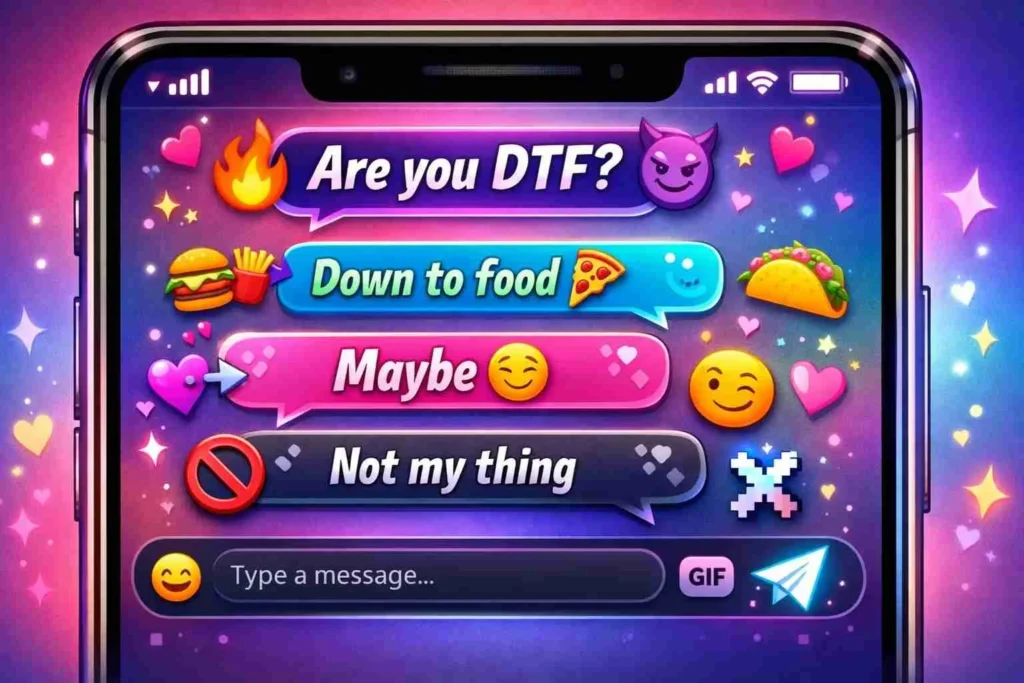
So when someone says “Are you DTF?”, they’re essentially asking:
👉 “Are you interested in hooking up?”
It’s direct, bold, and often blunt, which means context matters a lot.
Origin of DTF: Where Did It Come From?
The term DTF gained mainstream popularity in the late 2000s and early 2010s, especially through:
- Reality TV shows (like dating and party culture shows)
- Online forums and chatrooms
- Early social media platforms
- Dating apps like Tinder
Why Is DTF So Popular?
There are a few reasons why “DTF” stuck around:
🔥 1. It’s Short and Direct
People prefer quick communication, especially in texting or apps.
💬 2. It Removes Ambiguity
Instead of guessing someone’s intentions, it’s upfront (sometimes too upfront).
📱 3. It Fits Modern Dating Culture
Casual dating and hookup culture made terms like DTF more common.
😂 4. It Can Be Used Humorously
Sometimes people use it jokingly not seriously.
How Is DTF Used in Real Life?
DTF can appear in many contexts, including:
- Text messages
- Dating app bios
- Social media captions
- Casual conversations
DTF Usage Examples (With Tone Explanation)
💬 Friendly / Playful Tone
- “Pizza and Netflix? I’m DTF 😄”
👉 Here, it’s used jokingly (not sexual). - “I’m DTF… Down to Food 🍔”
👉 A humorous twist.
😏 Flirty Tone
- “So… are you DTF tonight?”
👉 Suggestive, testing interest. - “Low-key DTF if the vibe is right 😉”
👉 Casual but still flirty.
⚠️ Direct / Explicit Tone
- “No games. Just DTF.”
👉 Very straightforward, often seen on dating apps. - “You DTF or not?”
👉 Blunt and possibly aggressive.
❌ Negative / Dismissive Tone
- “Not DTF, sorry.”
👉 Clear boundary. - “That’s not my thing.”
👉 More polite rejection.
Example Table: DTF in Different Contexts
| Context | Example Phrase | Meaning | Tone |
|---|---|---|---|
| Casual Joke | “I’m DTF… down to fries 🍟” | Just joking, not sexual | Funny |
| Flirty Text | “You DTF tonight?” | Suggesting a hookup | Flirty |
| Dating App Bio | “DTF only” | Looking for casual encounters | Direct |
| Polite Response | “I’m not DTF, thanks” | Setting a boundary | Respectful |
| Confident Statement | “Yeah, I’m DTF 😉” | Agreeing to a hookup | Bold/Flirty |
When Should You Use DTF?
Before using this term, consider:
✅ Appropriate Situations
- Casual conversations with people who understand slang
- Dating apps where expectations are clear
- Among friends (jokingly)
❌ Avoid Using It
- In professional settings
- With someone you don’t know well
- In formal communication
- If you’re unsure about the other person’s comfort level
DTF vs Similar Slang Terms
Here’s how DTF compares to other common abbreviations:
| Term | Meaning | Tone | Use Case |
|---|---|---|---|
| DTF | Down to f*** | Direct/Explicit | Casual hookups |
| NSA | No strings attached | Neutral | Casual relationships |
| FWB | Friends with benefits | Slightly softer | Ongoing casual intimacy |
| Hookup | Casual sexual encounter | General | Broader term |
| Netflix & Chill | Suggestive hangout | Playful | Indirect/flirty |
👉 Key Difference:
DTF is more blunt and immediate, while others can be softer or more ambiguous.
Alternate Meanings of DTF
Although “Down To F*”** is the most common meaning, DTF can sometimes mean other things depending on context:
🍔 Funny/Creative Versions
- Down To Food
- Down To Fun
- Down To Fish (rare, humorous)
🖨️ Technical Meaning
- Direct To Film (DTF Printing)
A printing method used in custom apparel.
👉 Always look at context before assuming meaning.
Polite or Professional Alternatives to DTF
If you want to express interest without sounding too blunt, try these:
💬 Softer Alternatives
- “I’m open to something casual.”
- “I’m not looking for anything serious right now.”
- “Let’s just see where things go.”
💼 Professional/Respectful Tone
- “I prefer to keep things casual.”
- “I’m interested in a relaxed connection.”
These options are less aggressive and more respectful, especially when talking to someone new.
How to Respond to “Are You DTF?”
Your response depends on your comfort level:
👍 If You’re Interested
- “Maybe… depends on the vibe 😉”
- “Yeah, I’m open to it.”
👎 If You’re Not Interested
- “Not my thing, sorry.”
- “I’m looking for something different.”
😄 If You Want to Joke
- “Only if it stands for ‘Down To Food’ 🍕”
- “DTF? Always down to fries 😂”
FAQs
1. What does DTF mean in texting?
DTF in texting typically means “Down To F***,” indicating that someone is open to or interested in a casual sexual encounter. It’s commonly used in informal conversations.
2. Is DTF always sexual?
While DTF usually has a sexual meaning, it can sometimes be used humorously to mean things like “Down To Food” or “Down To Fun.” However, unless clearly stated otherwise, most people will interpret it in its original sexual sense.
3. Is it rude to ask someone if they are DTF?
It can be considered rude or inappropriate depending on the context and relationship. If you don’t know the person well or haven’t established that kind of tone, it may come across as disrespectful or too forward.
4. What does DTF mean on dating apps?
On dating apps, DTF typically signals that someone is looking for a casual hookup rather than a serious relationship.
5. How do I politely say I’m not DTF?
You can respond politely by saying something like “I’m not into that,” or “I’m looking for something more meaningful.” This keeps your boundaries clear without being rude.
6. Is DTF used by both men and women?
Yes, DTF is used by people of all genders. However, how it’s perceived can vary depending on the situation and cultural context.
7. Can DTF be used jokingly?
Absolutely. Many people use DTF in a playful or humorous way, such as saying “I’m DTF down to food,” to lighten the mood and avoid seriousness.
8. What is the difference between DTF and hookup?
DTF is more direct and specifically implies willingness for sex, while “hookup” is a broader term that can refer to anything from kissing to full intimacy depending on context.
Conclusion
Understanding what DTF stands for is essential in today’s digital communication landscape. While it primarily means “Down To F*”**, its tone can range from playful and humorous to bold and explicit depending on how it’s used. Context is everything what might be funny among friends could feel inappropriate in a different setting.
If you choose to use or respond to DTF, always consider the situation, your relationship with the person, and your comfort level. When in doubt, opting for clearer and more respectful alternatives can help avoid misunderstandings. Ultimately, communication works best when it’s both honest and considerate.
Discover More Related Articles:
- 450 Best Replies to “You Broke My Heart”: That Feel Honest & Real In 2026
- 376 Best To Respond To “Monkey”: That Show Confidence and Class In 2026
- 289 Best Reply To “Oh I See”: Without Killing the Conversation In 2026