
Definition
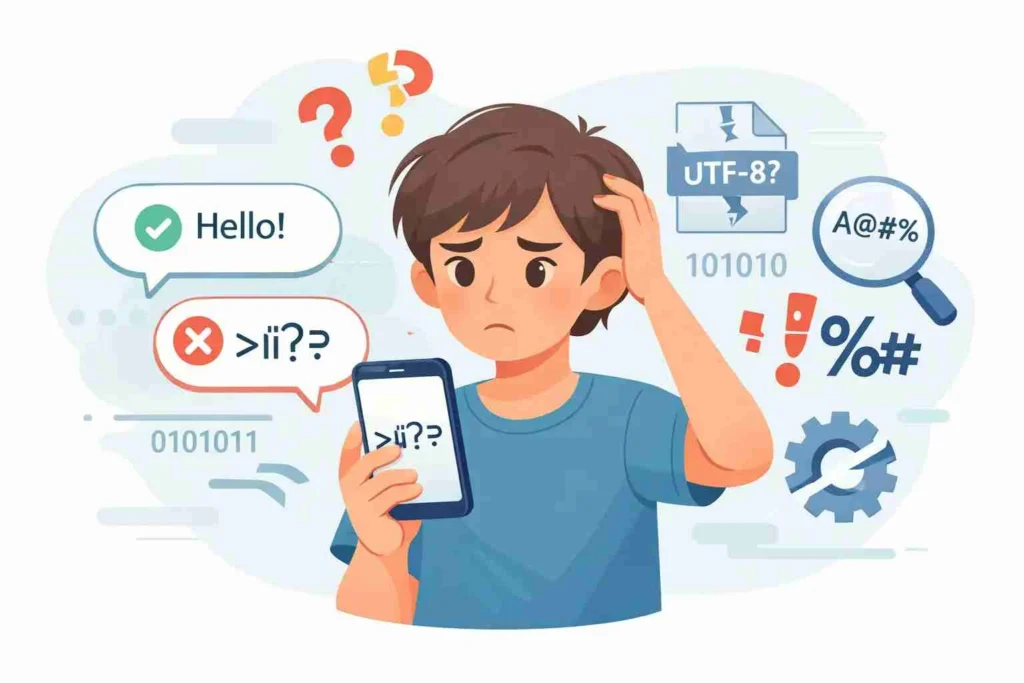
The symbol “>�” in text typically represents a character encoding error, also known as mojibake. It appears when text is incorrectly decoded due to mismatched encoding formats (like UTF-8 vs ISO-8859-1). Instead of displaying the intended character, the system shows garbled symbols such as “�” or “>�”.
You’re scrolling through a message, email, or webpage and suddenly you see something like “>�”. It looks strange, confusing, and honestly a bit broken. You might wonder: Is this a secret code? A typo? Or something more technical?
The truth is, “>�” isn’t intentional text at all. It’s a glitch a byproduct of how computers store and display characters. You’re chatting online, reading a document, or browsing a website, this odd symbol can pop up when something goes wrong behind the scenes.
In this guide, we’ll break down exactly what “>�” means in text, why it happens, how people interpret it in casual communication, and what you can do about it.
Origin of “>�” in Text
What Causes This Symbol?
The appearance of “>�” is rooted in character encoding issues. Here’s a simple explanation:
- Computers store text using encoding systems (like UTF-8, ASCII, etc.)
- When text is encoded in one format but read in another, it gets misinterpreted
- This mismatch creates strange characters like “�” (replacement character)
Breaking It Down
- “�” → Known as the replacement character (�), used when a system can’t decode a character
- “>” → Often appears due to formatting (like quoting in emails or markup)
So, when combined as “>�”, it usually means:
A decoding error occurred, and the system failed to display the original character correctly.
Why Is “>�” So Common Today?
With the rise of global communication, different devices, apps, and systems use various encoding formats. When these systems interact, mismatches can happen.
Common Scenarios Where You’ll See It:
- Copy-pasting text between apps
- Emails opened in different clients
- Web pages with outdated encoding
- Imported data files (CSV, XML, etc.)
- Messaging apps with unsupported characters
Real-World Usage of “>�” in Text
Although “>�” is not a deliberate symbol, people sometimes encounter it in conversations or content and try to interpret it.
How People React:
- Confusion 😕
- Ignoring it
- Assuming it’s a typo
- Asking for clarification
Important Note:
👉 “>�” does NOT have an emotional or slang meaning like emojis or abbreviations. It’s purely technical.
Examples of “>�” in Context
Here are some realistic situations where you might see it:
Example Table: Usage Context and Interpretation
| Context | Example Text | Meaning | Tone |
|---|---|---|---|
| Email reply | >� Thanks for your help | Broken formatting in quoted text | Neutral |
| Chat message | I loved it � but confused at end | Missing emoji or symbol | Slight confusion |
| Website content | Price: $10 � $20 | Intended to show a range (–) | Informational |
| Data file | Name: John � Age: 25 | Separator misread | Neutral |
| Social media | That was amazing � | Possibly meant emoji | Friendly |
Tone Interpretation (If Seen in Messages)
While “>�” itself has no tone, its placement can influence how a message feels.
1. Friendly Context 😊
That was fun � let’s do it again!- Likely meant to include an emoji
2. Neutral Context 😐
Meeting starts at 3 � don’t be late- Probably intended as a dash or separator
3. Confusing or Broken Context 🤔
I didn’t like it �- Missing emotional clarity
Comparison With Similar Symbols or Errors
To better understand “>�”, let’s compare it with related text issues:
| Symbol | Meaning | Type | Usage |
|---|---|---|---|
| � | Replacement character | Encoding error | Unknown character |
| ??? | Missing characters | Data corruption | Informal |
| □ | Unsupported glyph | Font issue | Technical |
| … | Ellipsis | Intentional | Tone/pausing |
| – / – / | Dashes | Formatting | Structured text |
Key Insight:
👉 Unlike emojis or punctuation, “>�” is never intentional communication.
Alternate Meanings of “>�” (Rare Cases)
While uncommon, some users might interpret it differently:
- Typing mistake: Accidental keyboard input
- Broken emoji: Failed rendering of 😊, ❤️, etc.
- Formatting artifact: From copied HTML or code
However, these are all secondary interpretations, not official meanings.
How to Fix or Avoid “>�” Errors
If you’re seeing this symbol frequently, here’s how to fix it:
1. Use UTF-8 Encoding
- Most modern systems support it
- Prevents character mismatch
2. Avoid Copy-Paste Across Platforms
- Especially from:
- PDFs
- Old websites
- Word documents
3. Update Your Software
- Browsers
- Messaging apps
- Email clients
4. Check File Imports
- Ensure correct encoding settings when opening files
5. Replace Manually
- If visible in text, replace with:
- Dash (–)
- Emoji
- Correct symbol
Polite or Professional Alternatives
If you encounter “>�” in communication, here’s how to respond professionally:
Instead of:
- Ignoring it
Try:
- “I think there may be a formatting issue in your message could you resend it?”
- “Some characters didn’t display correctly. Can you clarify that part?”
- “It looks like a symbol didn’t load properly.”
Usage Tips for Clean Communication
- Always preview messages before sending
- Stick to standard fonts and formats
- Avoid mixing encoding systems
- Use emojis from supported keyboards
- Test content across devices if publishing
FAQs
What does “>�” mean in text messages?
It usually indicates a character encoding error where the intended symbol or emoji failed to display correctly due to incompatible text formats.
Why do I see “�” instead of emojis?
This happens when your device or app cannot interpret the original emoji encoding, replacing it with a placeholder character.
Is “>�” a slang or abbreviation?
No, it is not slang. It is a technical error caused by mismatched text encoding systems.
How can I fix “>�” in my documents?
You can fix it by ensuring your file uses UTF-8 encoding and replacing incorrect characters manually or re-importing the file correctly.
Does “>�” have any emotional meaning?
No, it has no emotional or conversational meaning. Any perceived tone depends on the surrounding text.
Why does “>�” appear in emails?
It often appears due to encoding mismatches between email servers or clients, especially when forwarding or replying to messages.
Can I prevent “>�” from appearing?
Yes, by using consistent encoding formats, updating your software, and avoiding problematic copy-paste sources.
Is “>�” harmful or a virus?
No, it is completely harmless. It is just a display error, not a security threat.
Conclusion
The mysterious “>�” in text isn’t a secret code or trendy slang it’s simply a technical glitch caused by mismatched character encoding. While it may look confusing at first, understanding its origin makes it much easier to deal with.
In everyday communication, it’s best to treat it as a formatting issue rather than trying to interpret meaning from it. You’re reading emails, chatting online, or handling documents, using proper encoding like UTF-8 and keeping your tools updated can help you avoid this issue altogether.
When you do encounter it, a quick clarification or correction ensures your message stays clear and professional. Ultimately, clean and readable text always wins over confusing symbols.
Discover More Related Articles:
- 289 Best Reply To “Oh I See”: Without Killing the Conversation In 2026
- 450 Best Replies to “You Broke My Heart”: That Feel Honest & Real In 2026
- 376 Best To Respond To “Monkey”: That Show Confidence and Class In 2026