
Definition
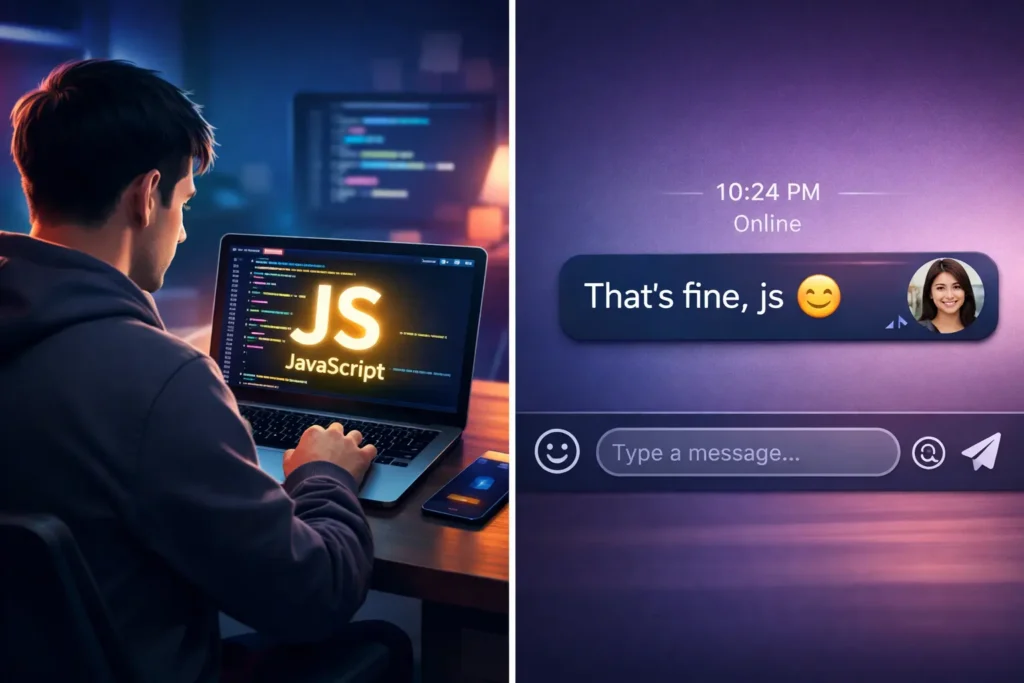
JS stands for “JavaScript,” a widely used programming language for building interactive websites and web applications. In casual chat and texting, “js” can also mean “just saying,” depending on context.
In today’s digital world, short forms and abbreviations dominate how we communicate. You’re scrolling through social media, chatting with friends, or exploring programming, you’ve likely encountered the term “JS.”
But here’s the catch:
“JS” doesn’t always mean the same thing.
Depending on context, it can represent:
- A powerful programming language
- A casual texting abbreviation
- A shorthand used in professional or informal communication
Understanding the js meaning helps you avoid confusion, especially when switching between tech conversations and everyday chats. Let’s break it all down in a simple, engaging way.
Origin of JS Meaning
1. JavaScript (Programming Context)
The most common and widely accepted meaning of JS is JavaScript.
- Developed in the mid-1990s
- Created by Brendan Eich while working at Netscape
- Became a core part of web development
JavaScript is one of the three core technologies of the web:
- HTML (structure)
- CSS (style)
- JavaScript (interactivity)
Today, it powers everything from simple animations to complex applications like Google Maps and social media platforms.
2. “Just Saying” (Chat & Internet Slang)
In informal texting or online chats, “js” often means:
“Just saying”
This usage became popular with the rise of texting culture, social media, and platforms like WhatsApp, Instagram, and Twitter.
Example:
- “That outfit looks a bit off, js 😅”
Here, “js” softens the statement, making it less harsh.
Popularity of JS in Modern Communication
The term JS has grown in popularity because:
1. Technology Growth
- JavaScript is used in 90%+ of websites
- It’s essential for modern web apps
- Developers use JS daily
2. Internet Culture
- Short forms save time while typing
- “JS” is easy to type and remember
- Fits perfectly in fast-paced digital conversations
3. Multi-Context Usage
Unlike many abbreviations, JS has dual meanings, making it versatile across:
- Tech discussions
- Casual texting
- Social media captions
Real-World Usage of JS
1. In Programming
Developers use JS in multiple ways:
- Building interactive websites
- Creating animations and effects
- Developing mobile apps (using frameworks like React Native)
- Server-side development (Node.js)
Example:
function greet() {
  console.log("Hello, world!");
}
2. In Everyday Chat
In texting, “js” is used to:
- Soften criticism
- Add humor
- Express opinions casually
Example:
- “That movie was kinda boring, js”
- “You should study more, js 😊”
Tone and Context of “JS” in Conversations
Understanding tone is crucial when using or interpreting “js.”
Friendly Tone
- “Your idea is actually pretty good, js 👍”
- Light and harmless opinion
Neutral Tone
- “I think this is not the best option, js”
- Mildly opinionated but not offensive
Negative or Dismissive Tone
- “That’s not really correct, js”
- Can sound passive-aggressive if not used carefully
👉 Tip:
Tone depends heavily on emojis, punctuation, and relationship between speakers.
Examples of JS in Different Contexts
Example Table: JS Usage
| Context | Meaning | Example Sentence |
|---|---|---|
| Programming | JavaScript | “I’m learning JS to build websites.” |
| Chat (neutral) | Just saying | “That idea might not work, js.” |
| Friendly chat | Just saying (soft tone) | “You did well, js 😊” |
| Critical tone | Just saying (harsh) | “That’s not correct, js.” |
Comparison: JS vs Similar Terms
JS vs HTML & CSS
| Term | Meaning | Role |
|---|---|---|
| JS | JavaScript | Adds interactivity |
| HTML | HyperText Markup Language | Structures content |
| CSS | Cascading Style Sheets | Styles the content |
👉 Together, they form the foundation of modern web development.
JS vs “Just Saying” Variants
| Abbreviation | Meaning | Tone |
|---|---|---|
| JS | Just saying | Neutral to casual |
| J/S | Just saying | Slightly more formal |
| JSYK | Just so you know | Informative |
| IMO | In my opinion | Opinion-based |
Alternate Meanings of JS
While the primary meanings are:
- JavaScript
- Just saying
There are a few less common interpretations:
- “Junior Senior” – sometimes used in school contexts
- “Job Seeker” – in HR or career discussions
- “Just Stop” – rarely used in texting for dismissal
However, these are context-specific and not widely used.
How to Use “JS” Properly
In Chat
- Use it to soften statements
- Keep tone friendly
- Avoid using it in serious or formal discussions
Example:
- “You might want to double-check this, js 🙂”
In Professional Communication
Avoid using “js” in formal writing unless referring to JavaScript.
Instead, use:
- “Just saying” (if needed)
- Or rewrite the sentence politely
In Programming Context
Always capitalize when necessary:
- JS (informal shorthand)
- JavaScript (formal)
Polite Alternatives to “JS”
Sometimes, “js” can sound blunt or dismissive. Here are better alternatives:
- “Just my opinion, but…”
- “You might consider…”
- “In my view…”
- “I could be wrong, but…”
These are more polite and professional, especially in sensitive conversations.
When NOT to Use “JS”
Avoid using “js” in:
- Formal emails
- Academic writing
- Professional reports
- Serious conversations
👉 Reason: It may appear informal or unclear.
SEO Insight: Why “JS Meaning” Is So Popular
Search queries like:
- “JS meaning in chat”
- “JS meaning in text”
- “JS full form”
are highly trending because:
- People encounter abbreviations daily
- They want quick explanations
- Confusion arises due to multiple meanings
This makes “js meaning” a high-value keyword for SEO content.
FAQs
What does JS mean in text messages?
In text messages, “JS” usually means “just saying,” which is used to express an opinion casually without sounding too direct or harsh.
What is the full form of JS in programming?
In programming, JS stands for JavaScript, a widely used programming language that powers interactive and dynamic web content.
Is JS a rude word in chat?
Not necessarily. However, depending on tone, “js” can sound blunt or dismissive, especially if used in critical statements.
Can JS mean something else besides JavaScript?
Yes, in informal chat, JS can also mean “just saying,” though JavaScript is the most recognized and widely accepted meaning.
How do I use JS in a sentence?
You can use “js” at the end of a sentence to soften your opinion, like: “That idea might need improvement, js.”
Is JS appropriate in formal writing?
No, “JS” is generally considered informal and should be avoided in professional or academic writing unless referring to JavaScript.
What is the difference between JS and IMO?
“JS” means “just saying,” while “IMO” means “in my opinion.” Both express opinions, but IMO is more clearly opinion-based.
Why do people use JS in texting?
People use “js” to save time, make conversations more casual, and soften statements to avoid sounding too direct or harsh.
Conclusion
The term “JS” is a perfect example of how modern language evolves across different contexts. You’re a developer working with JavaScript or someone chatting with friends using “js” as “just saying,” understanding its meaning is essential.
In programming, JS is a powerful language that drives the modern web. In casual conversations, it helps express thoughts in a soft, conversational way. However, context is everything using it in the wrong situation can lead to confusion or even misunderstandings.
To use “JS” effectively:
- Always consider your audience
- Be mindful of tone
- Use it appropriately based on context
Mastering such small details can significantly improve both your communication skills and your online presence.
Discover More Related Articles:
- 550 Comebacks for “Ooga Booga”: That Keep It Light and Fun in 2026
- 450 Best Replies to “XOXO” : In Text Messages and Conversations in 2026
- 356 “Epic Reactions” For Every Mood: That Always Get Likes In 2026