
Definition
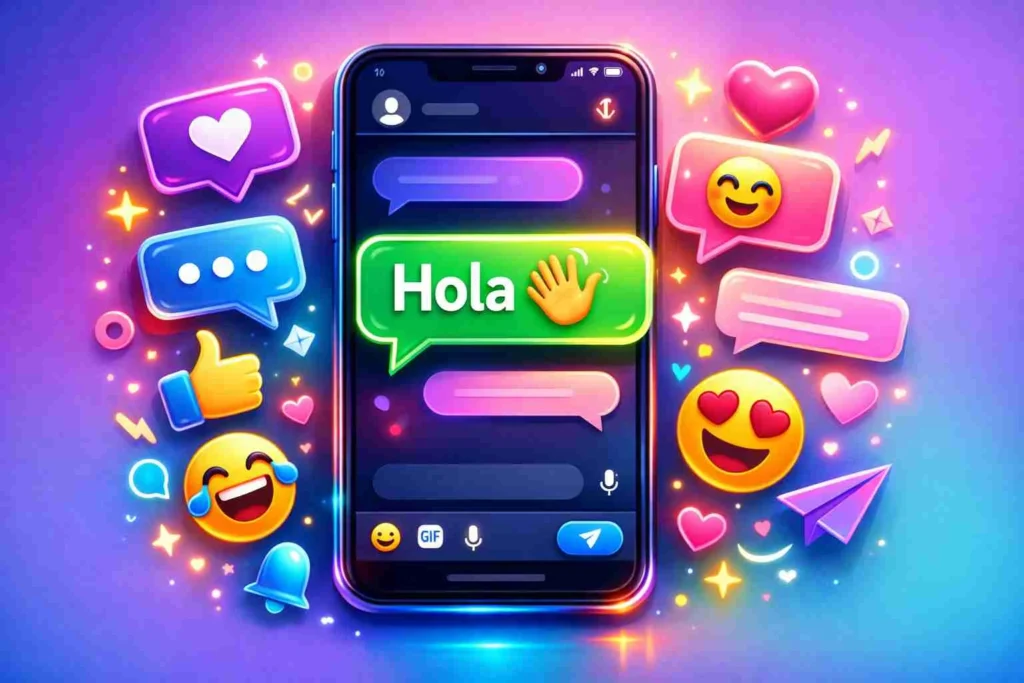
“Hola” means “hello” in Spanish and is commonly used in text messaging and online conversations as a friendly greeting. It is often used to start a conversation in a casual, warm, and approachable way.
If you’ve ever received a message that simply says “hola 👋,” it’s essentially the sender saying “hi” or “hello” in a slightly more stylish or international way. Over time, “hola” has become popular in digital communication beyond Spanish-speaking audiences, especially in social media, texting, and online chats.
In today’s digital world, people love using short, expressive, and sometimes multilingual phrases to make conversations more engaging. Among these, “hola” has become one of the most widely recognized greeting words worldwide. Hola meaning in text.
Unlike a simple “hi,” “hola” carries a slightly playful and global vibe. It adds personality to a message, making it feel less robotic and more human. Hola mean in text.
You’re chatting with friends, flirting, or just trying to sound friendly, using “hola” can subtly change the tone of your message in a positive way. Hola means in text.
Origin of “Hola”
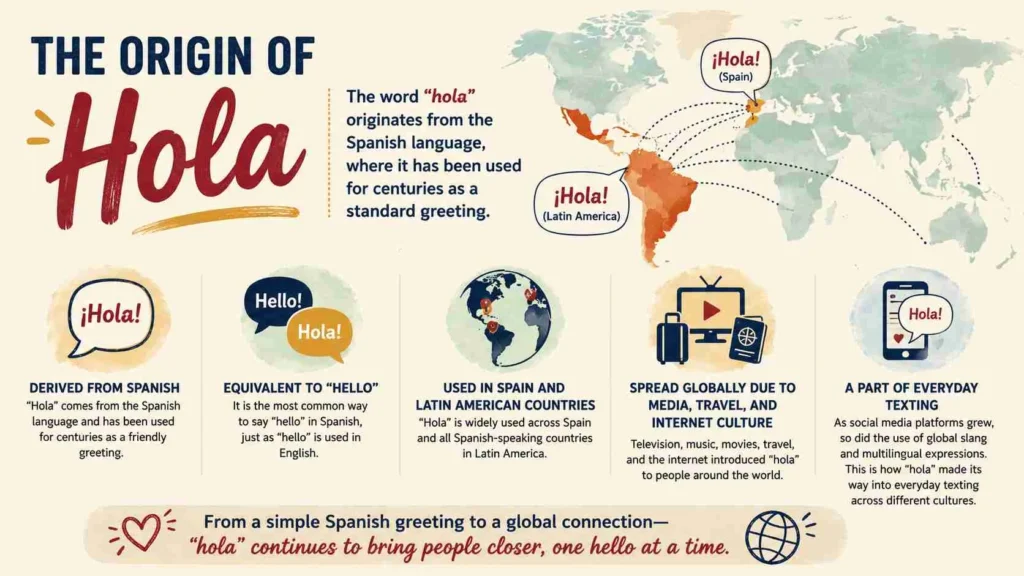
The word “hola” originates from the Spanish language, where it has been used for centuries as a standard greeting.
Key Points About Its Origin:
- Derived from Spanish
- Equivalent to “hello” in English
- Used in Spain and Latin American countries
- Spread globally due to media, travel, and internet culture
As social media platforms grew, so did the use of global slang and multilingual expressions. This is how “hola” made its way into everyday texting across different cultures.
Why People Use “Hola” in Texting
People use “hola” in text messages for several reasons:
1. To Sound Friendly and Warm
“Hola” feels softer and more welcoming than a plain “hi.”
2. To Add a Playful Tone
It can give a message a slightly flirtatious or fun vibe.
3. To Stand Out
Using “hola” instead of “hello” makes messages more interesting.
4. Cultural Expression
Some users use it to express interest in Spanish culture or language.
5. Casual Conversation Starter
It works perfectly for starting a conversation in a relaxed way.
Usage of “Hola” in Real Conversations
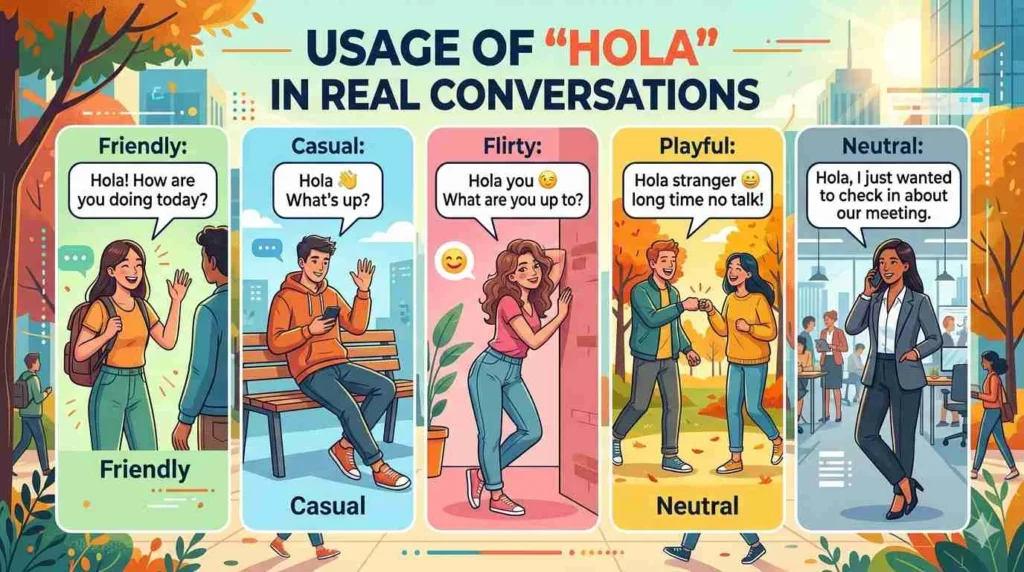
“Hola” can be used in different contexts depending on tone, punctuation, and emojis.
Examples of Usage:
- Friendly:
Hola! How are you doing today? - Casual:
Hola 👋 What’s up? - Flirty:
Hola you 😉 What are you up to? - Playful:
Hola stranger 😄 long time no talk! - Neutral:
Hola, I just wanted to check in about our meeting.
Tone Variations of “Hola”
The meaning of “hola” stays the same, but the tone can change based on context.
Tone Breakdown Table:
| Usage Style | Example Message | Tone | Interpretation |
|---|---|---|---|
| Friendly | Hola! 😊 | Warm | Casual greeting |
| Flirty | Hola 😉 | Romantic | Interest or attraction |
| Neutral | Hola, how are you? | Polite | Standard greeting |
| Playful | Hola stranger 😄 | Fun | Light teasing |
| Serious | Hola, we need to talk | Neutral/serious | Formal conversation |
Real-Life Contexts Where “Hola” is Used
1. Text Messaging
Most commonly used in chats to say hello.
2. Social Media
Used in comments, DMs, and captions to engage audiences.
3. Online Dating
Often used to start conversations in a friendly or flirty way.
4. Gaming Chat
Gamers use it as a quick greeting during online sessions.
5. Emails (Informal)
Rarely used in formal emails but may appear in casual ones.
Comparison: “Hola” vs Other Greetings
Let’s compare “hola” with other common greetings:
Comparison Table:
| Greeting | Language | Tone | Usage |
|---|---|---|---|
| Hola | Spanish | Friendly | Casual chats, social media |
| Hello | English | Neutral | Formal and informal |
| Hi | English | Casual | Everyday conversations |
| Hey | English | Very casual | Friendly or informal |
| Yo | Slang | Trendy | Youthful, informal |
Key Differences:
- “Hola” feels slightly more expressive than “hi”
- “Hello” is more formal
- “Hey” and “yo” are more casual/slang-based
- “Hola” adds a cultural or stylish touch
Alternate Meanings of “Hola”
In most cases, “hola” only means “hello.” However, in different contexts:
- It can signal a friendly mood
- It may indicate interest or flirtation
- Sometimes used sarcastically in humorous conversations
👉 Important: Unlike abbreviations, “hola” does not have multiple technical meanings it is primarily a greeting.
Professional Alternatives to “Hola”
While “hola” is great for casual chats, it’s not always suitable for formal communication.
Better Professional Alternatives:
- Hello
- Good morning / Good afternoon
- Greetings
- Dear [Name]
- Hi [Name]
When to Avoid “Hola”:
- Formal emails
- Business communication
- Academic writing
- Job applications
When to Use “Hola” (Best Practices)
Do Use “Hola” When:
- Messaging friends
- Starting casual conversations
- Social media interactions
- Online dating chats
- Wanting to sound friendly and relaxed
Avoid Using “Hola” When:
- Writing formal emails
- Communicating with superiors (unless informal tone is acceptable)
- Professional documents
Examples of “Hola” in Context
1. Friendly Chat
A: Hola!
B: Hey! How’s it going?
2. Flirty Conversation
A: Hola 😉
B: Well hello there 😄
3. After Long Time
A: Hola stranger!
B: Haha, long time no talk!
4. Casual Business Context
A: Hola, just checking if you’re available for a quick call.
B: Yes, give me 10 minutes.
Emotional Impact of “Hola”
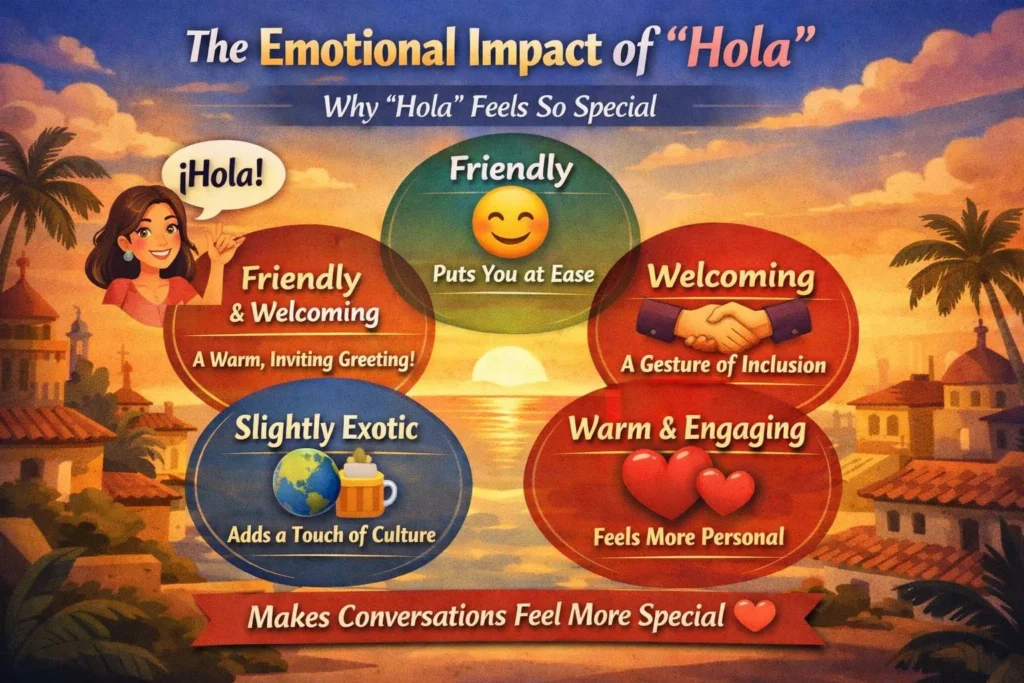
“Hola” creates a softer emotional tone compared to many English greetings.
Emotional Effects:
- Friendly 😊
- Welcoming 🤝
- Slightly exotic 🌍
- Warm and engaging ❤️
Because of its international feel, it often makes conversations feel more personal and interesting.
FAQs
What does hola mean in text messages?
“Hola” means hello in Spanish and is commonly used as a friendly greeting in texting to start a conversation in a casual and warm way.
Is hola formal or informal?
“Hola” is mostly informal, but it can be used in neutral or semi-formal situations depending on context and tone.
Can hola be used in professional messages?
“Hola” is not recommended in formal business communication, as it is more casual and best suited for informal conversations.
Is hola used in English conversations?
Yes, many English speakers use “hola” in texting or social media to sound friendly, trendy, or playful.
Does hola have multiple meanings?
No, “hola” primarily means hello, although tone and context can change how it feels emotionally in a conversation.
Is hola flirty?
“Hola” can be flirty depending on context, especially when paired with emojis like 😉 or 😏.
What is the difference between hola and hello?
“Hola” is Spanish and often feels more playful or expressive, while “hello” is neutral and widely used in formal contexts.
When should I use hola in texting?
You should use “hola” when chatting casually with friends, social media, or in relaxed conversations where a friendly tone is appropriate.
Conclusion
In conclusion, “hola” is a simple yet powerful greeting that means “hello” in Spanish and is widely used in modern texting and online communication. It adds personality, friendliness, and a touch of international flavor to conversations. You’re trying to sound warm, playful, or slightly flirty, “hola” is a versatile choice. Hola spanish greeting definition.
However, it’s important to remember the context. While “hola” works perfectly in casual chats, it may not be suitable for formal or professional communication. Choosing the right greeting can help you create the right impression and improve your communication style. Holaa meaning.
Overall, “hola” is more than just a word it’s a small expression that makes digital conversations feel more human, engaging, and global. Hola meaning in chat.
Discover More Related Articles:
- 456 Replies to “Can I Know You Better?”: In a Natural Way In 2026
- 456 How to Respond to a “Copycat”: Without Losing Your Confidence In 2026