
Definition
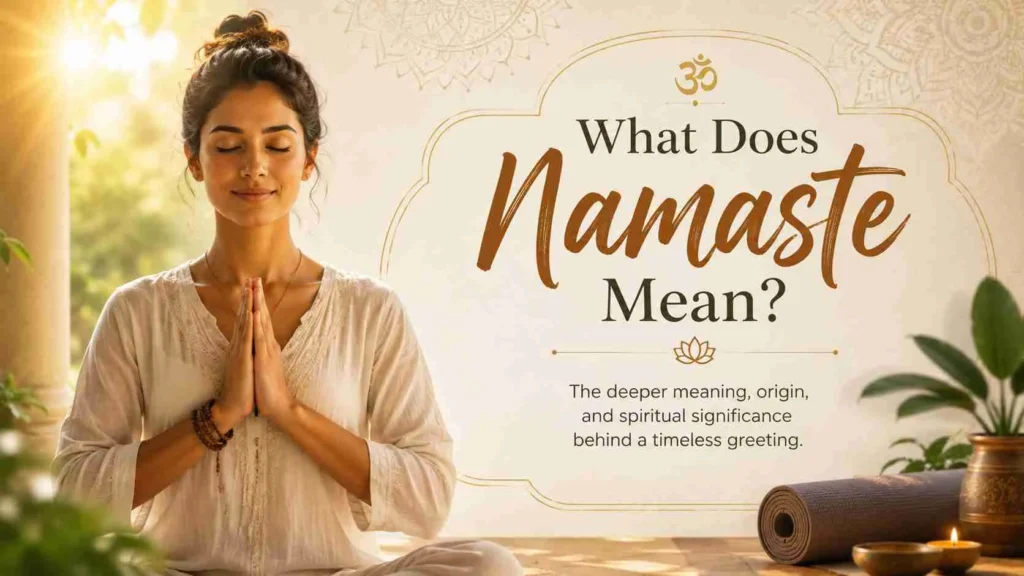
Namaste is a traditional greeting and gesture originating from India and Nepal. It comes from Sanskrit and is commonly translated as “I bow to you” or “The divine in me honors the divine in you.” It is often accompanied by placing the palms together in front of the chest and slightly bowing the head.
“Namaste” is one of the most recognized greetings in the world today. You’ve probably heard it in yoga classes, meditation videos, spiritual conversations, or while traveling through South Asia. But what does namaste really mean? Is it simply a greeting, or does it carry a deeper message?
The truth is, namaste is much more than a casual hello. It reflects respect, humility, connection, and spiritual acknowledgment. Understanding its meaning can help you use the word appropriately and appreciate the rich culture behind it.
Whether you’re curious about the literal translation, wondering how to pronounce it, or trying to understand why people say it after yoga classes, this guide covers everything you need to know.
What Is the Meaning of Namaste?
At its core, namaste is a respectful greeting. It can mean:
- Hello
- Greetings
- I bow to you
- Respectful acknowledgment
- Spiritual recognition
The word carries warmth and sincerity. Unlike a quick casual “hey,” namaste often conveys mindfulness and respect.
In many cultures, especially in India and Nepal, the greeting is used in both formal and informal settings.
The Literal Translation of Namaste
The word namaste comes from two Sanskrit parts:
| Sanskrit Word | Meaning |
|---|---|
| namas | bow, reverence, respect |
| te | to you |
So, the direct translation becomes:
“I bow to you.”
However, spiritual interpretations expanded the meaning into:
“The divine light in me honors the divine light in you.”
This interpretation became especially popular in yoga and wellness communities worldwide.
Origin of the Word Namaste
Sanskrit Roots
Namaste has ancient roots in the Sanskrit language, one of the oldest known languages in the world. Sanskrit heavily influenced Hindu, Buddhist, and Jain traditions.
The greeting has been used for thousands of years across South Asia.
Cultural Background
In India and Nepal, namaste is part of everyday life. People use it:
- When greeting elders
- During religious ceremonies
- In yoga and meditation
- When saying goodbye respectfully
- During formal interactions
It’s considered polite, humble, and culturally respectful.
How to Pronounce Namaste
The correct pronunciation is:
NUH-muh-stay
Phonetic breakdown:
- “Nah” sounds soft
- “mah” is gentle
- “stay” rhymes with “day”
Many English speakers overemphasize the final syllable, but native pronunciation is smoother and softer.
The Namaste Gesture Explained
The word is usually paired with a hand gesture called Anjali Mudra.
How the gesture works:
- Place your palms together
- Keep fingers pointing upward
- Hold hands near your chest
- Slightly bow your head
This gesture symbolizes:
- Unity
- Respect
- Gratitude
- Peace
It’s similar to prayer hands 🙏, which is why the emoji is often associated with namaste.
Why Do Yoga Teachers Say Namaste?
One of the biggest reasons namaste became globally recognized is yoga culture.
At the end of yoga classes, instructors often say:
“Namaste.”
In this context, it usually expresses:
- Gratitude
- Respect between teacher and students
- Shared mindfulness
- Spiritual connection
The class may respond with “namaste” back.
Is It Religious?
Not necessarily.
Although the word has spiritual roots, many people use it in a non-religious way. In yoga spaces, it often represents mindfulness and appreciation rather than a strict religious practice.
Real-World Usage of Namaste
Everyday Greeting
In India and Nepal, people commonly use namaste instead of:
- Hello
- Hi
- Good morning
It works in both formal and informal situations.
Example:
- Person A: “Namaste!”
- Person B: “Namaste!”
Tone: Friendly and respectful 😊
Respectful Greeting to Elders
Using namaste with older people shows politeness.
Example:
- “Namaste, Uncle. How are you today?”
Tone: Respectful and warm 🙏
Spiritual or Mindful Context
People may use it during meditation, yoga, or spiritual discussions.
Example:
- “Thank you for practicing with me today. Namaste.”
Tone: Peaceful and reflective ✨
Examples of Namaste in Different Contexts
Friendly Usage
| Situation | Example | Tone |
|---|---|---|
| Greeting a friend | “Namaste! Long time no see.” | Friendly |
| Yoga class | “Namaste everyone 🙏” | Calm |
| Meeting guests | “Namaste, welcome to our home.” | Warm |
Formal Usage
| Situation | Example | Tone |
|---|---|---|
| Greeting elders | “Namaste, sir.” | Respectful |
| Professional introduction | “Namaste and thank you for joining us.” | Polite |
| Cultural ceremony | “Namaste to all honored guests.” | Formal |
Incorrect or Awkward Usage
Although namaste is positive, using it jokingly or mockingly can feel disrespectful.
Example:
- Saying “naaaamaste” sarcastically during an argument 😒
Tone: Dismissive or mocking
Because the word has cultural and spiritual value, it’s best used sincerely.
Is Namaste Religious?
This is a very common question.
The Short Answer
No namaste is not strictly religious.
It originated in traditions connected to Hindu culture and Sanskrit, but today it is widely used as:
- A greeting
- A respectful gesture
- A mindfulness expression
Millions of people use it daily without religious intent.
Namaste in Modern Global Culture
Over the past few decades, namaste became internationally popular because of:
- Yoga studios
- Meditation apps
- Wellness influencers
- Spiritual retreats
- Travel culture
Today, many non-Indian speakers use the word worldwide.
Is It Okay for Non-Indians to Say Namaste?
Generally, yes when used respectfully.
Most people appreciate sincere cultural respect and understanding.
Good Ways to Use It
- In yoga or meditation settings
- When greeting Indian or Nepali people respectfully
- During cultural events
- While traveling in South Asia
What to Avoid
- Mocking accents
- Using it as a stereotype
- Treating it like a joke
- Overusing it for “exotic” effect
Respectful intention matters most.
Namaste vs Similar Greetings
Namaste vs Hello
| Namaste | Hello |
|---|---|
| Respectful and mindful | Casual greeting |
| Cultural/spiritual roots | General English greeting |
| Often paired with gesture | Usually verbal only |
| Formal or spiritual tone | Neutral tone |
Salaam vs Namaste
| Namaste | Salaam |
|---|---|
| Sanskrit origin | Arabic origin |
| Common in India/Nepal | Common in Muslim cultures |
| Means respectful bowing | Means peace |
| Often paired with prayer gesture | Sometimes paired with hand gesture |
Both express respect and kindness.
Namaste vs Pranam
| Namaste | Pranam |
|---|---|
| General greeting | More deeply respectful |
| Used widely | Often used for elders |
| Everyday use | Formal/traditional use |
Alternate Meanings of Namaste
The primary meaning is the respectful greeting, but depending on context, people may interpret it as:
- Peace
- Respect
- Spiritual acknowledgment
- Gratitude
- Humility
In wellness communities, it sometimes symbolizes:
- Inner peace
- Shared energy
- Human connection
Common Misconceptions About Namaste
“It Only Means Hello”
Not exactly.
While it can function like “hello,” the deeper meaning involves respect and acknowledgment.
“It’s Only for Yoga”
No.
Yoga popularized it internationally, but the word has existed for centuries in South Asian culture.
“It’s a Religious Prayer”
Not necessarily.
Many people use it culturally rather than religiously.
When Should You Use Namaste?
Appropriate Situations
- Greeting respectfully
- Yoga or meditation settings
- Meeting elders
- Cultural gatherings
- Peaceful conversations
Situations to Avoid
- Sarcastic jokes
- Mocking cultural traditions
- Random overuse without understanding
Polite Alternatives to Namaste
Depending on the context, you could also use:
| Alternative | Best For |
|---|---|
| Hello | Casual conversation |
| Greetings | Formal situations |
| Salaam | Muslim cultural greeting |
| Pranam | Deep respect for elders |
| Good morning | Professional settings |
| Welcome | Hospitality situations |
Why Namaste Became So Popular Online
The word spread quickly online because it combines:
- Simplicity
- Spirituality
- Positive energy
- Global yoga culture
You’ll often see:
- “Namaste 🙏”
- “Peace and namaste”
- “Namaste everyone”
It’s especially common on:
- Yoga channels
- Meditation apps
- Wellness blogs
Cultural Importance of Namaste
For many people, namaste reflects values like:
- Respect
- Equality
- Kindness
- Spiritual awareness
- Human connection
The idea behind the greeting suggests every person deserves acknowledgment and dignity.
That deeper meaning is why the word continues to resonate worldwide.
SEO Keyword Variations Related to Namaste
Here are related phrases people commonly search:
- what does namaste mean in yoga
- namaste meaning in English
- spiritual meaning of namaste
- namaste translation
- what does namaste literally mean
- why do yoga teachers say namaste
- namaste hand gesture meaning
- how to pronounce namaste
- is namaste religious
Using these related terms naturally helps readers better understand the topic.
FAQs
1. What does namaste literally mean?
The literal translation is “I bow to you,” from the Sanskrit words namas (bow/respect) and te (to you).
2. Why do yoga instructors say namaste?
Yoga instructors often say it to express gratitude, respect, mindfulness, and connection between teacher and students.
3. Is namaste a religious word?
Not strictly. It has spiritual and cultural roots but is widely used as a respectful greeting in everyday life.
4. What language is namaste from?
Namaste comes from Sanskrit, an ancient language of India.
5. Can anyone say namaste?
Yes, as long as it’s used respectfully and sincerely.
6. What hand gesture goes with namaste?
People place their palms together near the chest and slightly bow their heads. This gesture is called Anjali Mudra.
7. Is namaste formal or informal?
It can be both. It works in casual greetings, respectful interactions, and formal ceremonies.
8. What is the difference between namaste and namaskar?
Both are respectful greetings. Namaskar is often considered slightly more formal or traditional.
Conclusion
Understanding what namaste means goes far beyond learning a simple greeting. While the literal translation is “I bow to you,” the word also represents respect, gratitude, humility, and human connection.
Rooted in ancient Sanskrit and widely used across India and Nepal, namaste has become a globally recognized expression through yoga, meditation, and wellness culture. You use it in a spiritual setting, as a respectful greeting, or simply to show kindness, the key is sincerity and cultural respect.
By appreciating its deeper meaning and proper usage, you can use namaste thoughtfully and confidently in everyday conversations.
Discover More Related Articles:
- “Cap” Slang Meaning: From Street Language to Social Media in 2026
- “Glaze” Meaning Slang: What It Really Means in Internet Conversations In 2026
- “67” Meaning Slang: How It’s Used in Online Conversations In 2026