
Definition
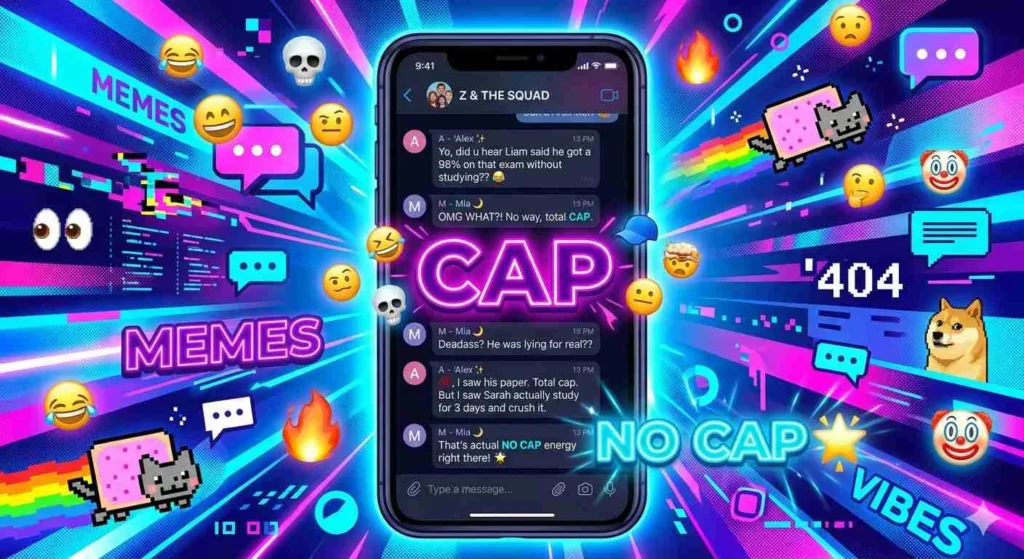
Cap (slang) means a lie or false statement, while “no cap” means truth or honesty. It is commonly used in internet slang to indicate someone is lying or telling the truth, especially in casual conversations, memes, and social media discussions.
If you spend any time on social media platforms like TikTok, Instagram, or X (Twitter), you’ve probably seen people reacting with words like “cap” or “no cap”. At first glance, it might look confusing or even like a typo but in reality, it’s one of the most popular slang expressions in modern internet culture.
Understanding cap slang meaning is essential if you want to keep up with online conversations, Gen Z expressions, and meme culture. But it’s not just about calling someone out it also has a cultural background and a variety of usage styles depending on tone and context.
In this article, we’ll break down everything you need to know about “cap,” including its definition, origin, usage, examples, comparisons, and even polite alternatives. You’re a student, content creator, or just curious, this guide will make you fluent in this trending slang.
Origin and History of “Cap”
The slang term “cap” has roots in African American Vernacular English (AAVE) and gained mainstream popularity through hip-hop culture in the early 2000s. It originally referred to “capping,” meaning exaggerating or lying.
Over time, especially with the rise of social media platforms like TikTok and Twitter, the term became widely adopted by younger audiences globally. Rap music played a huge role in spreading the phrase, with artists frequently using “no cap” to emphasize honesty or authenticity in lyrics.
Today, “cap” has evolved into a global slang term used by millions of people, regardless of background.
Timeline of Popularity
| Era | Development |
|---|---|
| Early 2000s | Used in hip-hop communities |
| 2010–2015 | Spread through rap lyrics |
| 2018–2020 | Went viral on TikTok & Twitter |
| Present | Global internet slang |
Why “Cap” Became So Popular
The rise of “cap” isn’t random it’s a perfect example of how internet language evolves quickly.
Here are some key reasons behind its popularity:
- Short and catchy – One syllable makes it easy to type and say
- Expressive – Quickly communicates belief or disbelief
- Meme-friendly – Works perfectly in captions and reactions
- Music influence – Hip-hop culture boosted its reach
- Social media virality – TikTok trends accelerated adoption
In simple terms, “cap” became popular because it’s fast, flexible, and fun to use.
How “Cap” Is Used in Real Life
1. To call out a lie
If someone says something unbelievable, you can respond with “That’s cap.”
2. To confirm truth
“No cap” is used to emphasize honesty.
3. As a reaction
People often say “cap” alone as a quick response to something suspicious.
4. In storytelling or exaggeration
Sometimes people jokingly use it while telling dramatic stories.
Examples of Cap Slang Meaning in Context
To fully understand how “cap” works, let’s look at real-life conversational examples:
| Situation | Example Sentence | Meaning |
|---|---|---|
| Denying truth | “I ran 10 km in 20 minutes.” – “Bro, that’s cap.” | You are lying |
| Confirming truth | “I studied all night, no cap.” | I’m being honest |
| Reaction | “I won the lottery yesterday.” – “Cap 😂” | I don’t believe you |
| Emphasis | “This is the best game ever, no cap.” | I’m serious |
These examples show how flexible the slang is in everyday use.
Tone and Emotional Meaning of “Cap”
The meaning of “cap” depends heavily on tone and context.
Common tones include:
- Playful – Used jokingly among friends
- Skeptical – Expressing doubt
- Sarcastic – Mocking exaggeration
- Serious emphasis – “No cap” to stress honesty
For example:
- “You got 100% on the test?” → “Cap 😂” (playful disbelief)
- “I actually worked hard for this, no cap.” → (serious honesty)
Comparison with Related Slang Terms
Understanding “cap” becomes easier when you compare it with similar slang expressions.
Cap vs No Cap vs Lie
| Term | Meaning | Usage |
|---|---|---|
| Cap | False statement | “That’s cap” = That’s a lie |
| No cap | Truth | “No cap” = I’m serious |
| Lie | Direct falsehood | More formal, less slangy |
Exaggeration vs Cap
- Cap usually implies intentional falsehood
- Exaggeration can be unintentional or humorous stretching of truth
Cap vs Fake
- “Fake” is more general
- “Cap” is slang-specific and casual
Alternate Meanings of “Cap”
Although slang dominates modern usage, “cap” also has other meanings in different contexts:
- Cap (hat) – A piece of clothing worn on the head
- Capital letter abbreviation – “CAP” in writing or typing contexts
- Medical cap – Protective coverings in healthcare settings
- Achievement cap – Maximum limit in games or systems
However, in internet slang, the meaning almost always refers to lying or truth-checking.
Polite or Professional Alternatives
Since “cap” is informal, it may not be suitable in professional communication. Here are some polite alternatives:
- “That’s not accurate.”
- “I don’t think that’s correct.”
- “Are you sure about that?”
- “That seems exaggerated.”
- “I’m not convinced.”
Using these alternatives is better in academic, business, or formal writing situations.
Real-Life Usage in Social Media Culture
“Cap” is extremely common in online spaces. You’ll often see it in:
- TikTok comment sections
- Instagram captions
- Meme replies
- Twitter/X reactions
- YouTube comment threads
It is often paired with emojis like 😂, 🤨, or 💀 to emphasize disbelief or humor.
Example:
- “I didn’t eat the whole pizza alone… no cap 😭”
FAQs
What does cap mean in slang?
Cap in slang means a lie or something false. It is used when someone doubts a statement or thinks it is not true, especially in informal online or casual conversations.
What does no cap mean in texting?
No cap means “no lie” or “I’m telling the truth.” People use it to emphasize honesty or seriousness in what they are saying, especially on social media platforms and chats.
Is cap a bad word or offensive?
No, cap is not offensive or a bad word. It is a casual slang term used mostly among friends and online communities. However, it should be avoided in formal or professional settings.
Where did the slang cap come from?
The slang cap originated from African American Vernacular English and became popular through hip-hop music. Later, it spread widely on social media platforms like TikTok and Twitter.
How do you use cap in a sentence?
You can use cap to call out lies or exaggerations. For example, “You said you met a celebrity? That’s cap,” or “No cap, this is the best movie I’ve seen.”
What is the difference between cap and no cap?
Cap means something is false or untrue, while no cap means something is completely true or honest. They are opposite expressions used in informal conversations.
Is cap used globally or only in America?
Although it started in the United States, cap is now used globally due to social media influence. People from many countries understand and use it in online conversations.
Can I use cap in professional writing?
No, cap is not suitable for professional writing. It is informal slang and should be avoided in academic papers, business emails, or formal communication settings.
Conclusion
The slang term “cap” has become a powerful part of modern internet language. It is simple, expressive, and widely used to identify lies or confirm truth in casual conversations. You’re scrolling through TikTok comments or chatting with friends, understanding the cap slang meaning helps you stay updated with digital culture.
However, while it’s fun and trendy, it’s important to use it in the right context. It works best in informal settings and should be avoided in professional communication.
With its roots in hip-hop culture and its viral spread through social media, “cap” is more than just slang it’s a reflection of how language evolves in the digital age.
Discover More Related Articles:
- “GNG” Meaning: What It Stands For, How to Use It & When It’s Appropriate In 2026
- “PTSO” Meaning: What No One Tells You About This Slang In 2026
- “FWB” Meaning: What It Really Means in Modern Conversations In 2026