
Definition
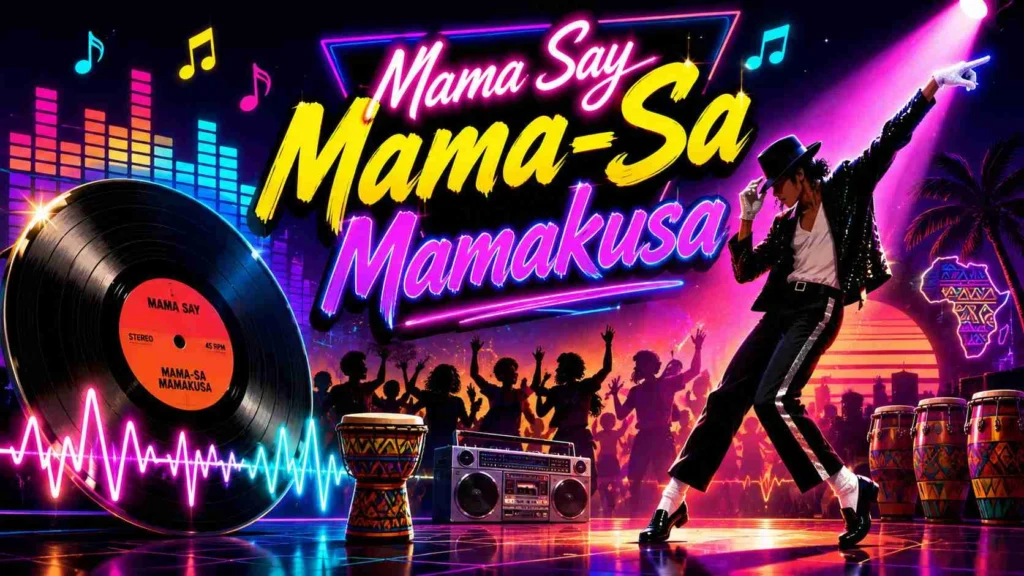
“Mama say mama-sa mamakusa” is a rhythmic chant from the Cameroonian song Soul Makossa by Manu Dibango, later popularized by Michael Jackson.
If you’ve ever listened to Michael Jackson’s Wanna Be Startin’ Somethin’ or Rihanna’s Don’t Stop the Music, chances are you’ve heard the catchy phrase “Mama-say mama-sa mama-kusa” and wondered what it actually means. The line is memorable, rhythmic, and instantly recognizable, but its meaning has sparked curiosity and debate for decades.
Some people think it’s just playful nonsense lyrics, while others believe it has deep cultural roots connected to African music traditions. So what’s the real story?
In this guide, we’ll break down exactly what “mama say mama-sa mamakusa” means, where it came from, how it became globally famous, and how people use or reference it online today.
What Does Mama Say Mama-Sa Mamakusa Mean?
The phrase “Mama-say mama-sa mama-kusa” is a lyric popularized worldwide by Michael Jackson in the song Wanna Be Startin’ Somethin’. It originates from Cameroonian musician Manu Dibango’s 1972 song Soul Makossa.
The original lyric is:
“Ma ma se, ma ma sa, ma ma coo sa.”
It comes from the word “makossa,” a Cameroonian music style and dance genre. The phrase itself does not have a direct English translation. Instead, it is mostly rhythmic and musical, used for sound, groove, and cultural expression rather than literal meaning.
In simple terms:
| Phrase | Meaning |
|---|---|
| Mama-say mama-sa mamakusa | A rhythmic chant originating from African music culture |
| Makossa | A dance music genre from Cameroon |
| Literal translation | No exact English meaning |
Origin of Mama Say Mama-Sa Mamakusa
The phrase traces back to legendary Cameroonian saxophonist and musician Manu Dibango.
In 1972, he released the song Soul Makossa, which included the iconic chant:
“Ma ma se, ma ma sa, ma ma coo sa.”
At the time, the song became one of the first African tracks to gain major international popularity, especially in the United States and Europe. The groove-heavy sound helped introduce African dance music to mainstream global audiences.
What Is Makossa?
Makossa is a music genre from Cameroon that blends:
- Traditional African rhythms
- Jazz
- Funk
- Soul
- Dance beats
The word itself roughly relates to “dance” or “I dance” in the Duala language spoken in Cameroon.
So while the phrase isn’t a sentence with a strict dictionary meaning, it reflects musical energy, rhythm, and dance culture.
How Michael Jackson Made the Phrase Famous
The phrase exploded in popularity after Michael Jackson used a variation of it in his 1982 hit song Wanna Be Startin’ Somethin’ from the album Thriller.
Jackson sang:
“Mama-say mama-sa mama-coosa.”
The line became one of the most recognizable hooks in pop music history.
Many listeners assumed Michael Jackson invented it, but the chant was actually inspired by Manu Dibango’s earlier work. This later led to discussions and legal settlements regarding credit and usage rights.
Still, Jackson’s version helped introduce the phrase to millions of people worldwide.
Why the Phrase Sounds Different in Different Versions
You may see the lyric written in several ways online:
- Mama say mama sa mamakusa
- Mama-say mama-sa mama-coosa
- Ma ma se ma ma sa ma ma coo sa
- Mama-sa mama-kusa
These spelling differences happen because the phrase is phonetic. People write it based on how they hear it in songs.
The most commonly accepted original form is:
“Ma ma se, ma ma sa, ma ma coo sa.”
Rihanna and Modern Pop Culture Usage
The phrase returned to mainstream attention when Rihanna sampled Michael Jackson’s chant in her 2007 hit song Don’t Stop the Music.
That introduced the lyric to a younger generation who may never have heard Soul Makossa or even Michael Jackson’s original version.
Today, the phrase is commonly associated with:
- Dance music
- Nostalgic pop culture
- Viral TikTok clips
- Throwback playlists
- Party songs
- Music memes
Does Mama Say Mama-Sa Mamakusa Have a Literal Meaning?
Not exactly.
This is where many people get confused.
The phrase is more musical and rhythmic than literal. It works similarly to:
- “La la la”
- “Na na na”
- Scat singing in jazz
- Vocal chants in dance music
However, unlike random filler sounds, this chant has cultural and musical roots connected to Cameroonian makossa music.
So while there’s no direct English translation like:
“Hello” = greeting
there is cultural significance tied to rhythm, identity, and musical tradition.
Why Is the Phrase So Catchy?
There are a few reasons the chant sticks in people’s heads:
Repetition
The repeated syllables make it easy to remember.
Rhythm
The phrase naturally follows dance-oriented beats.
Universal Sound
People from different languages can sing along easily.
Emotional Energy
The chant feels exciting and energetic even if listeners don’t understand its origins.
That’s part of why it became globally successful.
Examples of Mama Say Mama-Sa Mamakusa in Context
Here’s how people reference the phrase in real life and online.
| Situation | Example | Tone |
|---|---|---|
| Music discussion | “That mama-say mama-sa line is iconic!” | Friendly |
| Nostalgic post | “Every time I hear mama-sa mama-kusa, I think of the 80s.” | Nostalgic |
| Party playlist | “Play the song with the mama-say mama-sa part!” | Casual |
| TikTok caption | “Mama-say mama-sa vibes all night 😂” | Playful |
| Dance reference | “This beat gives total makossa energy.” | Positive |
Is Mama Say Mama-Sa Mamakusa Offensive?
Generally, no.
The phrase itself is not considered offensive. However, it’s important to understand and respect its African cultural origins rather than treating it as meaningless gibberish.
Using the phrase casually in music discussions, nostalgia posts, or dance contexts is common and usually harmless.
Still, understanding where it comes from shows cultural awareness and appreciation.
Tone and Usage Explained
The phrase is usually associated with upbeat, energetic, and fun situations.
Friendly Tone 😊
Used when celebrating music, dancing, or nostalgia.
Example:
“Mama-say mama-sa takes me straight back to old-school parties!”
Playful Tone 🎵
Often used jokingly in memes or captions.
Example:
“Me pretending I know all the lyrics: mama-sa mama-kusa 😂”
Neutral Tone
Used in music history discussions.
Example:
“The phrase originated from Manu Dibango’s Soul Makossa.”
There’s rarely a negative tone attached to it.
Comparison With Similar Musical Phrases
Many songs use catchy rhythmic sounds instead of literal words.
| Phrase | Song/Style | Meaning Type |
|---|---|---|
| Na na na | Pop music | Rhythmic filler |
| La la la | Various genres | Melody support |
| Shoop shoop | Soul music | Sound-based phrase |
| Mama-say mama-sa | Makossa/pop | Cultural rhythmic chant |
| Be bop a lula | Rock and roll | Stylized vocal phrase |
The difference is that “mama-say mama-sa” has identifiable cultural roots rather than being entirely invented nonsense.
Alternate Meanings or Interpretations
Some fans online try to assign deeper meanings to the phrase, including:
- Spiritual interpretation
- Secret message theories
- Hidden translations
However, most music historians agree that the chant is primarily rhythmic and tied to makossa musical tradition.
There is no verified hidden meaning.
Professional or Polite Alternatives
If you’re writing formally about the phrase, you may prefer alternatives like:
| Casual Phrase | Professional Alternative |
|---|---|
| Mama-sa mama-kusa | The makossa-inspired chant |
| Funny lyric line | Iconic musical refrain |
| Nonsense lyric | Rhythmic vocal phrase |
These sound more polished in articles, presentations, or academic discussions.
Why People Still Search for This Phrase Today
The phrase remains popular because it connects multiple generations of music fans.
People search for it because:
- They hear it in old songs
- TikTok revives classic audio clips
- They want the lyric spelling
- They wonder if it has meaning
- They discover Michael Jackson classics
- They hear Rihanna’s sample
Its mystery and rhythm keep curiosity alive.
Cultural Importance of Soul Makossa
Soul Makossa played a major role in introducing African music to international audiences.
The song influenced:
- Disco
- Funk
- Pop
- Dance music
- Hip-hop sampling culture
Many artists later borrowed African-inspired rhythms because of its success.
That makes the phrase more than just a catchy hook. It represents a moment when African music gained wider global recognition.
How Social Media Uses the Phrase Today
On platforms like TikTok, Instagram, and YouTube, the phrase is often used in:
- Dance edits
- Retro music clips
- Throwback memes
- Singing challenges
- Party videos
Example captions include:
- “Mama-say mama-sa energy tonight ✨”
- “This song never gets old 😭”
- “POV: You suddenly become Michael Jackson.”
The phrase survives because it feels timeless and fun.
Common Mispronunciations
People often mishear the chant as:
- Mama kusa
- Mama koosa
- Mama coosa
- Mama kusa kusa
That’s normal because the lyric is sung rhythmically rather than clearly spoken.
Fun Facts About Mama Say Mama-Sa Mamakusa
- The phrase became globally famous through Michael Jackson.
- Its roots are actually Cameroonian.
- Rihanna helped revive it for modern audiences.
- It’s one of the most recognizable vocal hooks in pop history.
- The chant sparked legal copyright discussions between artists.
FAQs
What does mama say mama-sa mamakusa mean?
It is a rhythmic chant originating from Manu Dibango’s Soul Makossa. It does not have a direct English translation but relates to the makossa music style from Cameroon.
Who originally said mama-say mama-sa?
The phrase originated with Manu Dibango in the 1972 song Soul Makossa.
Did Michael Jackson invent mama-say mama-sa?
No. Michael Jackson popularized the phrase globally, but it originated from Manu Dibango’s earlier song.
What is makossa?
Makossa is a dance music genre from Cameroon that combines African rhythms with jazz, funk, and soul influences.
What song says mama-say mama-sa?
The phrase appears prominently in Wanna Be Startin’ Somethin’ by Michael Jackson and later in Don’t Stop the Music by Rihanna.
Is mama-say mama-sa a real language?
The chant is connected to Cameroonian musical culture and the Duala language tradition, though the phrase itself is more rhythmic than directly translatable.
Why is mama-say mama-sa so famous?
Its catchy rhythm, use in major pop songs, and repeated exposure in dance culture made it globally recognizable.
How do you spell mama-say mama-sa correctly?
The most accepted original spelling is:
“Ma ma se, ma ma sa, ma ma coo sa.”
However, many phonetic variations exist online.
Conclusion
The phrase “mama say mama-sa mamakusa” is much more than a random lyric. It has deep musical roots connected to Cameroonian makossa culture and became globally iconic through artists like Manu Dibango, Michael Jackson, and Rihanna.
While the phrase does not have a precise English translation, it represents rhythm, dance, musical expression, and cultural influence. Its infectious sound helped it cross language barriers and remain popular for decades.
If you hear it today in songs, TikTok videos, or nostalgic playlists, you now know the real meaning and history behind one of music’s most memorable chants.
Discover More Related Articles:
- “67” Meaning Slang: How It’s Used in Online Conversations In 2026
- “Cap” Slang Meaning: From Street Language to Social Media in 2026
- “Glaze” Meaning Slang: What It Really Means in Internet Conversations In 2026