
Definition:
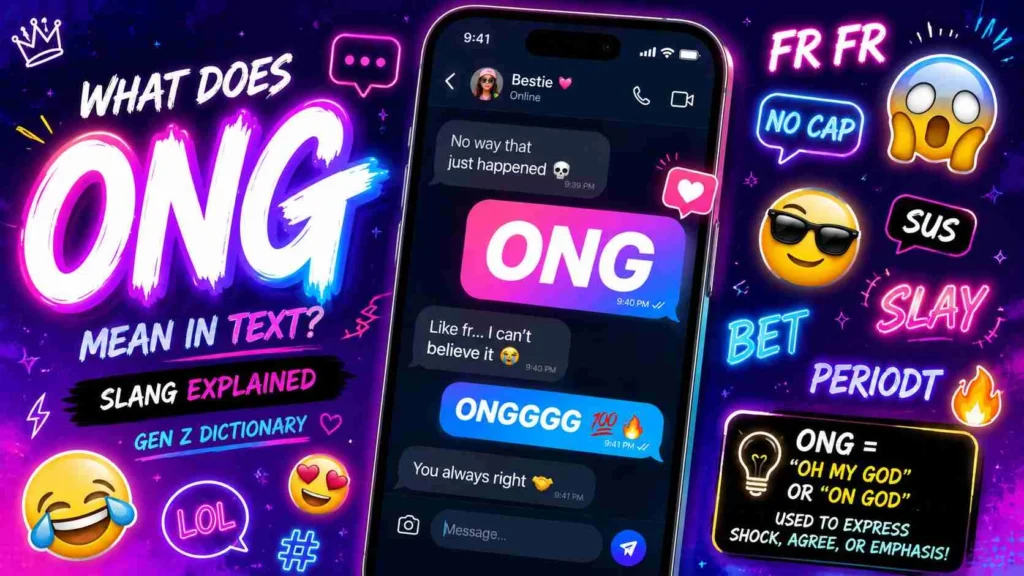
ONG is a slang abbreviation for “On God,” used to emphasize truthfulness or sincerity in a statement, similar to saying “I swear” or “I promise I’m telling the truth.” It is commonly used in texting and social media to show that someone is being completely honest or serious.
In today’s fast-paced digital world, slang terms evolve quickly, especially on platforms like TikTok, Snapchat, Instagram, and X (Twitter).
This article breaks down everything you need to know about what ONG means in slang, where it came from, how to use it correctly, and how it compares to similar expressions.
Origin of ONG (On God)
The slang term ONG comes from African American Vernacular English (AAVE), where the phrase “on God” has been used for years.
Originally, “on God” was a strong expression of honesty or emphasis, meaning:
- “I swear to God”
- “I promise I’m telling the truth”
- “I truly mean this”
Over time, especially with the rise of social media and texting culture.
Why it became popular:
- Viral usage on TikTok and memes
- Influence of rap lyrics and hip-hop culture
- Short-form texting habits
- Gen Z slang evolution
Today, ONG is widely used by teenagers and young adults worldwide, even outside the United States.
Meaning and Usage of ONG in Text
In modern slang, ONG is used to emphasize honesty or seriousness in a statement.
It can be placed at the beginning or end of a sentence.
Common meanings include:
- “I swear”
- “I’m serious”
- “No lie”
- “For real”
Tone of ONG depends on context:
| Context Type | Meaning of ONG | Example |
|---|---|---|
| Friendly | Emphasis or excitement | ONG that movie was amazing |
| Serious | Strong honesty | ONG I didn’t do it |
| Emotional | Strong feelings | ONG I miss you |
| Casual | Natural slang filler | That’s crazy ONG |
Real-Life Examples of ONG
Understanding slang becomes easier with real examples.
💬 Texting Examples:
- “ONG this pizza is the best I’ve ever had 😭”
- “I studied all night ONG I’m exhausted”
- “ONG you’re lying, that didn’t happen”
💬 Social Media Examples:
- “ONG this trend is hilarious 😂”
- “She said that? ONG I can’t believe it”
- “ONG I need a vacation ASAP”
Spoken Use (informal):
- “ONG, I didn’t expect that to happen!”
- “Bro, ONG that was crazy!”
Example Table of ONG Usage in Different Situations
| Situation | Sentence Using ONG | Meaning |
|---|---|---|
| Excitement | ONG this game is insane | Expressing excitement |
| Honesty | ONG I didn’t cheat | Being truthful |
| Surprise | ONG I didn’t see that coming | Shock or surprise |
| Humor | ONG that’s the funniest thing ever | Strong reaction |
| Emotion | ONG I miss those days | Emotional emphasis |
Comparison With Similar Slang Terms
To better understand what ONG means, it helps to compare it with similar slang expressions.
ONG vs I swear vs FR vs No cap
| Term | Meaning | Usage Style |
|---|---|---|
| ONG | On God (serious truth/emphasis) | Strong emotional or honest statement |
| I swear | Formal version of honesty | More traditional expression |
| FR | For real (agreement/truth) | Casual agreement |
| No cap | No lie / truth only | Gen Z slang, similar meaning |
Key difference:
- ONG feels more emotional and intense
- No cap is more casual and trendy
- FR is used for agreement
- I swear is more formal and universal
Alternate Meanings of ONG
Possible alternate interpretations:
- A typo for “OMG” (Oh My God)
- Rarely used as initials for organizations or names (not slang-related)
However, in internet slang and texting, ONG almost always means On God.
When and How to Use ONG Properly
Using slang correctly helps you sound natural in conversations.
✔ When to use ONG:
- Informal texting with friends
- Social media comments
- Expressing strong emotions or honesty
- Reactions to surprising situations
❌ When NOT to use ONG:
- Professional emails
- Formal writing
- Academic essays
- Job interviews or business communication
Tips for using ONG naturally:
- Use it sparingly (don’t overuse it)
- Pair it with emotional or strong statements
- Match the tone of the conversation
- Don’t use it in formal settings
Polite or Professional Alternatives to ONG
If you want to express the same meaning without slang, here are better alternatives:
- “I honestly mean this”
- “I truly believe this”
- “I assure you”
- “I’m serious”
- “To be honest”
These phrases are suitable for professional or formal communication.
Why ONG Became So Popular
The popularity of ONG is part of a bigger trend in internet language:
Key reasons:
- Short-form communication (faster typing)
- Influence of TikTok culture
- Meme language evolution
- Music and rap influence
- Gen Z preference for slang abbreviations
Just like “LOL,” “BRB,” or “FR,” ONG became a quick way to express emotion and honesty.
Common Misunderstandings About ONG
Many people misunderstand ONG when they first see it.
Common mistakes:
- Thinking it means “Oh No Guys”
- Confusing it with “OMG”
- Not recognizing it as slang
Reality:
👉 ONG is always about emphasis or truthfulness, not surprise alone.
FAQs
What does ONG mean in texting?
ONG means “On God,” used to show honesty or seriousness in a message.
Is ONG the same as OMG?
No, OMG means “Oh My God,” while ONG means “On God” (truth emphasis).
Is ONG a bad word?
No, ONG is not offensive. It is just slang used for emphasis.
Where did ONG come from?
It originated from African American Vernacular English (AAVE) and became popular through social media and rap culture.
Can I use ONG in formal writing?
No, ONG is informal and should only be used in casual conversations.
What does ONG mean on TikTok?
On TikTok, ONG is used to emphasize that something is true or surprising.
Is ONG used worldwide?
Yes, especially among Gen Z users across different countries due to social media influence.
What is a better alternative to ONG?
You can use “I swear,” “honestly,” or “I’m serious” in formal contexts.
Conclusion
ONG, short for “On God,” is a modern slang term used mainly in texting and social media to emphasize truth, seriousness, or strong emotion. It has become widely popular among Gen Z due to its simplicity and expressive power. Someone is reacting to something surprising, making a strong statement, or expressing genuine emotion, ONG helps add intensity to communication.
However, it’s important to understand the context before using it. While it works perfectly in casual chats and online conversations, it is not suitable for professional or formal situations. If used correctly, ONG can make your digital communication feel more natural, expressive, and relatable in today’s internet culture.
Discover More Related Articles:
- “67” Meaning Slang: How It’s Used in Online Conversations In 2026
- “Cap” Slang Meaning: From Street Language to Social Media in 2026
- “Glaze” Meaning Slang: What It Really Means in Internet Conversations In 2026