
Definition
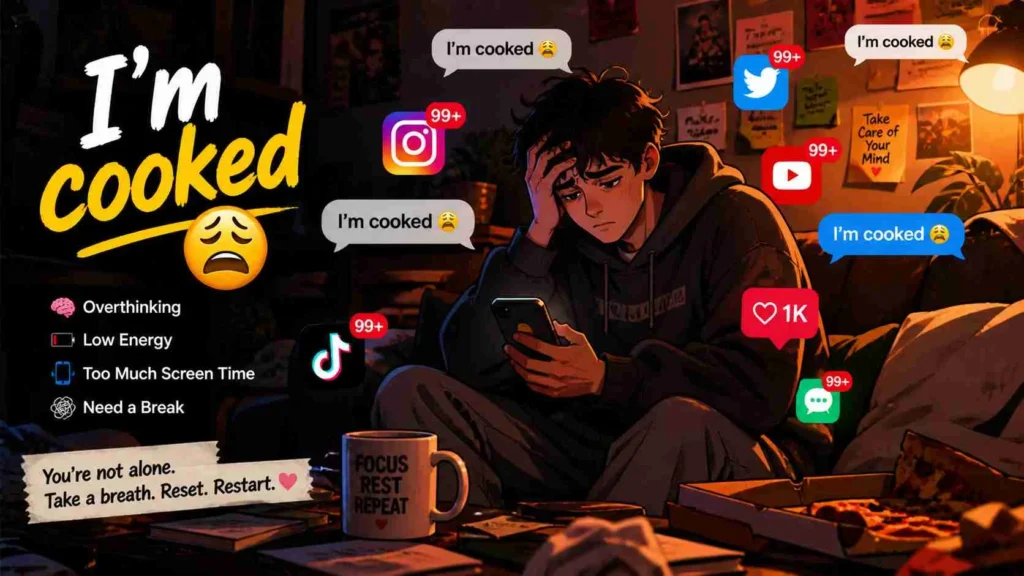
In modern slang, “cooked” means being completely exhausted, defeated, overwhelmed or in serious trouble. It can describe someone who is physically tired, mentally drained, or in a situation where failure feels inevitable. Depending on context, it may carry a humorous, dramatic or negative tone.
Language evolves fast, especially in the age of social media, gaming, and online culture. One word that has taken on a whole new life in slang is “cooked.” While it traditionally refers to preparing food, today it’s widely used to describe people, situations, and even emotions.
You might hear someone say, “I’m cooked after that workout,” or “He’s cooked if the boss finds out.” These phrases don’t have anything to do with actual cooking they reflect exhaustion, defeat, or being in trouble.
This article breaks down everything you need to know about “cooked meaning slang,” including its origin, tone, real-life usage, examples, comparisons with similar slang, and professional alternatives. Whether you’re a content creator, student, or just curious, this guide will help you understand and use the term naturally.
Origin of “Cooked” in Slang
The slang use of “cooked” likely evolved from the literal idea of something being overdone or ruined by heat. When food is “overcooked,” it’s no longer in good condition dry, burnt, or unusable.
Over time, this concept shifted into metaphorical use:
- “Overcooked” → damaged or ruined
- “Cooked” → exhausted, finished, or done for
The term gained traction in:
- Sports culture (athletes feeling physically drained)
- Gaming communities (players losing badly or being outmatched)
- Social media platforms like TikTok, Twitter, and Instagram
Today, it’s a widely recognized slang term used across different age groups and cultures.
Popularity and Modern Usage
“Cooked” has become especially popular among:
- Gamers 🎮
- Fitness enthusiasts 💪
- Students 📚
- Social media users 📱
Its appeal lies in its simplicity and relatability. Instead of saying “I am extremely exhausted,” people prefer the shorter, more expressive:
👉 “I’m cooked.”
It also adapts easily to different contexts:
- Physical exhaustion
- Mental burnout
- Social embarrassment
- Being in trouble
How “Cooked” Is Used in Different Contexts
1. Physical Exhaustion
Used when someone is extremely tired after activity.
Example:
- “That gym session destroyed me I’m cooked 😩.”
2. Mental Burnout
Describes feeling mentally drained or overwhelmed.
Example:
- “After studying all night, my brain is cooked.”
3. Being in Trouble
Indicates someone is likely to face consequences.
Example:
- “If my parents see this report card, I’m cooked.”
4. Defeat or Failure
Used when someone has lost or is about to lose.
Example:
- “We’re down 5-0… we’re cooked.”
5. Humorous or Dramatic Use
Sometimes exaggerated for comedic effect.
Example:
- “I skipped breakfast and now I’m cooked 😂.”
Tone and Emotional Meaning
The meaning of “cooked” changes depending on tone and context.
| Tone Type | Meaning | Example Sentence |
|---|---|---|
| Friendly | Light exhaustion | “I’m cooked after that run 😅” |
| Neutral | Tired or done | “He’s cooked after work.” |
| Negative/Dismissive | Hopeless or doomed | “You’re cooked if you mess up again.” |
| Humorous | Exaggerated struggle | “One assignment and I’m cooked 😭” |
Real-Life Examples of “Cooked” in Slang
Casual Conversations
- “Bro, I’m cooked after that football match.”
- “She’s cooked there’s no way she passes the exam.”
Social Media Captions
- “Monday got me cooked 😵💫”
- “Gym + no sleep = cooked 😩🔥”
Gaming Context
- “We lost the first round… we’re cooked.”
- “That opponent is too strong, we’re cooked.”
Workplace Situations
- “If the manager checks the reports, we’re cooked.”
Example Table: Situational Usage of “Cooked”
| Situation | Meaning of “Cooked” | Example |
|---|---|---|
| After exercise | Physically exhausted | “Leg day got me cooked.” |
| Studying | Mentally drained | “Final exams have me cooked.” |
| Trouble with authority | Facing consequences | “I’m cooked if the teacher finds out.” |
| Gaming loss | Defeated | “We’re cooked this match.” |
| Social embarrassment | Awkward or doomed | “That moment had me cooked.” |
Comparison with Similar Slang Terms
“Cooked” overlaps with several other slang expressions. Here’s how it compares:
| Slang Term | Meaning | Difference from “Cooked” |
|---|---|---|
| Done | Finished or exhausted | More neutral, less expressive |
| Burnt | Extremely tired | Similar but less commonly used |
| Toast | In trouble or finished | Often more final or dramatic |
| Dead | Extremely tired (exaggeration) | More humorous exaggeration |
| Finished | Completely defeated | More formal and serious |
Alternate Meanings of “Cooked”
Although slang dominates modern usage, “cooked” still has other meanings:
1. Literal Meaning
- Food that has been prepared by heating
“The chicken is cooked.”
2. Informal British/Australian Slang
- Can mean crazy or mentally unstable (less common today)
3. Drug-Related Context (Rare)
- In some contexts, it may refer to drug preparation, but this usage is niche and context-specific
Polite and Professional Alternatives
In formal settings, “cooked” may sound too casual. Here are better alternatives:
| Informal (Slang) | Professional Alternative |
|---|---|
| I’m cooked | I’m exhausted |
| He’s cooked | He is overwhelmed |
| We’re cooked | We are in a difficult situation |
| She’s cooked | She is struggling |
Example Transformation:
- Slang: “I’m cooked after this meeting.”
- Professional: “I’m quite exhausted after this meeting.”
Usage Tips: When and How to Use “Cooked”
Use It When:
- Talking casually with friends
- Posting on social media
- Describing relatable struggles
- Adding humor or exaggeration
Avoid It When:
- Writing formal emails
- In professional presentations
- Academic or business settings
Pro Tip:
Tone matters. Saying “I’m cooked 😅” feels lighthearted, while “You’re cooked.” can sound harsh or critical.
Why “Cooked” Became So Popular
Several factors contributed to its rise:
- Short and expressive
- Easy to understand
- Versatile across contexts
- Popularized by memes and TikTok
- Relatable to daily struggles
Its flexibility allows it to fit almost any situation involving stress, fatigue, or failure.
FAQs
What does cooked mean in slang?
In slang, “cooked” means being extremely tired, overwhelmed, or in trouble. It can describe physical exhaustion, mental burnout, or a situation where failure seems likely.
Is cooked a negative slang term?
It depends on context. It can be negative when referring to failure or trouble, but it’s often used humorously or casually to describe being tired.
Can cooked mean tired?
Yes, one of the most common meanings of “cooked” is being physically or mentally exhausted.
What does I’m cooked mean?
“I’m cooked” means “I’m extremely tired,” “I’m overwhelmed,” or “I’m in trouble,” depending on the situation.
Is cooked used in gaming slang?
Yes, in gaming, “cooked” often means losing badly or being in a situation where defeat is likely.
What is the difference between cooked and done?
“Cooked” is more expressive and dramatic, while “done” is more neutral and less emotional.
Can cooked be used professionally?
No, it’s best to avoid using “cooked” in professional settings and replace it with terms like “exhausted” or “overwhelmed.”
Why do people say cooked on social media?
People use “cooked” because it’s short, relatable, and expressive, making it perfect for captions, memes, and casual conversations.
Conclusion
The slang term “cooked” has evolved far beyond its original meaning of preparing food. Today, it’s a versatile and widely used expression that captures feelings of exhaustion, defeat, or being overwhelmed. Whether you’re talking about a tough workout, a stressful day, or a losing game, “cooked” delivers the message quickly and effectively.
Understanding its tone and context is key. It can be humorous, relatable, or even slightly harsh depending on how it’s used. While it’s perfect for casual conversations and social media, it’s best to switch to more professional alternatives in formal situations.
In short, “cooked” is a modern slang essential simple, expressive, and here to stay. Use it wisely, match the tone to your audience, and you’ll sound natural and up-to-date in any conversation.
Discover More Related Articles:
- “CFS” Meaning: Social Media, Medical & Business Meanings In 2026
- “FN” Meaning: In Text, Gaming & Online Conversations In 2026
- “YK” Meaning in Chat: What It Stands For & How to Use It Correctly In 2026