
Image-model comparisons often collapse into a beauty contest. We tried something more concrete: three prompts with checkable requirements, sent once to three image generators under their provider defaults.
Disclosure: I work with OrcaRouter and used it to run this evaluation. One OpenAI-compatible key gave me access to every model in this test, without changing how any model answered.
AI-generated illustration featuring official model logos; logos and model names are used descriptively and remain the property of their respective owners.
Compare the models in this article through OrcaRouter’s model catalog.
The result was nine images—and nine different interpretations of what “follow the prompt” means.
What we asked for
The models were OpenAI GPT Image 2, Grok Imagine Image, and Google Gemini 3.1 Flash Image Preview. Official xAI and Google documentation confirms that their respective APIs support image generation; those pages provide product context, while every visual judgment below comes from our saved outputs.
The three Chinese-language prompts tested different things:
- a watercolor Jiangnan water-town scene with an orange cat on a stone bridge and a clear reflection;
- a modern coffee-shop opening poster containing the exact English text “GRAND OPENING” and Chinese text “开业大吉”;
- a photorealistic top-down scene containing exactly three red apples and two green pears.
Each model generated one image per prompt. There were no retries and no failed image rows.
Ethan also rated every output on a 1–5 scale for instruction following and aesthetics. These are single-rater judgments, not crowd scores, but they make the visual review explicit:
| Model | Watercolor | Poster | Fruit |
|---|---|---|---|
| GPT Image 2 | 4 / 5 | 4 / 5 | 5 / 5 |
| Grok Imagine | 2 / 2 | 3 / 3 | 3 / 4 |
| Gemini 3.1 Flash Image | 5 / 4 | 4 / 4 | 5 / 5 |
Each cell shows instruction / aesthetics. GPT:. Grok:. Gemini:.
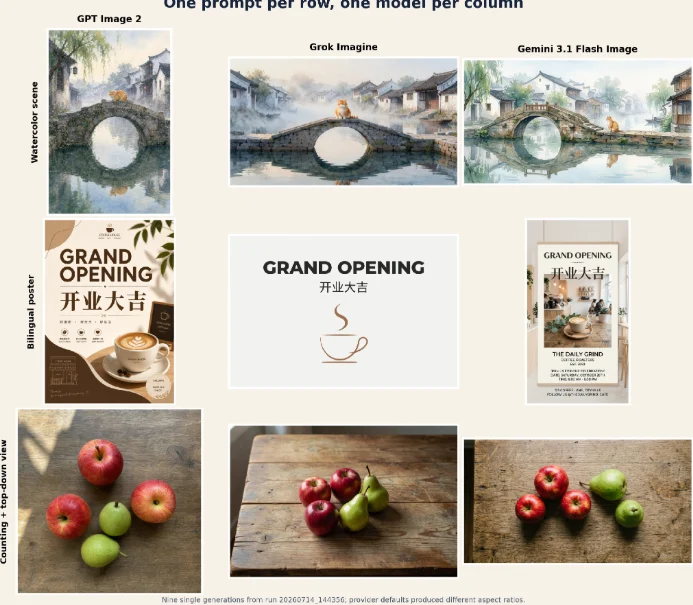
One generation per cell from run 20260714_144356. The models used their default output settings, including different aspect ratios.
Prompt 1: the same watercolor brief, three compositions
All three outputs included the requested water town, bridge, orange cat, mist, and reflection. The most immediate difference was framing. GPT Image 2 returned a tall portrait composition; Grok and Gemini returned wide landscapes.
GPT’s portrait frame made the bridge reflection a strong vertical centerpiece. The human review scored it 4 for instruction following and 5 for aesthetics, noting that the cat looked more prone than crouched. Grok placed the cat near the center and used a more photographic watercolor treatment, but the reviewer scored it 2/2 because the framing cut off part of the reflection and the fog obscured details. Gemini leaned into a lighter illustrated look with a broader view; it received 5 for instruction following and 4 for aesthetics, with detail quality as the main reservation.
None of those choices is automatically better. But they matter when an image must fit a newsletter banner, mobile cover, or social card. Because we used defaults, the aspect-ratio difference is part of the API experience we observed—not evidence that a model cannot produce another shape when explicitly configured.
Prompt 2: typography changes the comparison
The bilingual poster was the most practical test because malformed text can make an otherwise attractive image unusable.
GPT Image 2 produced a polished coffee poster with both required strings prominent and legible. It also added decorative microcopy and café details that were not requested. The reviewer scored it 4 for instruction following and 5 for aesthetics: slightly too complex, but strong overall.
Grok took the minimalist route: the required English and Chinese strings, a simple cup icon, and a large amount of white space. It followed the central text instruction while doing much less art direction around it. The 3/3 human score reflects that ambiguity: “minimalist” may have pushed the default result toward something too simple.
Gemini placed the required text on a poster shown inside a café scene. The central strings were readable, but it invented additional English details, a date, an address, and a social handle. Those extras can create cleanup work when a business needs only approved copy; the reviewer gave it 4/4.
This single prompt does not establish a universal text-rendering winner. It does show three useful profiles: polished campaign layout, strict minimalism, and environmental mockup.
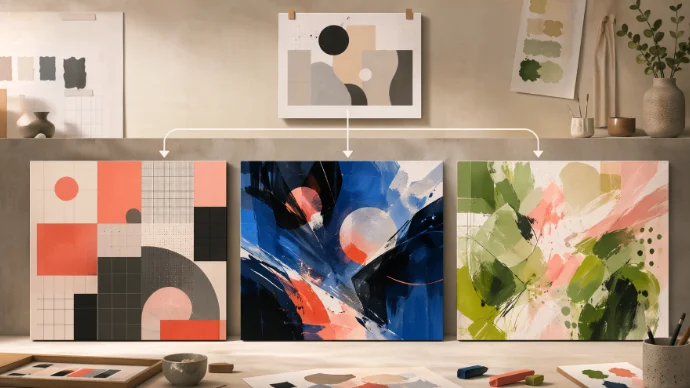
Editorial illustration generated with GPT Image 2. It introduces the theme; the benchmark evidence is shown in the real outputs below.
Prompt 3: all three counted correctly, but camera angle separated them
All three models generated exactly three red apples and two green pears. Counting—a common failure point in image generation—worked in every cell here.
Instruction following was not identical. GPT Image 2 and Gemini used clearly top-down views and each received 5/5 from the human reviewer. Grok showed the right fruit count but used a lower, roughly 45-degree camera angle. Its lighting still looked good, producing a 3 for instruction following and 4 for aesthetics.
That distinction is why a single “looks good” score is not enough. A client may care more about an exact camera angle or product count than about cinematic lighting.
The observed speed gap
The three Grok calls took 6.77, 6.33, and 7.83 seconds. Gemini took 18.12, 12.97, and 14.67 seconds. GPT Image 2 took 64.86, 39.76, and 68.62 seconds.
Those are strikingly different observations, but they are still only three calls per model. Queueing, provider load, image dimensions, and gateway behavior may all affect latency. We therefore describe the gap without claiming a stable speed ranking.
Comparable cost data was not recorded for all three routes, so this article deliberately does not turn partial billing information into a price comparison.
openai/gpt-image-2 output for img-002, run 20260714_144356. This is one selected generation, not a representative sample. Prompt: 设计一张咖啡店开业海报,现代简约风格,画面上清晰写出英文 GRAND OPENING 和中文「开业大吉」。
Three practical profiles
- GPT Image 2 received aesthetics 5 on all three prompts and handled the requested core poster text, but it was also the slowest route in this tiny run.
- Grok Imagine returned images quickly and reached aesthetics 4 on the fruit scene, while losing instruction points on the reflection, fog, and top-down angle.
- Gemini 3.1 Flash Image received instruction scores of 5, 4, and 5, but its poster added unrequested business details.
These profiles are more useful than an overall podium because the best choice depends on whether the job values layout polish, minimal output, exact composition, or iteration speed.
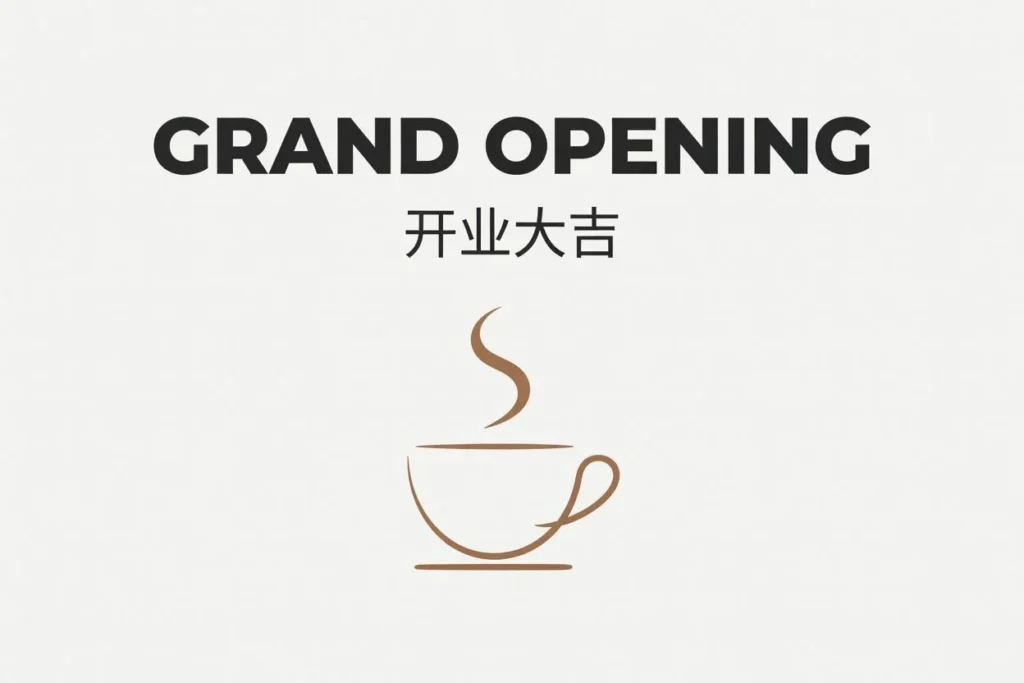
grok/grok-imagine-image output for img-002, run 20260714_144356. This is one selected generation, not a representative sample. Prompt: 设计一张咖啡店开业海报,现代简约风格,画面上清晰写出英文 GRAND OPENING 和中文「开业大吉」。
Limitations
This is a qualitative case study with one generation per prompt-model cell. Provider defaults were left in place, so the aspect ratios were not standardized. Every output has one human rating from the author, but there was no second rater and no LLM judge was applied to the images. The scores make the review traceable; they do not make it objective.
The next round should add repeated generations, fixed aspect ratios, blind human scoring, and prompts designed to test hands, small text, spatial relationships, and edit consistency. For a first pass, however, the nine images already make one point clearly: image generators can all satisfy the broad idea while making very different decisions about typography, framing, and how literally to follow the brief.
Explore the Models
Explore the current catalog on OrcaRouter Models.
This evaluation was run through OrcaRouter. The author works with OrcaRouter; model access does not imply affiliation with, endorsement by, or sponsorship from model providers.
Model names and logos are used descriptively. All trademarks belong to their respective owners.
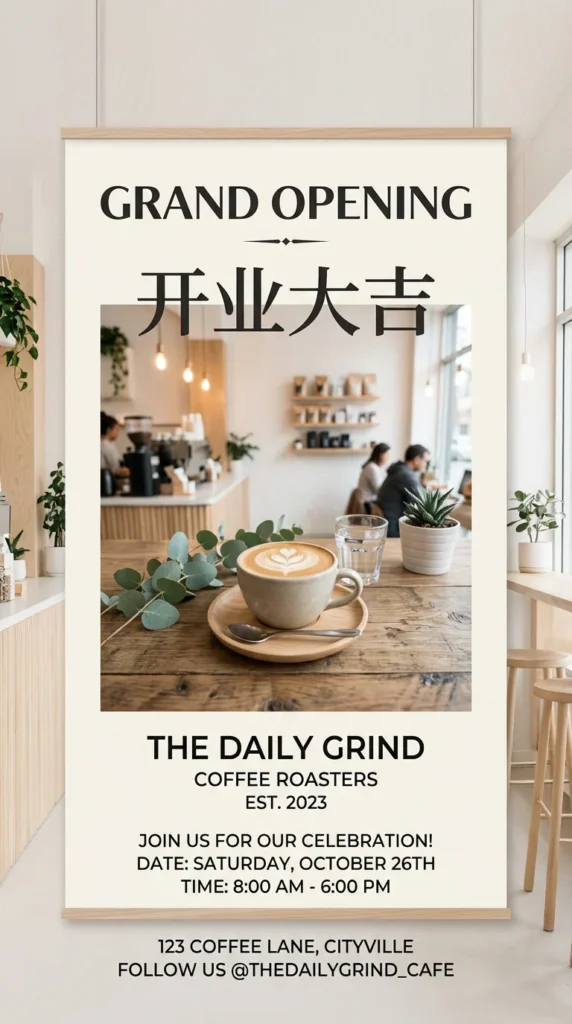
google/gemini-3.1-flash-image-preview output for img-002, run 20260714_144356. This is one selected generation, not a representative sample. Prompt: 设计一张咖啡店开业海报,现代简约风格,画面上清晰写出英文 GRAND OPENING 和中文「开业大吉」。
Sources
- Imagine Overview — SpaceXAI / xAI developer documentation; retrieved 2026-07-16.
- Gemini API image generation — Google AI for Developers; retrieved 2026-07-16.