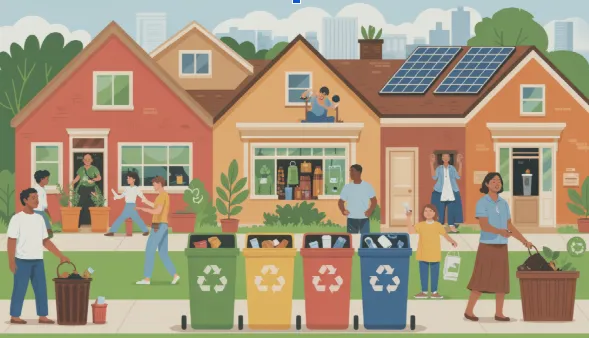

In a city known for sprawling highways and energy infrastructure, Houston is quietly building another kind of system—one that turns food scraps and yard waste into fertile soil. Composting, the biological process of breaking down organic matter into nutrient-dense material, has become a cornerstone of urban sustainability efforts. For a metro area generating millions of tons of waste annually, the practice offers a tangible way to reduce landfill dependency, cut methane emissions, and rebuild soil health in a region where green space is increasingly precious.
This shift isn’t just happening in backyards. It’s taking root in community gardens, municipal programs, and even in industries not typically associated with environmental stewardship—like book publishing. As Houston’s composting infrastructure matures, local businesses are beginning to see waste not as a disposal problem, but as a resource worth reclaiming.
Why Composting Matters in a City Like Houston
Houston’s waste stream is massive. The average American generates over 4 pounds of trash per day, much of it organic. In a city of nearly 2.3 million people, that adds up quickly. When organic waste decomposes in landfills without oxygen, it produces methane—a greenhouse gas far more potent than carbon dioxide in trapping heat.
Composting interrupts that cycle. By diverting food scraps, paper products, and yard trimmings into controlled decomposition systems, the process yields several environmental benefits:
- Significant reductions in landfill volume and methane output
- Creation of soil amendments that improve water retention and reduce erosion
- Lower demand for synthetic fertilizers, which carry their own environmental costs
- Support for urban agriculture and green infrastructure projects
In dense urban environments, community composting also builds social capital. Shared drop-off sites and neighborhood programs create feedback loops where residents see the direct results of their participation—whether in the form of finished compost for local gardens or reduced waste hauling fees.
Houston’s Growing Composting Infrastructure
Over the past decade, Houston has seen a steady expansion of composting services, driven by both grassroots organizing and municipal interest. While the city doesn’t yet have a universal curbside organics program, several key players have emerged to fill the gap.
Local recycling centers have begun accepting organic waste alongside traditional recyclables, offering drop-off points for residents without access to home composting setups. Nonprofit organizations and community gardens have launched education campaigns, teaching Houstonians how to separate compostable materials and manage small-scale systems.
For those seeking convenience, subscription-based compost collection services like Happy Earth Compost have become increasingly popular. These companies provide bins, schedule regular pickups, and handle the composting process off-site—making participation accessible even for apartment dwellers or businesses without the space for on-site systems. In Houston, options like Moonshot Compost and WasteLess Compost have built similar models around the same convenience-first approach.
The model is straightforward: customers receive a container for organic waste, fill it throughout the week, and leave it out for scheduled collection. The material is then transported to a commercial composting facility where it’s processed under controlled conditions. Some services even return finished compost to subscribers, closing the loop entirely.
The Food Waste Problem and Composting’s Role
Food waste represents one of the largest and most preventable components of the municipal waste stream. Nationally, nearly 40% of food produced in the United States goes uneaten, according to research from the Natural Resources Defense Council. Much of that waste ends up in landfills, where it contributes to greenhouse gas emissions and represents a staggering loss of resources—water, energy, and labor—that went into producing it.
Composting addresses the disposal side of this equation. While reducing food waste at the source remains the priority, composting ensures that unavoidable scraps—vegetable peels, coffee grounds, spoiled produce—are transformed into something useful rather than buried. The process also diverts paper products, cardboard, and other cellulose-based materials that would otherwise take up landfill space.
For Houston, where summer heat accelerates decomposition and odor issues in traditional waste bins, composting offers a cleaner alternative. Organic waste collected separately doesn’t sit in trash cans for days, reducing pest attraction and improving sanitation in residential and commercial settings alike.
What Houston Can Learn from Smaller Texas Cities
While Houston works to scale its composting efforts, smaller cities in Texas have already implemented successful programs worth studying. Kyle, a fast-growing suburb between Austin and San Marcos, has integrated composting into its municipal services with notable results.
Kyle’s approach includes several elements that could translate to a larger urban context:
- Accessible infrastructure: The city provides composting bins and clear guidelines on what materials are accepted, reducing confusion and contamination.
- Public education: Regular workshops and school programs have built widespread understanding of composting’s benefits and mechanics.
- Policy incentives: Local ordinances encourage composting through fee structures that reward waste diversion and penalize excessive landfill use.
- Partnerships: Collaboration between the city, private haulers, and composting facilities has created a reliable supply chain for organic waste processing.
Houston faces different challenges—greater scale, more diverse neighborhoods, and a more complex waste management bureaucracy. But the core lessons from Kyle remain relevant: clear communication, convenient access, and institutional support can drive participation even in communities without a strong environmental culture.
Starting at Home: Composting Basics for Houstonians
For residents interested in composting but unsure where to begin, home systems offer a low-cost entry point. Even a small backyard setup can divert hundreds of pounds of waste annually while producing valuable soil for gardens and landscaping.
The fundamentals are simple:
- Choose a bin: Options range from open piles to enclosed tumblers. In Houston’s humid climate, enclosed bins help manage moisture and deter pests.
- Balance inputs: Effective composting requires a mix of “greens” (nitrogen-rich materials like food scraps and grass clippings) and “browns” (carbon-rich materials like dry leaves and shredded paper). A rough 2:1 ratio of browns to greens works well.
- Maintain airflow: Turning the pile every few weeks introduces oxygen, which speeds decomposition and prevents anaerobic conditions that cause odor.
- Monitor moisture: The pile should feel like a wrung-out sponge—damp but not waterlogged. Houston’s summer rains can oversaturate outdoor bins, so drainage is important.
For apartment dwellers or those without yard space, vermicomposting—using worms to break down food scraps in a compact bin—offers an indoor alternative. The process is odorless when managed correctly and produces both compost and nutrient-rich liquid fertilizer.
Why Book Publishers Should Pay Attention
At first glance, book publishing and composting seem unrelated. But the industry generates significant organic waste—paper trimmings, damaged stock, cardboard packaging, and office food waste—that could be diverted from landfills.
For Houston-based publishers, integrating composting into operations offers several advantages:
- Waste reduction: Paper products make up a substantial portion of publishing waste. While recycling handles much of this, composting can process materials contaminated with food or ink that recycling facilities reject.
- Operational savings: Reducing landfill-bound waste can lower hauling fees, especially as disposal costs rise and landfill capacity tightens.
- Brand alignment: As readers increasingly value sustainability, publishers that demonstrate environmental responsibility strengthen their market position.
- Community engagement: Partnering with local composting initiatives or supporting literacy programs through compost donations can build goodwill and local connections.
Some forward-thinking publishers have already begun exploring these opportunities. By auditing waste streams, identifying compostable materials, and working with collection services, they’re finding that sustainability and business efficiency can align.
The shift doesn’t require a complete operational overhaul. Starting with break room composting or partnering with a pickup service for paper waste can demonstrate feasibility before expanding to larger-scale efforts. For an industry built on storytelling, there’s also narrative value in being able to tell customers that unsold books and production scraps are returning to the soil rather than sitting in a landfill.
The Path Forward
Houston’s composting movement is still in its early stages compared to cities like San Francisco or Seattle, where municipal organics collection is standard. But momentum is building. As more residents and businesses participate, the infrastructure will continue to improve—more drop-off sites, better processing capacity, and eventually, perhaps, city-wide curbside collection.
For industries like book publishing, the opportunity is clear: waste doesn’t have to be waste. With the right systems in place, organic materials can become resources, costs can be reduced, and environmental impact can be meaningfully lowered. In a city as large and complex as Houston, every sector that takes responsibility for its waste stream moves the entire system forward.
The question isn’t whether composting makes sense—it does. The question is how quickly Houston’s institutions, businesses, and residents will embrace it.