
Most homeowners pick a roof the wrong way. They start with price, fall in love with an aesthetic, and only later discover that the material they chose sheds granules in the first Texas summer or buckles after a single bad hail season. The decision deserves more than a quick quote comparison.
Picking the right roofing material for a Texas home means weighing lifespan against upfront cost, summer heat against storm impact, and neighborhood curb appeal against long-term resale value. This guide breaks all of that down in plain language so you can walk into any contractor conversation with a clear head.
The Texas Weather Problem No Homeowner Can Ignore
Texas is not a normal climate for roofing. The heat alone would be enough of a challenge. Add the wind, the violent spring storms, and the hail, and you have a testing ground unlike almost anywhere else in the country.
Hail is the headline threat. According to NOAA’s National Weather Service Storm Prediction Center, there were 5,432 hail events across the U.S. in 2025, and Texas and Kansas led all states in hail frequency that year, per the Insurance Information Institute’s 2025 hail statistics report. North Texas, including the Dallas-Fort Worth corridor, sits squarely in the most active hail zone in the state.
That geographic reality should be the first filter you apply to any roofing decision. A material that performs beautifully in San Diego can fail badly in Collin County. So before you think about color or style, think about what the sky above your zip code is likely to throw at your house over the next 30 years.
How the Main Roofing Materials Actually Compare
Here is a straight comparison of the four most common residential roofing materials installed across Texas today. All lifespan figures reflect proper installation and routine maintenance.
| Material | Typical Lifespan | Hail Resistance | Heat Reflectivity | Relative Upfront Cost |
| 3-Tab Asphalt Shingles | 15 to 20 years | Low | Low | Lowest |
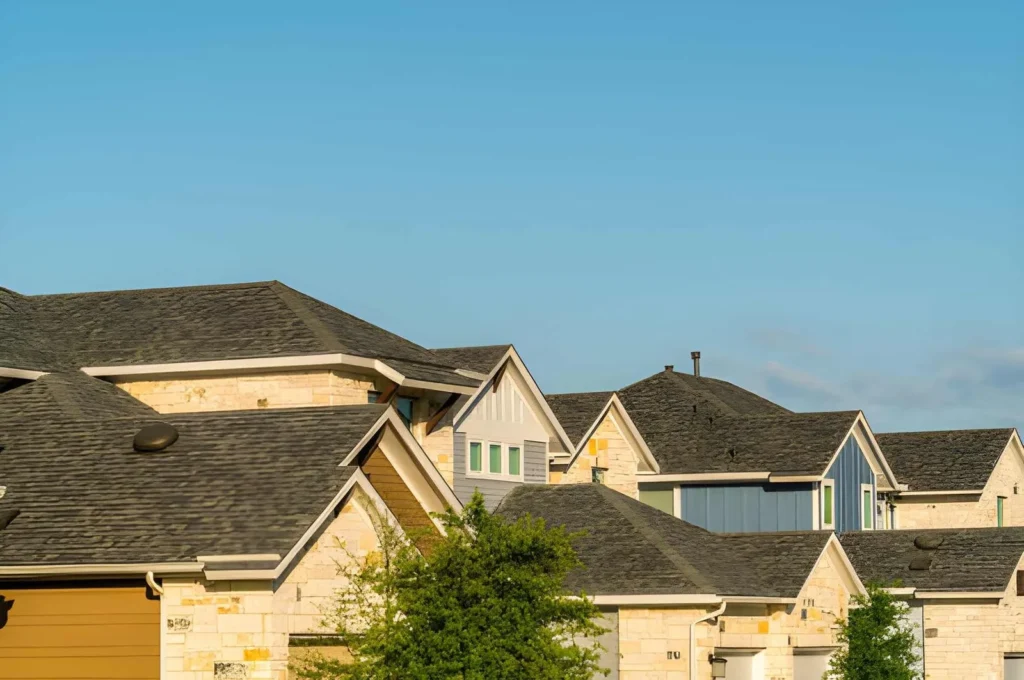
| Architectural Asphalt Shingles | 25 to 30 years | Moderate | Low to moderate | Low to moderate |
| Clay or Concrete Tile | 50 to 100 years | Moderate (brittle) | Moderate | High |
| Metal (Steel or Aluminum) | 40 to 70+ years | High | High | Moderate to high |
The table makes one pattern obvious. Asphalt is cheap to install but short-lived, and in a state that averages hundreds of hail events annually, “short-lived” can mean even shorter than the warranty suggests. Clay tile lasts beautifully but is brittle under impact and heavy enough to require reinforced framing. Metal lands in an interesting middle ground: expensive upfront but genuinely durable where it counts.
Why Metal Performs Differently in the Texas Heat
The energy angle on metal roofing is real, and it matters in a climate where air conditioning runs from April through October. A reflective metal roof bounces solar radiation rather than absorbing it, which keeps the attic and living space cooler without extra insulation work.
The U.S. Department of Energy notes that a cool roof is designed to reflect more sunlight than a conventional one, and that while conventional roofs can reach 150°F or more on a sunny summer afternoon, a reflective roof under the same conditions could stay more than 50°F cooler, according to the DOE’s EnergySaver resource on cool roofs. For a Texas homeowner running central air eight months a year, that temperature difference translates directly into monthly savings.
“You will only have to replace the roof every 50 to 100 years as compared to 20 years,” said a metal roofing specialist quoted by Facilities Management Insights, noting the higher craftsmanship involved in metal installation justifies its upfront premium over the full ownership period. That long replacement cycle is where the real math changes. Running two or three asphalt replacements over a 60-year ownership period adds up to far more than the price gap between asphalt and metal at the start. The International Association of Certified Home Inspectors projects metal roofing to last between 40 and 80 years, meaning a homeowner who installs metal in their 40s may never need to think about a new roof again.
The Three Metal Roof Styles Worth Understanding
Not all metal roofs look or behave the same. If you are shopping options in the North Texas market, you will mostly encounter three styles, and your choice between them affects both performance and final cost.
- Corrugated panels. The most economical metal option. Lightweight, fast to install, and available in a wide range of colors. Works well for utility buildings and some residential applications, though exposed fasteners require periodic inspection.
- Standing seam. The premium residential standard. Concealed fasteners create a cleaner look and better seal, and the raised seams allow for thermal expansion without stress cracking. If longevity is the priority, this is the style most contractors recommend first.
- Metal shingles. Engineered to look like traditional asphalt or wood shingles from street level, but built from steel or aluminum underneath. A practical choice if your HOA has aesthetic rules or you want to blend in with the neighborhood without giving up the durability advantage.
Homeowners in Richardson who want guidance on which profile fits their structure can connect with a metal roofing Richardson specialist who can assess your roof slope, framing, and sun exposure before recommending a specific system.
The 3-Question Rule: A Practical Decision Framework
Here is the framework I would use before signing anything with a roofing contractor. Three questions. Answer all three honestly, and the right material usually picks itself.
Question 1: How long are you staying in the house? If the answer is under 10 years, asphalt architectural shingles may be perfectly rational. If it is 20 years or more, run the full lifetime cost numbers and metal almost always wins on price per year of service.
Question 2: What is your attic insulation situation? A poorly insulated attic limits how much any roof material can improve your energy bills. Before upgrading to a premium metal system, confirm your attic insulation meets current recommendations. A reflective roof above a poorly insulated space still helps, but the gains are smaller.
Question 3: Does your current framing support a heavier alternative? This only applies if you are considering clay or concrete tile. Have a contractor check your joist load ratings before falling in love with a tile aesthetic. Metal, by contrast, is light enough that most existing frames support it without modification.
Run those three questions in order. They filter out most of the noise and keep the decision grounded in your actual situation rather than marketing brochures.
Contractor Selection Is Not an Afterthought
The material you choose matters. The installation quality matters more. A standing seam system installed with incorrect seam spacing or improper ventilation will underperform a well-installed corrugated panel every single time. Before hiring anyone, ask for completed local references, verify manufacturer certification for the specific system they’re proposing, and confirm they pull permits and follow local building codes.
In a market like North Texas where storm season brings a wave of out-of-state contractors chasing insurance claims, vetting your roofer is as important as choosing your material. The ones who stay after the storm cleanup season are usually the ones worth trusting.
Making the Final Call
There is no universally correct roofing material. But for most Texas homeowners who plan to stay in their home for 15 or more years and want a system that handles both brutal heat and severe storms without demanding constant repairs, metal roofing makes a compelling case. The upfront cost is real. So is the payoff over time.
Start with your timeline, check your framing, get at least three quotes from credentialed local contractors, and ask each one to break down the cost per year of expected service. That single calculation often makes the right decision obvious before you ever have to think about which shingles look best from the curb.