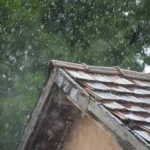


A single hailstorm can shave years off your roof’s life, and you might not notice a thing from the ground. Most homeowners don’t. By the time ceiling stains show up in the spare bedroom, the rot has already moved into the decking, the insulation, and your wallet. The good news is that storm damage follows predictable patterns. Once you know what to look for, you can spot trouble within an hour of the sky clearing.
Why Storm Damage Hides So Well
Your roof is built to shed water, not to withstand a direct hit from a golf ball sized chunk of ice. Asphalt shingles flex on impact, and the damage often stays on the underside. The granule layer takes the abuse, but the mat underneath cracks, and that crack stays hidden until the next heavy rain works its way in.
Wind does the same thing. A strong gust lifts a shingle’s edge, breaks the sealant strip, and sets it back down looking perfectly normal. You get a 60 mph storm, the roof looks fine on Tuesday, and the first leak shows up at Thanksgiving. That gap between event and symptom is exactly why a quick visual check matters.
There’s a real cost to waiting. The Federal Emergency Management Agency tracks disaster losses across the country, and roof damage is consistently among the most common property claims after severe weather events. FEMA’s data on disaster declarations shows that severe storms generate the highest number of federal declarations of any hazard type, year after year. That tell you how often these events hit ordinary neighborhoods, not just news headlines.
Here’s the thing nobody says out loud: the insurance adjuster works for the insurance company. The public adjuster works for you. And the roofing contractor, if you hire a reputable one, works for you too. Your job is to document what you see before any of them show up.
The 15 Minute Ground Inspection
You don’t need a ladder to start. Grab a pair of binoculars and walk the perimeter of your house. Look at every roof plane from at least two angles, because damage that’s invisible from the driveway shows up clearly from the side yard.
- Granule loss in the gutters: If the downspout areas show a buildup of dark sand, that’s the protective coating washing off your shingles. Heavy granule loss after a single storm means the shingles took a beating.
- Dented vents and flashing: Metal roof vents, gutters, and flashing dent on impact. If the metal is marked up, the shingles nearby took the same hit.
- Shingle edges lifting: Look for tabs that don’t lie flat against the course below them. A lifted edge is a torn sealant strip, and that’s a wind damage signature.
- Bruising on the shingle surface: Dark, soft spots that look like a bruise. Press gently if you can reach them, they’ll feel spongy compared to intact shingles.
If you spot any of these, you’re past the “keep watching it” stage.
What Hail Damage Actually Looks Like
Hail damage gets misdiagnosed more than any other roofing issue. The size of the hail matters less than the force of the impact, and force depends on wind speed, hail density, and the angle of the fall. A marble sized stone falling straight down does nothing. A pea sized stone driven by 50 mph gusts can crack a shingle.
Look for circular bruises, not visible holes. Newer architectural shingles resist puncture, so the damage shows as a soft spot with granules knocked loose. On older shingles, you’ll see actual splits radiating from a center point. The splits are the serious ones, and they spread over time as the shingle heats and cools.
The National Oceanic and Atmospheric Administration tracks severe storm frequency across the country, and the patterns are worth knowing if you own a home in the Plains. NOAA’s severe weather data shows that hail reports of one inch diameter or larger occur most often in a corridor stretching from Texas through Kansas and Nebraska. If you live in that band, this isn’t an if, it’s a when. That changes how you budget for roof maintenance, and honestly, it changes how you pick a contractor.
Wind Damage Is Easier to Miss and Worse to Ignore
Wind damage doesn’t announce itself with visible holes. It announces itself with sealant failure. When a shingle lifts in a gust, the adhesive strip tears away from the shingle below it. The tab settles back down, but it’s no longer glued. The next storm lifts it again, and this time the nails start working loose.
Check the ridge caps first. They’re the most exposed part of the roof, and they take wind damage before anything else. Look for caps that sit crooked or show exposed nail heads. Then check the rakes, the edges where the roof meets the gable end. That’s the second most vulnerable spot.
A loose shingle is not an emergency. A loose shingle with exposed nail heads is an invitation for water. The nails have rubber washers under their heads, but those washers dry out and crack after years of UV exposure. Once the washer fails, every rainstorm becomes a slow drip directly into the decking, and you won’t see it until the plywood starts to rot from the inside out.
Inside Signs You Can’t Ignore
Go into your attic on a sunny day. Turn off the lights and look up at the underside of the roof deck. Light coming through means holes, and holes mean water is already getting in. Then look for dark streaks on the rafters and the insulation. Those streaks are water stains, and they tell you exactly where the leak path runs.
Don’t stop at the attic. Walk through every room on the top floor and look at the ceilings near exterior walls. A yellow or brown spot the size of a quarter is a warning. A spot that’s grown since last week is active damage. If you feel a soft spot in the drywall, the water has already soaked through, and the fix just got more expensive.
One thing to understand about water: it doesn’t travel straight down. It follows the slope of the decking, runs along the trusses, and drips off at the lowest point. A stain in the living room ceiling might trace back to a leak three feet up the roof that you’d never find without a professional inspection.
Gutters Tell the Real Story
Your gutters collect two things after a storm: water and evidence. Check the gutters and the downspout openings for granule buildup. A handful of granules is normal wear over a season. A thick layer after a single storm means shingles are shedding their protective coating, and that coating is what keeps UV rays from cooking the asphalt underneath.
The Department of Energy has published long standing guidance on roof reflectance and attic heat gain, and the physics matters here. Darker, granule depleted shingles absorb more solar radiation, which drives up attic temperatures, and higher attic temperatures accelerate the aging of the decking and the shingles still intact. DOE’s cool roofs guidance documents how surface reflectance directly affects how much heat builds up in the structure below. A roof that’s lost its granules isn’t just leaking, it’s also cooking itself.
Don’t clean the gutters until you’ve taken pictures. That granule buildup is your evidence for the insurance claim, and once you flush it away, you can’t document it.
When to Call a Professional Instead of Climbing Up
Grab the phone when you see any of these four things:
- Shingles with visible cracks or missing pieces.
- Dented metal vents, flashing, or gutters.
- Granule buildup in the gutters that appears after a single storm.
- Any interior water stain that wasn’t there before.
If you see all of them, don’t wait for the next storm to make things worse. Water damage compounds daily, and the difference between a repair and a full replacement is often just a matter of timing. When you live in a hail corridor, the smart play is to have a professional assess the damage within a week of the storm, while the evidence is still fresh and the insurance claim is still easy to document.
If you’re in south central Kansas and you’ve spotted any of these signs, getting emergency roof repair in Wichita handled quickly can mean the difference between patching a few shingles and replacing the whole deck. Local contractors know the hail patterns, they know what the local insurance adjusters expect to see, and they know which neighborhoods got hit hardest.
Document Everything Before You Call
Before you make that call, take 20 minutes to document. Walk around the house and photograph every roof plane from the ground. Get close ups of any dents in the metal, any granule piles in the gutters, and any interior stains. Note the date of the storm and the estimated hail size if you saw it fall. Email the photos to yourself so they’re timestamped.
This isn’t busywork. Insurance adjusters evaluate claims based on documented evidence, and a homeowner who shows up with dated photos and a clear timeline has a head start over a homeowner who just says “my roof leaks.” The 20 minutes you spend documenting could save you thousands on the claim.
Then ask the contractor for a written inspection report that includes photos of the damage they find. A good roofer will take their own photos from the roof surface, and those photos show the bruising and cracking that you can’t capture from the ground. That report becomes the backbone of your insurance claim.
One more thing: check your insurance policy’s time limits before you call anyone. Most policies require you to file a claim within a specific window after the damage occurs, and that window varies by state and by carrier. If you’re past the deadline, the damage is on you, and that changes every decision you make next. So check the policy first, then make the calls.
Storm damage doesn’t get better with time. It gets worse, and it takes your savings with it while it does. The roof that looks fine from the driveway today is the roof that leaks three storms from now. The only question is whether you catch it early enough to repair it, or late enough to replace it. Which one would you rather pay for?