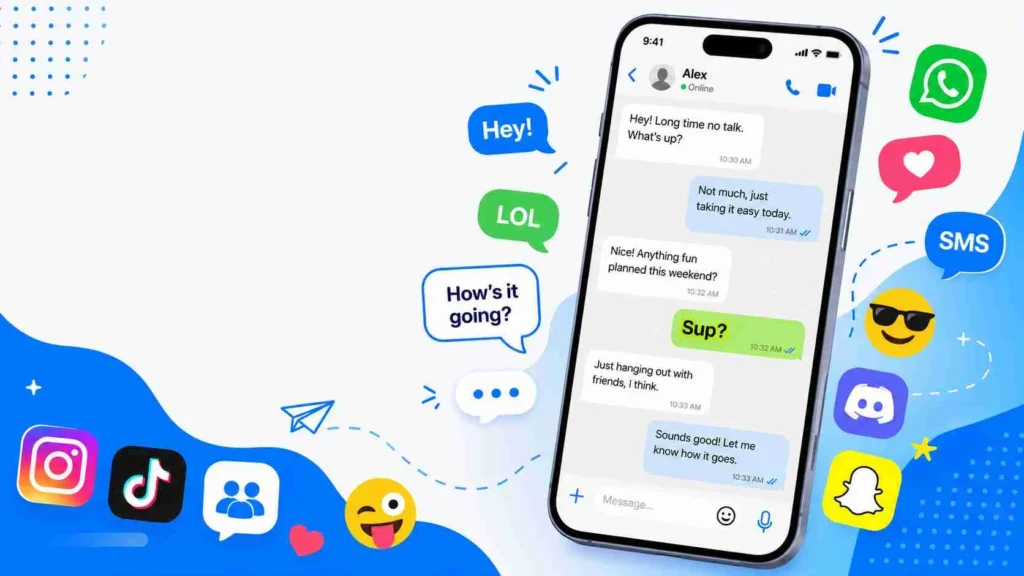

Sup meaning in text refers to the casual slang greeting “What’s up?” People use it to say hello, start a conversation, or ask what someone is doing in text messages, chats, and social media.
Have you ever opened a message and seen nothing but “Sup?”
It’s one of the shortest messages someone can send. Even so, it says a lot. Depending on the situation, it can mean hello, what are you doing, how are you, or simply I want to start a conversation.
The word has become one of the most common greetings in digital communication. You’ll see it in text messages, Snapchat chats, Instagram DMs, WhatsApp conversations, Discord servers, gaming communities, and almost every messaging platform.
Despite its popularity, many people still wonder:
- What does sup mean in text?
- Is it the same as what’s up?
- Is sup flirting?
- How should you reply?
- Is it rude or friendly?
- Can you use it in professional conversations?
The answer depends on the context, your relationship with the other person, and the tone of the conversation.
This guide explains everything you need to know about the sup meaning in text, including real examples, texting etiquette, common misunderstandings, and the best ways to respond naturally.
What Does Sup Mean in Text?
The sup meaning in text is simple.
“Sup” is a casual, shortened version of “What’s up?”
People use it as an informal greeting when they want to say hello or begin a conversation.
Instead of typing the full phrase, many people simply write:
- Sup
- Sup?
- S’up
- SUp
- Sup!
Although it comes from the question “What’s up?”, most people don’t expect a detailed answer.
In everyday texting, sup often means:
- Hello
- Hey
- What are you doing?
- How’s it going?
- What’s new?
- What’s happening?
Most of the time, it’s simply a conversation starter.
Quick Definition
| Text | Meaning | Tone | Typical Use |
|---|---|---|---|
| Sup | What’s up? | Casual | Friends |
| Sup? | What are you doing? | Friendly | Text messages |
| Sup! | Hey! | Relaxed | Social media |
| S’up | What’s up? | Informal | Online chat |
One small word can perform several jobs in a conversation, which explains why it remains so popular after many years.
Sup Meaning in Texting
Texting changes the way people communicate.
Instead of writing complete sentences every time, people naturally shorten words to save time and make conversations feel quicker.
That’s exactly how sup became so common.
When someone texts sup, they’re rarely looking for a formal response. Instead, they’re trying to start a relaxed conversation.
Think of it as knocking on someone’s door before entering.
People Usually Text “Sup” When They Want To:
- Say hello
- Check you’re available
- Start chatting
- Break the silence
- Reconnect after a while
- Continue a previous conversation
- See what you’re doing
- Keep a friendship active
Unlike formal greetings, sup doesn’t carry much pressure.
A simple reply usually keeps the conversation moving.
Why Do People Say “Sup” Instead of “What’s Up?”
The answer is convenience.
Digital conversations favor speed.
Instead of typing eight characters plus punctuation, people naturally shorten familiar phrases.
Over time, “What’s up?” evolved into several forms:
What's up?
      ↓
What's up
      ↓
S'up
      ↓
Sup
This shortening happens with many English expressions.
For example:
| Original Phrase | Shortened Version |
|---|---|
| What’s up | Sup |
| Are you | U |
| Before | B4 |
| See you later | CUL8R |
| Be right back | BRB |
| By the way | BTW |
The goal isn’t perfect grammar.
It’s faster, friendlier communication.
Does “Sup” Always Mean “What’s Up?”
Usually, yes.
However, the exact meaning changes slightly depending on the conversation.
For example:
Greeting
Sup!
Meaning:
“Hello.”
Conversation Starter
Sup?
Meaning:
“What are you doing?”
Checking In
Hey, sup?
Meaning:
“How have you been?”
Looking for Company
Sup tonight?
Meaning:
“What are you doing tonight?”
Casual Curiosity
Sup with you lately?
Meaning:
“What’s been happening in your life?”
Context changes everything.
That’s why the same word can sound completely different depending on who sends it.
Is “Sup” a Greeting or a Question?
Interestingly, it’s both.
In spoken English, people often ask questions without expecting long answers.
For example:
- How’s it going?
- What’s up?
- How are things?
- Everything good?
“Sup” belongs to this category.
Sometimes it functions as a greeting.
Sometimes it’s a genuine question.
Sometimes it’s simply a conversation opener.
Compare These Examples
Example 1
Alex:
Sup!
Jordan:
Hey!
Here, sup simply means hello.
Example 2
Emma:
Sup?
Noah:
Just watching a movie.
Here, it means:
“What are you doing?”
Example 3
Chris:
Sup lately?
Taylor:
Started a new job.
Now it means:
“What’s new in your life?”
The wording stays the same.
The meaning shifts naturally.
Sup Meaning in Chat
The sup meaning in chat is almost identical to texting.
you’re chatting through an app or a website, people use it as a relaxed way to start talking.
You’ll commonly see it in:
- Private chats
- Gaming communities
- Group conversations
- Social media DMs
- Live chat platforms
- Community forums
Since chat conversations happen in real time, shorter greetings feel natural.
Instead of writing:
Hello. How are you doing today?
Most people simply write:
Sup?
The shorter version feels quicker and more conversational.
Examples of “Sup” in Real Conversations
Seeing real conversations helps you understand the meaning much faster.
Friends
Jake
Sup?
Mia
Nothing much. Just got home.
Classmates
Lucas
Sup? Finished the assignment?
Emma
Almost done.
Gaming Friends
Ryan
Sup bro.
David
About to jump into a match.
Family
Brother
Sup?
You
Watching TV.
Coworkers (Casual Workplace)
Sarah
Sup? Ready for lunch?
Ben
Definitely.
Notice something?
None of these replies are long.
That’s completely normal.
Sup Slang Meaning
Many people search for the sup slang meaning because they assume it’s an internet abbreviation.
Technically, sup is considered slang.
It’s an informal expression people use in relaxed conversations.
Unlike formal English, slang changes over time.
Some slang disappears after a few years.
Other expressions become permanent parts of everyday language.
“Sup” belongs to the second category.
It’s been around for decades and continues to appear in millions of conversations every day.
Several factors explain its lasting popularity:
- It’s easy to type.
- It’s easy to pronounce.
- Almost everyone understands it.
- It works in nearly every casual conversation.
- It sounds friendly.
- It starts conversations naturally.
Few slang expressions have remained relevant for as long.
Is “Sup” an Acronym or an Abbreviation?
This question causes a surprising amount of confusion.
The answer is straightforward.
“Sup” Is Not an Acronym.
An acronym uses the first letters of several words.
Examples include:
| Acronym | Meaning |
|---|---|
| NASA | National Aeronautics and Space Administration |
| ASAP | As Soon As Possible |
| LOL | Laughing Out Loud |
| FYI | For Your Information |
“Sup” doesn’t fit this definition.
Instead, it’s a shortened form of an existing phrase.
That makes it an abbreviation and a piece of internet slang.
Quick Comparison
| Term | Is “Sup” One? | Explanation |
|---|---|---|
| Acronym | ❌ No | Doesn’t represent multiple words |
| Abbreviation | ✅ Yes | Shortened from “What’s up?” |
| Slang | ✅ Yes | Informal everyday expression |
| Greeting | ✅ Yes | Often replaces “hello” |
Understanding this distinction helps avoid a common mistake seen across many websites.
Where Did “Sup” Come From?
Although texting made the word famous, sup actually existed long before smartphones.
Its roots trace back to spoken English.
People casually shortened “What’s up?” while speaking.
Instead of saying every word clearly, they naturally blended the sounds together.
What's up?

↓

Whassup

↓

'Sup

↓

Sup
This kind of language evolution happens constantly.
People simplify familiar phrases during everyday speech.
Eventually, the spoken version becomes common enough to appear in writing.
That is exactly what happened with sup.
When SMS texting became popular in the late 1990s and early 2000s, short messages mattered because every character counted.
People quickly adopted shorter greetings.
The rise of instant messaging accelerated the trend even further.
Platforms like early chat rooms, MSN Messenger, AOL Instant Messenger, Yahoo Messenger, and later social media introduced millions of users to quick, informal conversations.
Today, “sup” feels completely natural in digital communication because generations of internet users have adopted it as part of everyday online language.
How “Sup” Became Part of Internet Culture
Language on the internet moves quickly.
Words that save time often spread the fastest.
“Sup” became popular because it met several important needs.
It was:
- Short
- Friendly
- Easy to recognize
- Easy to type
- Easy to answer
As texting expanded beyond computers and into mobile phones, people naturally favored brief greetings over longer introductions.
Instead of typing:
Hey, how have you been doing today?
Many people simply wrote:
Sup?
That tiny message accomplished the same goal while feeling more relaxed.
Today, you’ll find “sup” in nearly every corner of digital communication, from casual text messages to gaming chats and social media conversations.
How People Use “Sup” Today
The meaning of sup hasn’t changed much over the years. What has changed is where people use it.
Today, you’ll see “sup” everywhere people chat online. It works as a quick greeting, a conversation starter, or a casual way to check in with someone. Because it’s informal, it fits naturally into digital conversations where speed and friendliness matter.
Here are the most common situations where people send “sup.”
Talking to Friends
Friends use sup more than anyone else.
Instead of writing a long greeting, they send one word to start talking.
Example
Ava:
Sup?
Liam:
Just got home. You?
Noah:
Sup bro.
Ethan:
Nothing much. Playing Xbox.
In these conversations, sup feels effortless. No one expects a formal reply.
Checking on Someone
Sometimes “sup” means, “I haven’t talked to you in a while.”
Example
Sophia:
Hey, sup? Haven’t heard from you lately.
Olivia:
I’ve been busy with work.
Here, the greeting also shows interest in the other person’s life.
Starting a Conversation
Many people send “sup” simply because they want someone to talk to.
Example
Sup?
A reply like:
Not much. What’s going on?
opens the door to a longer conversation.
Making Plans
People often use “sup” before inviting someone somewhere.
Example
Sup tonight?
Translation:
What are you doing tonight?
Another example:
Sup this weekend?
Meaning:
Do you have any plans?
Reconnecting
After weeks or months without talking, people often avoid awkward introductions.
Instead, they send:
Sup?
It’s simple, friendly, and doesn’t feel forced.
What Does “Sup” Mean on Different Platforms?
Although the word stays the same, people use it a little differently depending on the platform.
Let’s look at the most common ones.
Sup Meaning on Snapchat
Snapchat conversations tend to be short and spontaneous.
That makes sup one of the platform’s favorite greetings.
People usually send it to:
- Start a streak conversation
- Continue a chat
- Ask what someone is doing
- Start flirting
- Respond to a Story
Example
Sup?
Just chilling.
Or
Sup? Saw your Story.
This naturally leads into another topic.
Because Snapchat focuses on casual communication, “sup” fits perfectly.
Sup Meaning on Instagram
Instagram DMs are another place where sup appears frequently.
Someone might message:
Sup?
after:
- Viewing your Story
- Liking your post
- Following you
- Finding your profile
It serves as an easy conversation opener.
Example
Sup? Nice vacation photos.
Or
Sup? Haven’t talked in forever.
The message feels friendly instead of overly formal.
Sup Meaning on TikTok
Although TikTok is built around videos, direct messages have become increasingly popular.
People often use “sup” when:
- Starting a conversation
- Responding to shared videos
- Messaging mutual followers
Example:
Sup? That video was hilarious.
The greeting immediately creates a relaxed tone.
Sup Meaning on WhatsApp
WhatsApp conversations often resemble everyday texting.
You’ll commonly see:
- Sup
- Sup?
- Hey sup
- Yo sup
Examples:
Sup?
Just eating dinner.
or
Sup this afternoon?
Nothing planned yet.
Because many WhatsApp conversations happen among family and close friends, “sup” feels natural.
Sup Meaning on Discord
Discord communities revolve around real-time communication.
You’re chatting with gaming friends or hobby groups, “sup” appears constantly.
Examples include:
Sup everyone!
Sup guys.
Sup, anyone online?
It’s often used to greet an entire group instead of one person.
Sup in SMS and iMessage
Traditional text messaging hasn’t disappeared.
Millions of people still communicate through SMS and iMessage every day.
Here, sup keeps its original purpose.
Examples include:
Sup?
Sup after work?
Sup this morning?
Because texting is usually personal, the greeting feels warm without being overly casual.
Is “Sup” Flirting?
This is one of the most searched questions online.
The honest answer is:
Sometimes.
The word itself isn’t flirtatious.
The situation determines its meaning.
Think of “sup” like smiling at someone.
A smile can be:
- Friendly
- Romantic
- Polite
- Playful
The same applies to “sup.”
When “Sup” Is Just Friendly
Most of the time, people simply want to chat.
Examples include:
- Friends texting after school
- Siblings checking in
- Gaming buddies
- Coworkers chatting before lunch
- Family members
Nothing romantic is happening.
When “Sup” Might Be Flirty
Context changes everything.
Someone may send:
Sup 😊
or
Sup… thinking about you.
Late-night messages can also feel different.
For example:
Sup? Can’t sleep.
The greeting itself isn’t flirting.
The surrounding conversation creates the romantic tone.
Signs Someone May Be Flirting
Watch for patterns instead of focusing on one word.
Possible signs include:
- They message first often.
- They continue the conversation.
- They compliment you.
- They ask personal questions.
- They use playful emojis.
- They remember small details.
- They look for reasons to keep talking.
A single “sup” doesn’t automatically mean romantic interest.
Friendly vs. Flirty
| Situation | Friendly | Possibly Flirty |
|---|---|---|
| Friend texting after class | ✔ | |
| Family group chat | ✔ | |
| Gaming server | ✔ | |
| Crush texting late at night | ✔ | |
| Responding to your selfie | ✔ | |
| Random social media DM | Depends | Depends |
Always pay attention to the entire conversation rather than one greeting.
How to Reply to “Sup”
One reason “sup” remains popular is that it’s easy to answer.
Most replies are short.
You don’t need to overthink it.
Casual Replies
These are the most common responses.
- Not much.
- Nothing much.
- Just relaxing.
- Just got home.
- Working.
- Watching TV.
- Just chilling.
- What’s up with you?
- Hey!
- All good.
- Same old.
- Pretty good.
Friendly Replies
These responses help keep the conversation going.
- Just finished work. You?
- I’m good. How about you?
- Not much. What’s new?
- Just hanging out.
- Nothing exciting today.
Funny Replies
Humor makes conversations memorable.
Examples:
- Surviving adulthood.
- Fighting my alarm clock.
- Pretending to be productive.
- Looking for snacks.
- Living the dream… sort of.
- Trying not to spend money.
- Arguing with my Wi-Fi.
These playful replies often encourage longer conversations.
Flirty Replies
If you’re interested in the other person, you can answer playfully.
Examples:
- Better now that you texted.
- Waiting for you to message.
- Missing someone… guess who.
- Thinking about you.
- Just hoping you’d text.
Keep the tone light unless you’re sure the interest is mutual.
Busy Replies
Sometimes you’re occupied.
Simple responses work best.
Examples:
- At work right now.
- In class.
- Driving.
- Busy at the moment.
- Can I text you later?
Short, honest replies prevent misunderstandings.
Replies That Continue the Conversation
Instead of ending the chat, ask a question.
Examples:
Not much. You?
Just relaxing. What about you?
Nothing exciting. What’s going on?
Questions encourage the other person to keep talking.
Thirty Real Conversation Examples Using “Sup”
The following examples show how naturally the word fits into everyday texting.
Friends
Example 1
Emma:
Sup?
Mason:
Just got back from the gym.
Example 2
Olivia:
Sup tonight?
Sophia:
Movie night.
Example 3
Noah:
Sup dude.
Lucas:
Working.
Example 4
Ella:
Sup?
Aiden:
Nothing much. You?
Example 5
Grace:
Sup this weekend?
Chloe:
Going hiking.
Dating
Example 6
Sup 😊
Just thinking about dinner.
Example 7
Sup?
Waiting for someone to ask me out.
Example 8
Sup beautiful.
Hey there!
Example 9
Sup tonight?
Free after eight.
Example 10
Sup stranger.
I know. I’ve been busy.
School
Example 11
Sup? Homework done?
Example 12
Sup. Ready for the test?
Example 13
Sup after class?
Example 14
Sup. Need notes?
Example 15
Sup. Want to study together?
Gaming
Example 16
Sup. Online?
Example 17
Sup squad.
Example 18
Sup. Queue up?
Example 19
Sup everyone.
Example 20
Sup. New update yet?
Family
Example 21
Sup?
Making dinner.
Example 22
Sup Mom.
Heading home?
Example 23
Sup Dad.
Need anything?
Example 24
Sup sis.
Shopping.
Example 25
Sup bro.
Watching football.
Social Media
Example 26
Sup? Loved your Story.
Example 27
Sup. Nice post.
Example 28
Sup. Long time no see.
Example 29
Sup. You still live in Chicago?
Example 30
Sup. Remember me?
These examples highlight how flexible the word is. you’re talking with friends, family, classmates, or someone you’ve just reconnected with, “sup” adapts naturally to the conversation.
Sup vs. Similar Greetings
Although sup and what’s up share the same meaning, they’re not the only casual greetings people use.
Each greeting creates a slightly different impression.
| Greeting | Meaning | Formality | Best Used With |
|---|---|---|---|
| Sup | What’s up? | Very casual | Friends, peers |
| What’s up? | How are things? | Casual | Most informal conversations |
| Hey | Hello | Neutral | Almost anyone |
| Hi | Hello | Semi-casual | Friends and coworkers |
| Hello | Greeting | Formal | Professional settings |
| Yo | Informal hello | Very casual | Close friends |
| Wassup | Slang variation of “What’s up?” | Very casual | Friends |
| How are you? | Asking about someone’s well-being | Polite | Most situations |
| Good morning | Time-based greeting | Professional | School and work |
Choosing the right greeting depends on your relationship with the other person and the setting.
When Should You Use “Sup”?
Knowing the sup meaning in text is only part of the story. You also need to know when it’s appropriate to use it.
Because “sup” is an informal greeting, it works best in relaxed conversations where you already know the other person. Using it in the wrong setting can make you sound too casual or even unprofessional.
Here are the situations where “sup” feels natural.
Use “Sup” With Friends
Friends are the most common audience for this greeting.
You’re texting every day or reconnecting after a few weeks, “sup” is a quick way to break the ice.
Examples
Sup? Want to grab lunch later?
Sup! Haven’t seen you in a while.
Use It With Siblings and Family
Many families communicate casually through text.
If your family has a relaxed texting style, “sup” works well.
Examples
Sup bro.
Sup sis.
Sup Dad. Need anything from the store?
Use It With Classmates
Students often use “sup” before asking questions or making plans.
Examples
Sup? Did you finish the assignment?
Sup. Are you going to class today?
Use It With Close Coworkers
Some workplaces have a friendly culture where casual greetings are normal.
In that case, “sup” may be acceptable with coworkers you know well.
Example
Sup? Ready for lunch?
Avoid using it with managers or clients unless you’re certain it’s appropriate.
Use It in Gaming Communities
Online gaming encourages quick communication.
Players often greet teammates with short messages.
Examples include:
- Sup everyone.
- Sup squad.
- Sup, who’s online?
- Sup, ready to queue?
Use It on Social Media
Direct messages on social media are usually informal.
“Sup” fits naturally in:
- Instagram DMs
- Snapchat chats
- Discord messages
- WhatsApp conversations
- Messenger chats
- TikTok messages
Because these platforms encourage casual conversations, the greeting rarely feels out of place.
When You Shouldn’t Use “Sup”
Although “sup” is friendly, it isn’t suitable for every situation.
Avoid using it in formal communication.
Business Emails
Instead of:
Sup?
Use:
Hello,
or
Good morning,
Job Interviews
Professional conversations require respectful greetings.
Choose:
- Hello
- Good afternoon
- Nice to meet you
instead of “sup.”
Speaking With Clients
Clients usually expect professional language.
Even if your workplace has a relaxed culture, begin with a more traditional greeting.
Academic or Professional Settings
Unless your teacher or professor communicates very casually, avoid using “sup” in school emails or formal messages.
Common Misunderstandings About “Sup”
Because “sup” appears so often online, people sometimes misunderstand what it actually means.
Let’s clear up the most common myths.
Myth: “Sup” Is an Acronym
False.
It doesn’t stand for several words.
It’s simply a shortened version of “What’s up?”
Myth: “Sup” Is Always Flirting
False.
Most people use it as a friendly greeting.
Flirting depends on the overall conversation, not the greeting alone.
Myth: It Requires a Long Answer
False.
Most replies are only a few words.
Examples include:
- Not much.
- Just relaxing.
- Working.
- You?
A short response feels completely natural.
Myth: Only Teenagers Say “Sup”
False.
Although younger generations use it often, many adults who grew up with texting still use it regularly.
It’s common among:
- Millennials
- Gen Z
- Gamers
- Social media users
- Friends and family members
Myth: Saying “Sup” Is Rude
False.
On its own, “sup” isn’t rude.
However, it may sound too casual in formal situations.
The setting matters more than the word itself.
Related Texting Slang You Should Know
If you’re learning the sup meaning in texting, it helps to understand other common abbreviations and slang terms that appear in everyday conversations.
| Slang | Meaning | Example |
|---|---|---|
| WYD | What are you doing? | WYD tonight? |
| HRU | How are you? | HRU today? |
| LOL | Laughing out loud | LOL, that’s funny. |
| IDK | I don’t know | IDK yet. |
| TBH | To be honest | TBH, I agree. |
| BTW | By the way | BTW, thanks again. |
| FYI | For your information | FYI, the meeting changed. |
| BRB | Be right back | BRB, someone’s at the door. |
| RN | Right now | I’m busy RN. |
| IKR | I know, right? | IKR! That was crazy. |
| OMG | Oh my gosh | OMG, really? |
| SMH | Shaking my head | SMH, that was careless. |
| TTYL | Talk to you later | Gotta go. TTYL! |
| DM | Direct message | Send me a DM. |
| IRL | In real life | We’ve never met IRL. |
These expressions often appear in the same conversations as “sup” because they all reflect the fast, informal style of modern texting.
Texting Etiquette | Is “Sup” Always Appropriate?
Good communication isn’t just about choosing the right words. It’s also about reading the situation.
Following a few simple etiquette tips can help you avoid awkward conversations.
Match the Other Person’s Tone
If someone usually writes:
Hello, how are you?
replying with:
Sup?
may seem too casual.
On the other hand, if they regularly use slang, “sup” fits naturally.
Consider Your Relationship
The closer you are to someone, the more acceptable “sup” becomes.
Ask yourself:
- Are we friends?
- Do we usually joke around?
- Have we talked before?
If the answer is yes, you’re probably safe using it.
Think About Timing
A simple “sup?” during the day feels casual.
Sending it very late at night may carry a different tone, especially if you’re messaging someone you’re interested in.
Timing can subtly change how your message is interpreted.
Don’t Force Slang
If “sup” doesn’t sound natural to you, don’t feel pressured to use it.
Simple greetings like:
- Hi
- Hey
- Hello
are always good alternatives.
Authenticity matters more than following internet trends.
FAQs
What does “sup” mean in text?
“Sup” is a casual abbreviation of “What’s up?” People use it as a friendly greeting, a conversation starter, or a way to ask what someone is doing.
What does “sup” mean in chat?
In chat, “sup” usually means hello, what’s new, or what are you doing? The exact meaning depends on the conversation.
What does “sup” mean on Snapchat?
On Snapchat, “sup” is commonly used to start a conversation, respond to a Story, or casually check in with someone.
What does “sup” mean on Instagram?
On Instagram, people often send “sup” in direct messages after viewing Stories, liking posts, or reconnecting with friends.
Is “sup” flirting?
Not by itself. While it can appear in flirty conversations, “sup” is usually just a casual greeting. The surrounding messages determine the conversation is romantic.
Is “sup” rude?
No. It’s a friendly, informal expression. However, it may sound too casual in professional or formal settings.
Is “sup” an abbreviation?
Yes. It is a shortened form of “What’s up?”
Is “sup” an acronym?
No. Unlike terms such as LOL or FYI, “sup” doesn’t represent the first letters of multiple words.
Can you say “sup” to your boss?
Generally, no. Unless you have a very informal relationship and workplace culture, choose more professional greetings like “Hello” or “Good morning.”
What’s the difference between “sup” and “what’s up”?
There is almost no difference in meaning. “Sup” is simply a shorter, more informal version of “What’s up?”
Why do people text “sup” instead of “hello”?
People use “sup” because it’s quick, friendly, and naturally invites conversation. It feels less formal than “hello” and often encourages the other person to respond with more than just a greeting.
Conclusion
The sup meaning in text is straightforward, but its versatility is what makes it so popular. At its core, “sup” is simply a shorter way of saying “What’s up?” Yet that small greeting can accomplish several things at once. It can say hello, start a conversation, check on a friend, or invite someone to keep chatting.
One of the biggest reasons people continue using “sup” is its simplicity. It removes the pressure of formal conversation and creates an approachable, relaxed tone. You’re messaging a lifelong friend, joining a gaming session, replying to an Instagram Story, or reconnecting after weeks of silence, a quick “sup?” often feels like the most natural way to begin.
Understanding the context is just as important as understanding the word itself. The same message can express friendliness, curiosity, or even playful interest depending on who sends it and how the conversation unfolds. Paying attention to tone, timing, and your relationship with the other person will help you interpret and use “sup” with confidence.
Discover More Related Articles:
- “IIRC” Meaning: What It Stands For, How to Use It & When It Sounds Right In 2026
- “Sigma” Meaning Slang: Why Everyone Is Talking About Sigma Personality In 2026
- “Medusa Tattoo” Meaning: Symbolism & Cultural Significance In 2026