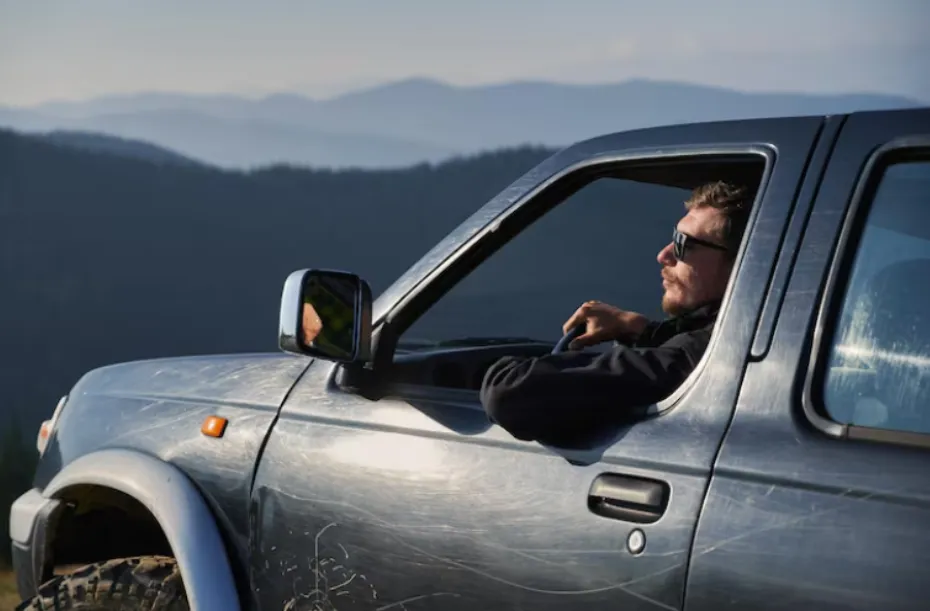

Mountain driving asks more from a vehicle than an ordinary commute. Steep climbs, long descents, changing weather, tight curves, and winter traction can turn a scenic drive into tiring work when the vehicle is poorly matched to the route.
The most useful features are not necessarily the flashiest ones. Good tires, predictable braking, the right drivetrain, useful ground clearance, strong visibility, and a comfortable driving position often matter more than cosmetic off-road packages. Choose features that reduce workload and improve control on the roads you actually drive.
Start With Traction, but Do Not Confuse It With Braking
All-wheel drive and four-wheel drive can make it easier to accelerate on loose, wet, or snowy surfaces because more than one axle can contribute traction. But AWD and 4WD do little to improve braking on slippery pavement.
That distinction matters in the mountains. Drivers still need appropriate tires, sensible speed, and enough following distance for the conditions.
AWD is usually convenient for paved roads where traction changes frequently because the system can respond without much driver input. Traditional 4WD can be more useful when a route includes deeper snow, rough unpaved surfaces, or low-speed situations where low-range gearing is appropriate.
Neither system should be treated as permission to drive faster when grip is limited.
Match the Vehicle to Park City Driving
A vehicle that feels ideal for occasional ski trips may be different from one used every day for commuting, towing, trail access, or carrying a family and winter gear.
Drivers comparing models through park city chevy can start by defining the hardest conditions the vehicle will regularly face. A commuter may prioritize AWD, heated features, good visibility, and manageable dimensions. Someone heading onto rougher roads may care more about 4WD, ground clearance, underbody protection, recovery points, and durable tires.
Cargo needs matter too. Ski equipment, bikes, boots, and overnight bags can quickly expose a small cargo area. Fold-flat seating, roof-rack compatibility, and tie-down points can make mountain trips easier.
Consider How the Engine Performs at Elevation
Higher elevation reduces the amount of oxygen available to an internal-combustion engine. A naturally aspirated engine can lose roughly 3% of power per 1,000 feet of elevation, although the real effect varies by engine and conditions.
Turbocharged engines can reduce that altitude-related performance loss by compressing more air into the engine. Hybrid and electric motors can also provide useful low-speed torque without relying on atmospheric oxygen in the same way.
That does not mean every mountain driver needs a turbocharger or hybrid. It means that buyers who regularly climb long grades should test the vehicle under load rather than judging performance only from horsepower figures or a short drive on flat roads.
Give Brakes and Transmission Behavior More Attention
Climbing a grade tests power. Descending it tests control.
On a long downhill section, constantly riding the brake pedal can build heat and reduce braking effectiveness. A transmission that allows the driver to select a lower gear can help control speed through engine braking and reduce reliance on the service brakes.
Some vehicles provide dedicated downhill or tow/haul settings that change transmission behavior to better manage grades. Hill descent control can be useful on steep, low-speed surfaces because it manages vehicle speed without requiring the driver to continuously modulate the brakes.
These systems are aids, not substitutes for proper downhill technique or good brakes.
Choose Tires for the Conditions, Not the Drivetrain Badge
Tires are the only part of the vehicle actually touching the road, so their condition and design affect acceleration, cornering, and stopping.
For drivers who routinely encounter snow and sustained cold, tire choice deserves as much attention as AWD or 4WD. Check tread condition, tire age, and whether the tire type matches the weather you expect.
A capable drivetrain on worn or unsuitable tires can still struggle to stop or turn. Conversely, a well-prepared vehicle with appropriate tires may feel far more predictable than a more rugged model on poor rubber.
Before winter, inspect all four tires rather than assuming adequate tread on one axle is enough.
Ground Clearance Matters Only When the Route Requires It
Higher ground clearance can help when snow accumulates or a route includes rocks, ruts, or uneven surfaces. It can also reduce the chance of scraping bumpers or underbody components.
But more clearance is not automatically better for every driver. Taller vehicles can be harder to enter, may handle differently, and can be less convenient in garages or tight parking areas.
Choose clearance around real use. Paved mountain highways and maintained resort roads usually demand different hardware than forest roads, deep snow, or rocky trail access.
Skid plates and other underbody protection are most useful when contact with rough terrain is a realistic possibility rather than a styling preference.
Visibility Features Reduce Work on Tight Roads
Mountain routes frequently combine sharp bends, elevation changes, narrow lanes, and vehicles approaching from difficult angles.
Good outward visibility should be a buying priority. Large mirrors, clear sight lines, a useful rear camera, blind-spot monitoring, and surround-view cameras can reduce the effort required when parking, changing lanes, or maneuvering in confined areas.
Adaptive headlights or automatic high beams can also be useful on dark roads. Cameras and alerts should supplement, not replace, direct observation.
Comfort Features Matter More on Long, Winding Drives
Comfort is not merely a luxury when the route requires continuous steering and attention.
A supportive seat with useful lumbar adjustment can reduce fatigue. Heated seats and a heated steering wheel are especially practical during cold starts, while effective climate control and windshield defrosting help maintain visibility.
A quieter cabin can also reduce fatigue on long drives. For families, rear-seat comfort, charging access, climate controls, and storage can make mountain trips easier.
Look at Driver-Assistance Features Realistically
Modern driver-assistance systems can be useful on mountain roads, but their value depends on the road and conditions.
Adaptive cruise control can reduce fatigue on open highways, while blind-spot monitoring and rear cross-traffic alerts help with visibility. Automatic emergency braking provides another layer of protection when a hazard develops unexpectedly.
Lane-centering may be less useful when snow obscures road markings. Drivers should understand each system’s limits and be ready to take full control.
Prepare the Vehicle Before the Mountain Trip
Even a well-equipped vehicle needs preparation.
Before a longer mountain drive, check tire condition and pressure, windshield washer fluid, wipers, exterior lights, coolant, and the general condition of the brakes. In cold weather, battery health deserves attention because low temperatures can expose a weak battery quickly.
Carry basics appropriate to the season, including warm clothing, water, a flashlight, an ice scraper, and required traction equipment. Check road and weather conditions before leaving.
Frequently Asked Questions About Mountain Driving Features
Is AWD or 4WD better for mountain driving?
It depends on the route. AWD is convenient for paved mountain roads with changing conditions, while 4WD can be more useful for deeper snow, rough roads, and low-speed situations where low-range gearing is appropriate.
Does AWD help a vehicle stop faster in snow?
Not in the way many drivers assume. AWD can improve acceleration by sending power to more wheels, but braking still depends heavily on tire grip, road conditions, vehicle speed, and braking systems. Appropriate tires and conservative speed remain essential on snow and ice.
Are turbocharged engines better at high altitude?
Turbocharged engines can retain more of their performance at elevation than naturally aspirated engines because the turbocharger compresses intake air. Whether that difference matters to you depends on the vehicle, load, elevation, and how often you drive sustained uphill grades.
Is high ground clearance necessary in the mountains?
Not always. High clearance is useful for deep snow, rocks, ruts, and rough access roads. Drivers who remain primarily on maintained paved roads may benefit more from good tires, predictable handling, strong brakes, and an appropriate drivetrain than from maximum ride height.
What comfort feature makes the biggest difference on mountain trips?
There is no single answer, but supportive seats, effective climate control, good defrosting, a heated steering wheel, and low cabin noise can all reduce fatigue. Prioritize the features that address the conditions and trip lengths you encounter most often.
Final Thoughts
An enjoyable mountain vehicle is not defined by one badge or one headline feature. It is the combination of traction, tires, braking, power delivery, visibility, comfort, and ground clearance that fits the route.
Start with where and how you drive. Then evaluate which features reduce effort, improve control, and make the vehicle easier to live with outside the mountains as well.
That approach leads to a better decision than simply choosing the most rugged-looking model on the lot.