
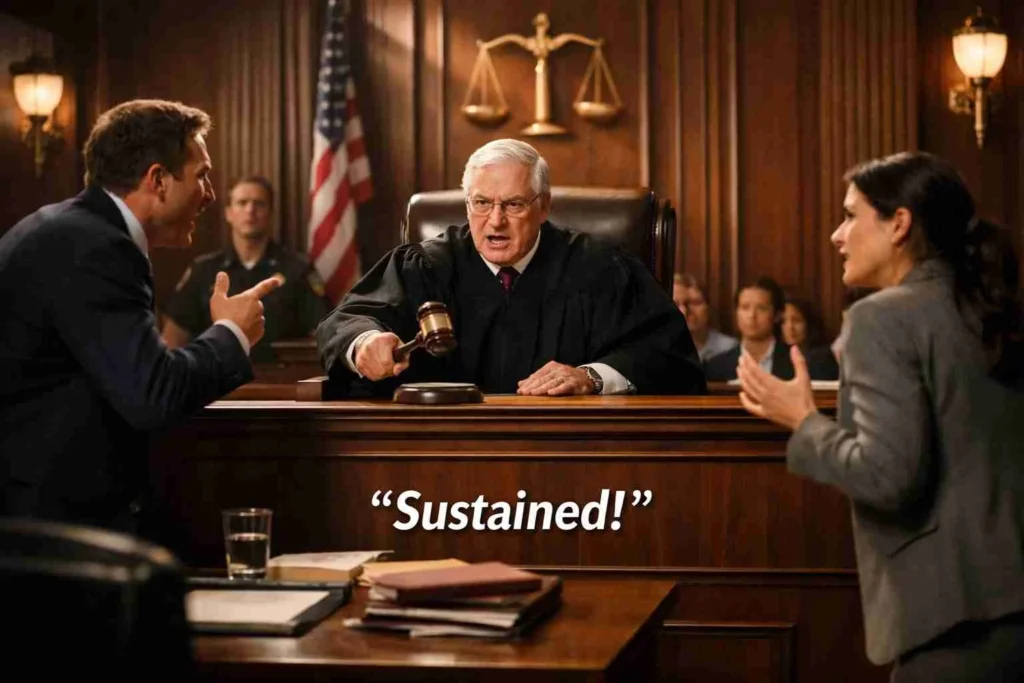

Definition
“Sustained” in court means that a judge agrees with an objection raised by an attorney and decides that the objection is valid. As a result, the question, evidence or statement being challenged is not allowed and must be disregarded.
If you’ve ever watched a courtroom drama or followed a real legal case, you’ve probably heard the judge say “Objection… sustained!” It’s one of the most recognizable phrases in legal proceedings but what does “sustained” actually mean in court, and why does it matter? Sustained meaning in law.
Understanding courtroom language can feel overwhelming, especially if you’re not familiar with legal terminology. But don’t worry this guide breaks it all down in a clear, friendly, and practical way. You’re a student, content writer, or just curious about how courts work, you’ll learn:
- What “sustained” means in legal terms
- Real-world examples and tone
- Differences between similar terms like “overruled”
- Professional alternatives and usage tips
Let’s dive in 👇
What Does “Sustained” Mean in Court?
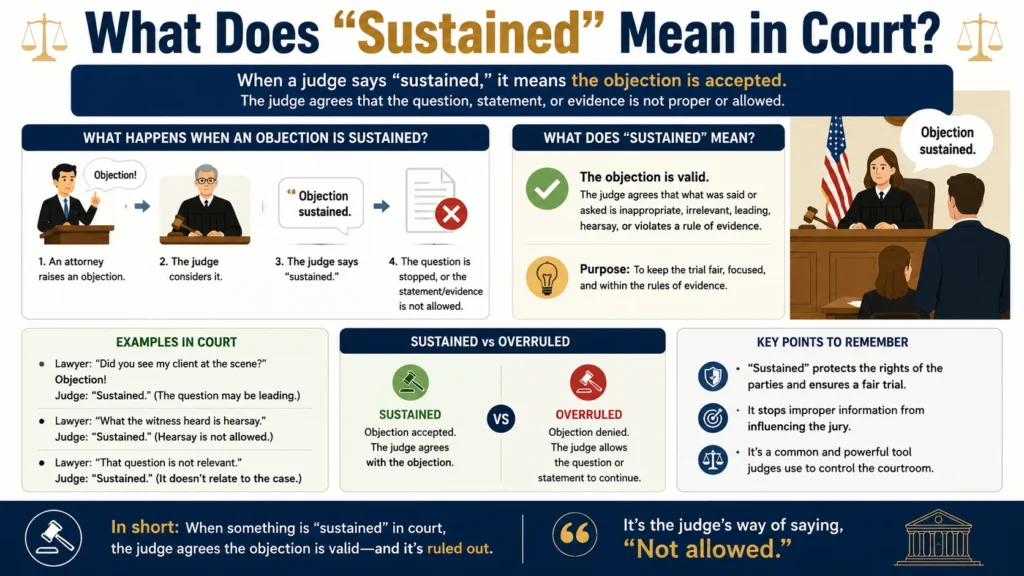
In legal proceedings, the word “sustained” is used by a judge when they approve or support an objection made by a lawyer.
Simple Breakdown
- A lawyer objects to something (question, evidence, statement)
- The judge reviews the objection
- If the judge agrees → “Sustained”
Origin and Legal Background
The term “sustained” comes from traditional legal language rooted in English common law, which forms the basis of many modern legal systems, including those in the United States, the United Kingdom, and parts of South Asia.
Why “Sustained”?
The word itself means:
- To support
- To uphold
- To confirm as valid
In court, when a judge says “sustained,” they are essentially saying:
👉 “I support this objection it’s correct under the law.”
Popularity in Media
Courtroom shows and movies have made phrases like:
- “Objection!”
- “Sustained!”
- “Overruled!”
…part of everyday vocabulary even for people who have never been in a courtroom.
How “Sustained” Is Used in Court
Here’s how the process typically works:
Step-by-Step Courtroom Interaction
- Lawyer asks a question
- Opposing lawyer objects
- Judge evaluates the objection
- Judge says:
- “Sustained” → objection accepted
- “Overruled” → objection rejected
Types of Objections That Can Be Sustained
| Type of Objection | Meaning | When Sustained Happens |
|---|---|---|
| Leading Question | Suggests the answer | Judge agrees it’s improper |
| Hearsay | Second-hand information | Judge disallows unreliable evidence |
| Relevance | Not related to the case | Judge finds it irrelevant |
| Speculation | Guessing, not facts | Judge blocks unsupported claims |
| Argumentative | Aggressive or debating tone | Judge maintains courtroom decorum |
Examples of “Sustained” in Context
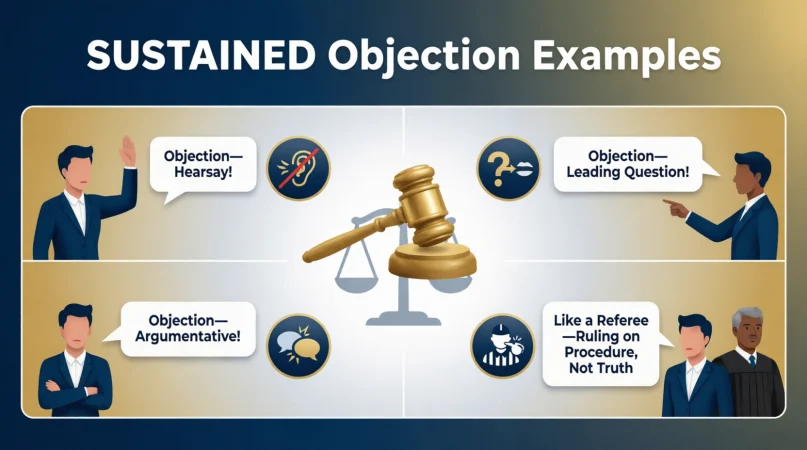
Example 1 (Neutral Tone)
Lawyer: “What did the witness say about the incident?”
Opposing Lawyer: “Objection, hearsay.”
Judge: “Sustained.”
👉 Meaning: The witness cannot answer because it’s second-hand information.
Example 2 (Formal Tone)
Lawyer: “Isn’t it true you were angry at the time?”
Opposing Lawyer: “Objection, leading the witness.”
Judge: “Sustained.”
👉 Meaning: The question is too suggestive and must be rephrased.
Example 3 (Dismissive Tone ⚖️)
Lawyer: “You always lie, don’t you?”
Opposing Lawyer: “Objection, argumentative.”
Judge: “Sustained.”
👉 Meaning: The judge stops the aggressive questioning.
Example 4 (Friendly Explanation Style 😊)
Think of it like a referee in a game:
- A player complains → referee agrees → penalty enforced
- That’s basically what “sustained” means in court!
Comparison | Sustained vs Overruled
Understanding the difference is crucial:
| Term | Meaning | Outcome |
|---|---|---|
| Sustained | Judge agrees with objection | Question/evidence is stopped |
| Overruled | Judge disagrees with objection | Question/evidence continues |
Quick Tip
- Sustained = Stop 🚫
- Overruled = Continue ▶️
Tone and Communication Impact
The word “sustained” is:
- Formal and authoritative
- Neutral in tone
- Final and non-negotiable
It’s not emotional it simply reflects a legal decision.
Real-World Usage Beyond Court
While “sustained” is primarily a legal term, it also appears in other contexts:
General Meanings
- Maintained over time
Example: “Sustained effort leads to success.” - Endured something difficult
Example: “He sustained injuries in the accident.”
Alternate Meanings
| Context | Meaning of Sustained |
|---|---|
| Legal | Objection accepted |
| Medical | Injury suffered |
| General English | Continued or maintained |
| Academic | Supported by evidence |
Polite or Professional Alternatives
In non-legal settings, instead of saying “sustained,” you might use:
- “Accepted”
- “Approved”
- “Upheld”
- “Validated”
- “Confirmed”
Example:
- “The manager approved the request.”
- “The claim was validated after review.”
Practical Usage Tips
To understand or use “sustained” correctly:
- Use it only in formal or legal contexts
- Avoid casual misuse (it sounds technical)
- Pair it with objections or decisions
- Understand the context before interpreting tone
Detailed Example Table | Courtroom Scenarios
| Scenario | Objection Raised | Judge’s Response | Outcome |
|---|---|---|---|
| Witness repeats someone else’s words | Hearsay | Sustained | Testimony excluded |
| Lawyer suggests answer | Leading | Sustained | Question rephrased |
| Irrelevant topic introduced | Relevance | Sustained | Topic dismissed |
| Emotional attack on witness | Argumentative | Sustained | Tone corrected |
| Guessing without evidence | Speculation | Sustained | Statement blocked |
Why “Sustained” Matters in Legal Proceedings
The judge’s decision to sustain an objection can:
- Protect fairness in trials
- Prevent misleading information
- Ensure proper legal procedures
- Influence the outcome of a case
A single “sustained” ruling can completely change how evidence is presented.
Common Misunderstandings

Many people think:
- “Sustained means someone won the case” ❌
- “It means the lawyer is right about everything” ❌
Reality
- It only applies to a specific objection at a specific moment
FAQs
What does sustained mean in court?
It means the judge agrees with an objection and stops the question or evidence from being used in the trial.
Is sustained good or bad?
It depends on perspective. It’s good for the lawyer who made the objection and bad for the opposing side.
What is the opposite of sustained in court?
The opposite is “overruled,” which means the objection is rejected and the process continues.
Can a sustained objection affect the case outcome?
Yes, especially if it prevents important evidence from being presented.
Why do lawyers say objection?
They raise objections to challenge improper questions or evidence that violate legal rules.
Does sustained mean the witness is lying?
No, it only means the question or evidence is not allowed not that the witness is dishonest.
Is sustained used outside courtrooms?
Yes, but with different meanings such as “continued effort” or “supported claim.”
What does “sustained” mean in court?
In court, “sustained” means the judge agrees with an objection raised by a lawyer. When an objection is sustained, the question, testimony, or evidence being challenged is not allowed or must be disregarded.
Conclusion
Understanding what “sustained” means in court gives you valuable insight into how legal proceedings work. It’s a simple yet powerful term that reflects a judge’s authority to maintain fairness and enforce legal rules. When a judge says “sustained,” they are not deciding the entire case they are simply ensuring that the process stays accurate, relevant, and lawful. Sustained in court meaning.
You’re watching a courtroom drama, studying law, or creating content, knowing this term helps you interpret legal conversations more confidently. Remember: “sustained” means supported, accepted, and enforced in that specific legal moment. Sustained meaning court.
Discover More Related Articles:
- “ATL” Meaning in Chat: What Does It Stand For in Social Media In 2026
- “Charizarding” Mean: The Viral Slang You Should Know In 2026
- “White Heart” Mean : In Love, Friendship & Aesthetic Posts In 2026