
Definition
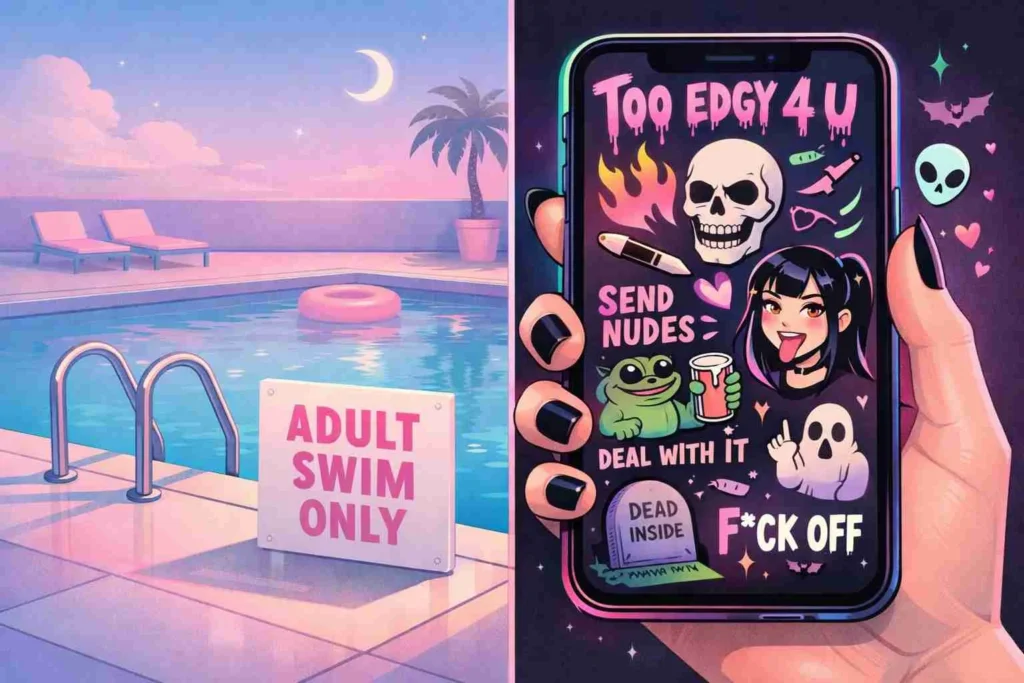
“Adult swim” means a period or signal that content, space, or activity is intended only for adults, not children. It originally referred to designated times at swimming pools when kids had to leave the water so adults could swim freely, and today it’s also widely used to describe mature-themed media or humor aimed at an adult audience.
If you’ve ever heard someone say “it’s adult swim now” or noticed the phrase attached to TV shows, memes, or even jokes online, you might wonder what does adult swim actually mean?
At first glance, it sounds literal adults swimming. But the phrase has evolved far beyond pool rules. Today, “adult swim” carries cultural, entertainment, and even internet slang significance. From strict poolside announcements to edgy late-night cartoons, the term has grown into a recognizable label for anything meant strictly for grown-ups.
In this comprehensive guide, you’ll learn the full meaning of “adult swim,” where it comes from, how it’s used in real life and online, and how it compares to similar terms. By the end, you’ll not only understand the phrase you’ll know exactly when and how to use it confidently.
Origin of “Adult Swim”
The phrase “adult swim” has a very practical and straightforward origin.
1. Poolside Beginnings
Originally, “adult swim” was a scheduled break at public swimming pools where:
- Children were required to leave the water
- Adults could swim without interruptions
- The atmosphere became quieter and more relaxed
These sessions were especially common in:
- Community pools
- Resorts and hotels
- Recreation centers
The purpose wasn’t exclusion it was simply about giving adults their own time.
2. Transition Into Pop Culture
The phrase took on a whole new life in 2001 when Cartoon Network launched a late-night programming block called Adult Swim. This programming featured:
- Mature humor
- Dark or surreal themes
- Content not suitable for children
This shift transformed “adult swim” from a literal pool rule into a cultural label for adult-oriented entertainment.
How “Adult Swim” Is Used Today
Today, “adult swim” has three main meanings, depending on the context.
1. Literal Meaning (Pools & Recreation)
Still used in its original sense:
- “The pool closes for adult swim at 6 PM.”
- “Kids out adult swim time!”
Tone: Neutral and practical
2. Entertainment Meaning (TV & Media)
Refers to content designed for adults:
- “That show is part of Adult Swim it’s definitely not for kids.”
- “Adult Swim cartoons are weird but hilarious.”
Tone: Informative or enthusiastic
3. Slang or Figurative Meaning (Internet & Social Media)
Used humorously to indicate:
- Something is too mature or inappropriate for kids
- A situation requires adult-level thinking
Examples:
- “This conversation just turned into adult swim 😅”
- “That joke? Yeah… adult swim only.”
Tone: Playful, ironic, or slightly edgy
Real-World Usage Examples
Here’s how “adult swim” can appear in different contexts and tones:
Example Table 1: Usage by Context
| Context | Example Sentence | Tone |
|---|---|---|
| Pool Setting | “It’s adult swim everyone under 18 out of the pool.” | Neutral |
| TV/Entertainment | “That’s an Adult Swim show, so expect mature themes.” | Informative |
| Social Media | “This meme is pure adult swim energy 😂” | Playful |
| Conversation | “Let’s keep this adult swim no kids around.” | Casual |
Tone and Meaning Variations
“Adult swim” can carry different tones depending on how it’s used.
Friendly / Playful
- “Okay, now we’re in adult swim territory 😄”
Meaning: The topic is getting mature but still lighthearted
Neutral / Informative
- “Adult swim hours start at 7 PM.”
Meaning: Straightforward scheduling
Slightly Dismissive
- “That’s adult swim content not for everyone.”
Meaning: Implies exclusivity or maturity
Why “Adult Swim” Became Popular
Several factors contributed to the popularity of the phrase:
1. Relatable Origins
Almost everyone has encountered or heard of pool “adult swim” rules.
2. Cultural Influence
The rise of adult-oriented cartoons and late-night programming made the phrase recognizable worldwide.
3. Internet Humor
Online communities embraced the phrase as shorthand for:
- Mature jokes
- Dark humor
- “Not safe for kids” content
Comparison With Similar Terms
While “adult swim” is unique, it overlaps with other expressions.
Example Table 2: Adult Swim vs Similar Terms
| Term | Meaning | Difference from Adult Swim |
|---|---|---|
| NSFW | Not safe for work content | More explicit warning |
| Mature Content | General adult themes | More formal |
| 18+ | Age-restricted material | Strict classification |
| After Dark | Late-night adult content | Less playful tone |
Key Insight
“Adult swim” feels more casual, cultural, and humorous compared to stricter labels like “18+” or “NSFW.”
Alternate Meanings of “Adult Swim”
While the main meanings are widely accepted, a few alternate uses exist:
- Brand reference – Refers specifically to the TV programming block
- Metaphorical use – Describes situations requiring maturity
- Humor label – Used to categorize edgy jokes
These variations all revolve around the same core idea: adults-only context.
Polite or Professional Alternatives
In formal or professional settings, “adult swim” might sound too casual. Here are better alternatives:
Example Table 3: Professional Alternatives
| Casual Phrase | Professional Alternative |
|---|---|
| Adult swim | Adults-only session |
| Adult swim | Restricted to mature audiences |
| Adult swim | Age-appropriate content (18+) |
| Adult swim | Private adult session |
When Should You Use “Adult Swim”?
Use the phrase when:
- You want to lightly signal maturity
- You’re discussing adult-oriented media
- You’re joking about grown-up topics
Avoid it when:
- Writing formal documents
- Communicating with children or mixed audiences
- Clarity is critical (use precise terms instead)
Practical Usage Tips
- ✔ Use it casually in conversations or online
- ✔ Pair it with humor or emojis for tone
- ✔ Make sure the audience understands the reference
- ✔ Avoid overusing it in professional contexts
FAQs
What does adult swim mean in slang?
In slang, “adult swim” refers to content, jokes, or conversations that are meant for adults only, often implying mature or edgy humor not suitable for children.
Is adult swim only related to swimming pools?
No, while the phrase started with pool rules, it now also refers to adult-oriented entertainment and internet slang.
Why is it called adult swim on TV?
The name comes from the idea of giving adults their own time slot, similar to pool schedules where kids leave so adults can enjoy the space.
Is adult swim inappropriate?
Not necessarily. It simply means content is intended for adults, which may include mature themes, language, or humor.
Can kids watch adult swim shows?
Generally, no. Most adult swim content is designed for mature audiences and may not be suitable for children.
What is the difference between adult swim and NSFW?
“Adult swim” is more casual and cultural, while NSFW is a clearer warning about explicit or inappropriate content.
How do you use adult swim in a sentence?
You can say, “That conversation turned into adult swim quickly,” meaning it became mature or not suitable for kids.
Is adult swim a formal term?
No, it is mostly informal and used in casual conversation, entertainment, and online culture.
Conclusion
“Adult swim” is a simple phrase with a surprisingly rich evolution. What began as a practical pool rule has transformed into a widely recognized cultural term representing adult-only spaces, content, and conversations. You’re talking about late-night cartoons, mature humor, or literal swimming schedules, the phrase carries a consistent message this is for adults.
Understanding how to use “adult swim” correctly comes down to context. In casual conversations, it adds humor and relatability. In entertainment, it signals mature themes. And in everyday life, it still holds its original meaning.
If you use it thoughtfully matching the tone and audience you’ll sound natural, informed, and culturally aware.
Discover More Related Articles:
- “ATL” Meaning in Chat: What Does It Stand For in Social Media In 2026
- “Charizarding” Mean: The Viral Slang You Should Know In 2026
- “White Heart” Mean : In Love, Friendship & Aesthetic Posts In 2026