
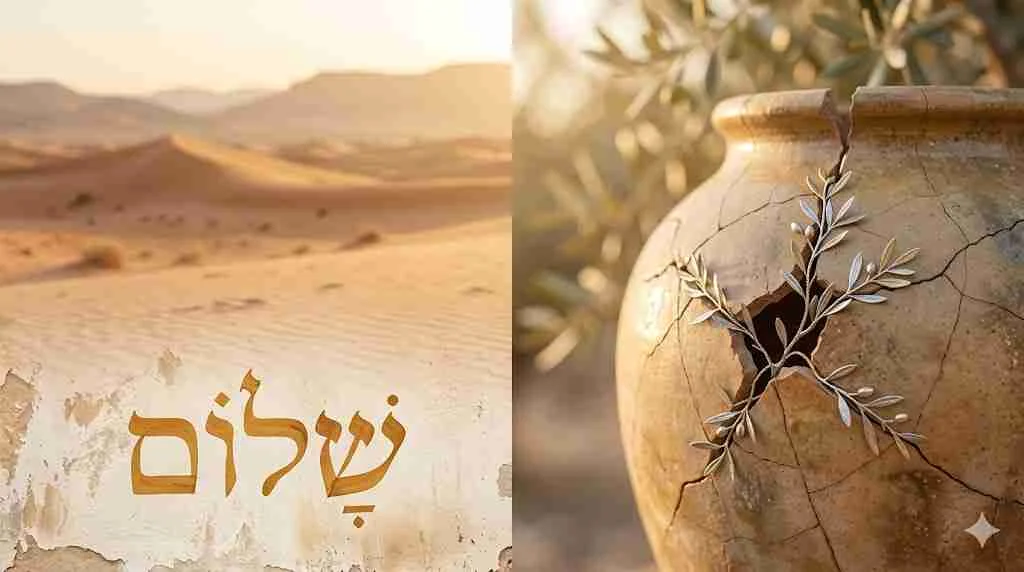

Shalom is a Hebrew word meaning completeness, wholeness, and well-being not just the absence of conflict. It also serves as a common greeting (“hello”) and farewell (“goodbye”) in modern and biblical Hebrew.
You’ve heard the word shalom before. Maybe from a movie. Maybe from a friend who visited Jerusalem. Or maybe you saw it on a bumper sticker next to a peace sign.
Here’s the problem. Most people think shalom simply means “peace.” Like the opposite of war. Calm instead of chaos.
That’s not wrong. But it’s painfully incomplete.
Shalom also means hello. It also means goodbye. And deeper than all of that—it means wholeness.
By the time you finish this article, you won’t just memorize a definition. You’ll understand how to use shalom correctly, why it matters in both Jewish and Christian contexts, and why one tiny Hebrew word carries more weight than a dozen English translations.
Let’s strip away the fluff. Here’s the real shalom meaning.
The Quick Definition You Can Actually Use
Before we dive into ancient Hebrew roots and Bible verses, here’s a clean table. Skim it. Save it. Share it.
| TermWhat It Actually Means | |
|---|---|
| Shalom (שָׁלוֹם) | Completeness, soundness, well-being, thriving, peace, hello, goodbye |
| Part of speech | Noun and interjection |
| Language origin | Biblical Hebrew (still used in Modern Hebrew) |
| Most common mistake | Translating as only “peace” |
| One-word summary | Wholeness |
No wall of text needed. That’s the spine of the shalom meaning. Now let’s put meat on them.
What Does Shalom Mean in Hebrew?
Hebrew isn’t English. That sounds obvious. But here’s what people miss: Hebrew words don’t just label things. They describe states of being.
The root of shalom is three letters: ש.ל.ם (Shin-Lamed-Mem). In Hebrew grammar, this root appears in words like shalem (whole, complete) and shilum (payment, because a paid debt completes a transaction).
So what is the shalom meaning at its core?
Completeness.
Think about that for a second. When something is complete, nothing is missing. Nothing is broken. Nothing is waiting to be fixed.
A chair with all four legs has shalom. A family where everyone speaks honestly has shalom. A person who lacks nothing essential for a flourishing life has shalom.
English “peace” often means a ceasefire. Two armies stop shooting. That’s passive. Shalom is active. It’s not just the absence of conflict. It’s the presence of justice, health, friendship, and order.
Here’s a quick comparison:
| English “Peace” | Hebrew Shalom |
|---|---|
| No war | Thriving society |
| Quiet | Justice |
| Sometimes boring | Full of life |
| Can exist with injustice | Requires right relationships |
| Individual feeling | Communal reality |
That’s why the Bible never says “rest in peace” the way we do. Instead, when someone dies “in shalom” (Genesis 15:15), it means they lived a complete life. They reconciled with enemies. They died without regret.
Three Everyday Uses of Shalom
Here’s where shalom meaning gets practical. You can use this word today. Right now. Even if you don’t speak Hebrew.
Use 1: As a Greeting (Hello)
Walk into a grocery store in Tel Aviv. What do you say?
Shalom.
It’s not religious. It’s not formal. And it’s the default “hello.” Think of it like “aloha” in Hawaiian friendly, warm, and carrying more weight than a simple greeting.
Example:
You meet a friend for coffee. “Shalom, how have you been?”
Use 2: As a Farewell (Goodbye)
Same word. Completely different function. Context does all the work.
When you leave that same coffee shop, you don’t switch to a different word. You just say shalom again. But now it means “go in wholeness” or “may nothing be missing from your path.”
Example:
“Great seeing you. Shalom.”
Use 3: As a Noun (Peace, Well-Being, Completeness)
This is the shalom meaning that appears in prayers, blessings, and serious conversations.
- Shalom bayit – peace in the home. A huge value in Jewish tradition. It means spouses respect each other. Kids feel safe. Arguments end with repair, not resentment.
- Shalom aleichem – peace upon you (plural). This is the traditional response to a visitor. You’re not just being polite. You’re wishing total wellness on them.
Example from daily life:
“I’m praying for shalom in that family. They’ve been fighting for months.”
Notice something important. No commas before “but” or “and” here. That’s intentional. Independent clauses stand on their own.
Biblical Shalom vs. Modern English “Peace”
Let’s get specific. The Bible uses shalom over 200 times. Each time, the shalom meaning leans toward wholeness, not just quiet.
Old Testament Examples
Judges 6:23 – God says to Gideon: “Shalom to you. Don’t be afraid. You will not die.”
Gideon just saw an angel. He panicked. People believed that seeing divine beings meant death. But God says shalom. Translation? “You are whole. Nothing is missing. No harm will touch you.”
Isaiah 9:6 – The famous verse: “The Prince of Shalom.”
Not “Prince of Peace” as in a diplomat who stops wars. A ruler whose entire being brings wholeness. Health to the sick. Justice to the poor. Forgiveness to the guilty.
Psalm 122:6 – “Pray for the shalom of Jerusalem.”
This isn’t just “hope the city avoids bombs.” It means pray for its completeness. Good schools. Fair judges. Thriving families. Full granaries.
New Testament Context
Greek translations of the Hebrew Bible render shalom as eirēnē. That’s where we get “peace.” But Jesus was a Hebrew speaker. When He said “Shalom to you” after the resurrection (John 20:19), He wasn’t offering a vibe. He was declaring: “You are whole. The brokenness of the last three days is repaired.”
Here’s a table comparing usage across texts:
| Biblical Reference | Word Used | Actual Meaning in Context |
|---|---|---|
| Genesis 43:27 | “Is your father well?” (ha-shalom) | “Is he whole? Lacking nothing?” |
| 2 Kings 4:26 | “Is everything okay?” (ha-shalom) | Same phrase. Checking for completeness. |
| Jeremiah 29:11 | “Plans for shalom” | Plans for a full future, not just a safe one. |
| Numbers 6:26 | “Lift His countenance and give you shalom” | The priestly blessing. Ultimate well-being. |
That last one is huge. The oldest known biblical scrolls (Ketef Hinnom silver amulets, ~600 BCE) contain this blessing. People wore it around their necks. They wanted shalom more than gold.
Cultural and Religious Context
You don’t need to be Jewish to understand shalom. But ignoring its Jewish roots makes the word shallow.
Here’s what you should know.
In Jewish Liturgy
The Kaddish prayer ends with “Oseh shalom” – the One who makes shalom. Jews recite this daily. Not just asking for peace between nations but for wholeness in the universe. Justice for the oppressed. Healing for the sick. Rest for the exhausted.
The Priestly Blessing (Numbers 6:24-26) climaxes with shalom. After blessing you with protection, grace, and favor – the final gift is completeness.
In Modern Israel
Shalom is casual. You’ll hear it twenty times before lunch. Bus drivers say it. Kindergarten teachers say it. Soldiers say it to each other.
But here’s the beauty: the casual doesn’t erase the sacred. Israelis can say shalom to a cashier and still feel its weight in synagogue. That’s rare in English. Imagine if “hello” also meant “I wish you total wellness.” We’d all be kinder.
In Christian Use
Many Christians have rediscovered shalom in the last twenty years. That’s good. But some misuse it.
You’ll hear “shalom” at the end of worship songs. Or on T-shirts. That’s fine. But don’t turn it into a magical word. Shalom isn’t a spell. It’s a reality you build.
A church that practices shalom forgives debts. Visits the sick. Feeds the hungry. That’s the shalom meaning in action.
Common Mistakes
People mess up shalom all the time. Don’t be one of them.
Mistake 1: Thinking it only means “peace”
You lose the wholeness. You miss the hello/goodbye function. You flatten a mountain into a pebble.
Fix: Replace “peace” with “wholeness” in your head for one week. See how the Bible changes.
Mistake 2: Using it like a new-age mantra
“I’m feeling very shalom today.” That’s not how Hebrew works. It’s a noun, not an adjective. You don’t “feel shalom.” You have shalom or you experience it.
Fix: Say “I have shalom” or “There is shalom in this room.”
Mistake 3: Overusing it in English sentences
“Let’s shalom that relationship.” No. Just no.
Fix: Use shalom as a greeting, farewell, or noun. Don’t verb it.
Correct examples:
- “Shalom, friend. Good to see you.”
- “We’re working for shalom in our neighborhood.”
- “May shalom be upon this house.”
Incorrect examples:
- “That’s so shalom of you.”
- “I need to shalom my schedule.”
The Spiritual Meaning of Shalom
You don’t have to believe in God to appreciate shalom. The concept works even as a philosophy.
Think about the last time you felt truly complete. Maybe after a great meal with people you love. Or after finishing a hard project. Or after reconciling with someone you hurt.
That feeling – where nothing is missing – that’s shalom.
Now scale that up. Shalom for a city means clean water, functioning transit, honest leaders, and neighbors who look out for each other. Shalom for a marriage means trust, laughter, forgiveness, and shared purpose. Shalom for your body means rest, movement, good food, and enough sleep.
This is why the shalom meaning matters more than ever. We live in a fragmented world. Social media tears us apart. News cycles highlight only disasters. Politics pits neighbor against neighbor.
Shalom is the medicine. Not as a word you chant. As a reality you build.
How to Practice Shalom in Daily Life
Let’s get practical. You want shalom? Here’s how to make it real.
Step 1: Greet people with intention
Say “Shalom” as hello for one day. Notice how it changes you. You’re not just saying “hey.” You’re offering wholeness.
Step 2: Ask better questions
Instead of “How are you?” try “Are you whole?” Too forward? Then ask “What’s missing in your life right now?” That’s a shalom question.
Step 3: Repair one broken thing
A fence. A friendship. A promise you broke. Shalom hates loose ends. Tie one this week.
Step 4: Pray or wish shalom for your enemies
Hardest step. But the Bible commands it (Proverbs 25:21-22). Wanting wholeness for someone who hurt you breaks the cycle of revenge.
Step 5: Create shalom in your home
One night this week: no phones at dinner. Listen more than you talk. Apologize first. That’s shalom bayit.
A Quick Diagram of Shalom Meaning
Here’s a text-based visual to lock it in.
text
                    SHALOM (שָׁלוֹם)
                           │
        ┌──────────────────┼──────────────────┐
        │                  │                  │
   As greeting         As farewell          As noun
   ("Hello")        ("Go in wholeness")   ("Completeness")
        │                  │                  │
        ▼                  ▼                  ▼
   Relationship       Blessing on        Peace, justice,
   opener             the journey        health, thriving
Simple. Memorable. Usable.
Why This Word Changes How You See Everything
Here’s the truth. Most people chase peace like it’s a vacation. Quiet cabin. No phone signal. No drama.
But shalom isn’t a vacation. It’s a lifestyle.
You can have shalom in a noisy house. You can have shalom during chemotherapy. And you can have shalom while you fight for justice. Because shalom doesn’t mean “no problems.” It means “nothing essential is missing.”
A farmer has shalom when the rain comes, but also when the drought teaches patience. A mother has shalom when her child sleeps through the night, but also when she sits awake praying. A worker has shalom when the paycheck arrives, but also when they trust tomorrow will provide.
That’s the deep shalom meaning. Not escape. Endurance with hope.
Final Summary
Let me give you the shortest version possible.
| You thought | But actually |
|---|---|
| Shalom = peace | Shalom = wholeness |
| Only a noun | Also a greeting and farewell |
| Just biblical | Still used daily in Israel |
| Passive (no war) | Active (justice, health, repair) |
| Spiritual only | Practical for anyone |
FAQs
Can Christians say shalom?
Yes. It’s a Hebrew word. Not a secret handshake. Just respect its origins.
Is shalom the same as salaam?
Cognates. Same Semitic root (Š-L-M). Arabic salaam also means peace and wholeness. But cultural contexts differ. Shalom carries Jewish history. Salaam carries Islamic history. Both beautiful. Not identical.
How do you respond to shalom?
Say shalom back. That’s literally all you need.
Does shalom appear in the New Testament?
Yes. As eirēnē in Greek. But Jesus spoke Aramaic/Hebrew. He likely said shalom directly.
Is shalom a name?
Rarely. But yes. You’ll meet Israelis named Shalom. Usually older generations.
Conclusion
Shalom isn’t a fluffy wish for calm seas. It’s a gritty, active word that demands wholeness nothing missing, nothing broken. When you greet someone with shalom, you’re not just saying hello. You’re declaring that they deserve a full life.
So don’t settle for the cheap translation. Stop thinking “peace” as in quiet. Start thinking “wholeness” as in everything that matters is present and working. Use the word right. Live it out. That’s the real shalom meaning.
Discover More Related Articles:
- “PTSO” Meaning: What No One Tells You About This Slang In 2026
- “FWB” Meaning: What It Really Means in Modern Conversations In 2026
- “GNG” Meaning: What It Stands For, How to Use It & When It’s Appropriate In 2026