
Definition:
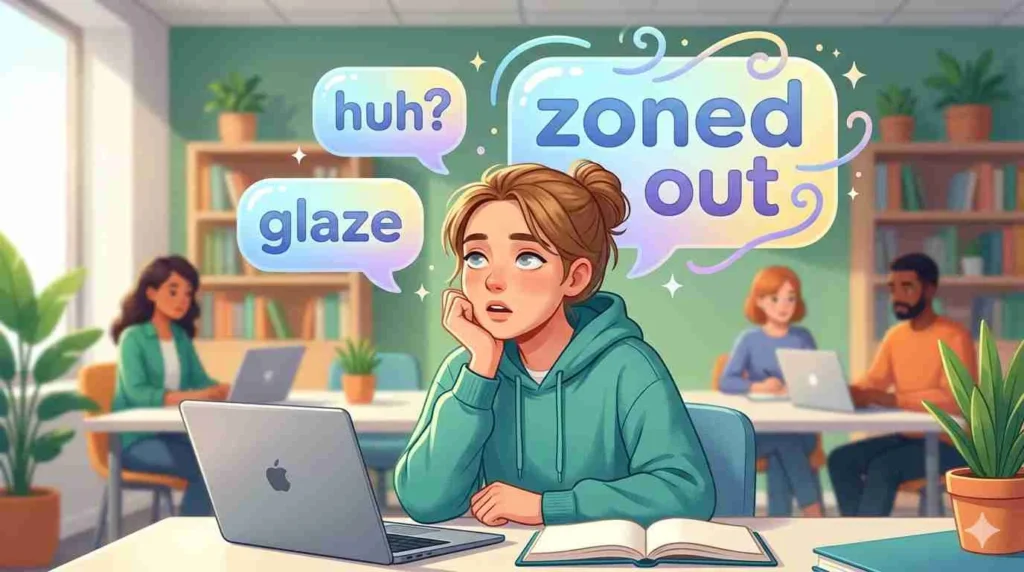
“Glaze meaning slang” refers to a state where someone’s eyes or attention appear blank, distracted, or unfocused, often because they are bored, overwhelmed, or mentally “zoned out” during a conversation or situation.
If you’ve seen someone say “he started to glaze over” or “her eyes glazed,” they’re not talking about donuts or cooking. In modern slang, especially online and in casual speech, “glaze” has become a popular way to describe that distant, mentally checked-out look people get when they stop paying attention.
In today’s digital world, where slang evolves quickly on TikTok, Instagram, and meme culture, understanding “glaze meaning slang” helps you keep up with how people actually talk online. Let’s break it down in a simple, engaging, and complete way.
Origin and Popularity of “Glaze” in Slang
The slang use of “glaze” comes from the older English phrase “eyes glazing over.” Traditionally, it described someone becoming sleepy, bored, or mentally disengaged. The word “glaze” itself originally refers to something becoming covered with a shiny, glass-like coating like a donut glaze or ceramic finish.
Over time, people started using the visual metaphor: when someone loses focus, their eyes look “shiny, blank, or glassy,” like a glazed surface.
How it became popular online:
- TikTok culture: Short videos showing “zoning out” moments helped spread the term.
- Meme usage: People caption reactions like “bro started glazing mid-convo 😭”
- Gen Z slang evolution: Short, expressive terms became more common than full phrases.
Today, “glaze” is widely used in casual chats, gaming communities, and social media reactions.
What Does “Glaze” Mean in Slang Today?
In modern slang, “glaze” is used in a few related ways depending on context:
1. Mental disengagement
Someone is not mentally present or stops paying attention.
- “He was glazing during the lecture.”
- “She completely glazed out when I started talking.”
2. Emotional overload or boredom
The brain “checks out” due to too much information or lack of interest.
- “I started glazing after the third presentation slide.”
3. Reacting slowly or blankly
Used to describe a delayed or empty reaction.
- “Bro just glazed at me when I asked the question.”
4. Internet slang exaggeration
Sometimes used humorously in memes for dramatic effect.
- “That explanation had me glazing instantly 💀”
Real-World Usage of Glaze (With Context)
Here’s how “glaze” actually appears in everyday conversations:
- In class: “I was glazing halfway through the math lecture.”
- At work: “He glazed out during the meeting after lunch.”
- Online gaming: “My teammate was glazing and missed the enemy call.”
- Conversations: “Stop glazing bro, I’m talking to you.”
It’s a flexible slang term, mostly informal, and commonly used among younger speakers.
Examples of “Glaze” in Different Tones
| Situation | Example Sentence | Tone |
|---|---|---|
| Classroom | “I started glazing after 10 minutes of the lecture.” | Neutral |
| Friendship chat | “Bro you’re glazing, focus 😂” | Playful |
| Gaming | “He glazed and didn’t revive me.” | Frustrated |
| Meme | “Me glazing while pretending to listen 💀” | Humorous |
| Work meeting | “I was glazing through that presentation.” | Casual/relatable |
These examples show how flexible the slang is depending on tone and situation.
Tone and Emotional Meaning Behind “Glaze”
The word “glaze” doesn’t always carry the same emotional weight. It can change depending on how it’s used:
Neutral tone:
Just describing lack of attention.
Funny tone:
Used in memes or jokes about boredom.
Slightly negative tone:
Can imply someone is not paying attention when they should be.
Self-aware tone:
People often use it to describe themselves humorously.
Example:
- “Not gonna lie, I was glazing the whole time 😭”
Comparison With Related Slang Terms
Understanding “glaze meaning slang” becomes easier when compared with similar expressions.
| Term | Meaning | Difference from “Glaze” |
|---|---|---|
| Zone out | Mentally drift away | More general and less visual |
| Space out | Lose attention temporarily | Less meme-driven |
| Dazed | Confused or stunned | More emotional intensity |
| Blank out | No reaction or memory | Stronger and more extreme |
| Daydream | Thinking unrelated thoughts | Not necessarily boredom |
“Glaze” is more visual and expressive, often used in casual or humorous online contexts.
Alternate Meanings of “Glaze”
While slang is the most popular modern usage, “glaze” also has other meanings:
1. Culinary meaning
A shiny coating applied to food (like donuts or pastries).
- “Chocolate glaze on a donut”
2. Art and ceramics
A glass-like coating applied to pottery.
- “Ceramic glaze finish”
3. Fashion/beauty slang (less common)
Sometimes used metaphorically for a shiny look.
However, in modern internet slang, the “zoned out” meaning is by far the most common.
Alternatives or Polite Ways to Say “Glaze”
If you want to avoid slang or sound more professional, you can use these alternatives:
- I lost focus
- I zoned out
- I wasn’t paying attention
- I became distracted
- I drifted off mentally
- I lost track of the conversation
These are better suited for formal or professional environments.
Why “Glaze” Became So Popular Online
The rise of “glaze” as slang is tied to internet culture:
- Short and expressive wording
- Easy to use in memes and captions
- Visual metaphor (glassy eyes = no focus)
- Fits Gen Z communication style
- Works well with emojis and reactions
Example meme usage:
- “Me glazing during Zoom meetings 😭”
- “Brain: active. Me: glazing.”
Common Misunderstandings About “Glaze”
Some people confuse slang “glaze” with other meanings. Here are common mistakes:
- ❌ Thinking it always means food glaze
- ❌ Assuming it means admiration (like “to glaze someone” = praise excessively, which is different slang)
- ❌ Confusing it with “glossing over” something
In slang context, it mostly refers to mental disengagement, not admiration or decoration.
Usage Tips for “Glaze” Slang
To use “glaze” correctly:
- Use it in informal conversations only
- Avoid using it in professional writing
- Pair it with context for clarity
- Works best in humor or storytelling
- Often used with “bro,” “me,” or emojis
Example:
- “Bro I was glazing so hard during that lecture 💀”
FAQs
What does glaze mean in slang?
In slang, glaze means to mentally zone out or lose focus, often when someone becomes bored, distracted, or overwhelmed during a conversation or activity.
Why do people say I’m glazing?
People say “you’re glazing” when they notice you are not paying attention or seem mentally absent during a conversation or situation.
Is glaze a bad word in slang?
No, it is not offensive. It is mostly a casual or humorous term used among friends or online communities.
What does glazing over mean in slang?
“Glazing over” refers to the moment someone’s attention fades, and they stop actively processing what is being said.
Where did the slang glaze come from?
It comes from the phrase “eyes glazing over,” which describes a dull or unfocused stare, often due to boredom or fatigue.
Is glaze used on social media?
Yes, it is commonly used on TikTok, Instagram, and memes to describe funny or relatable moments of zoning out.
Can glaze mean something else in slang?
Yes, in some contexts it can also refer to over-praising someone excessively, but this is less related to the “zoning out” meaning.
How do I stop glazing during conversations?
Staying engaged, taking breaks, and actively listening can help you avoid zoning out or “glazing” during discussions.
Conclusion
The slang term “glaze” has become a popular and expressive way to describe moments when someone mentally zones out, loses focus, or becomes detached from a conversation. Originating from the phrase “eyes glazing over,” it has evolved into a widely used internet slang term across social media, gaming, and casual conversations.
Understanding “glaze meaning slang” helps you interpret modern digital communication more effectively and even use it naturally in everyday chats. While it is mostly informal and humorous, it reflects a relatable human experience everyone zones out sometimes.
If used correctly, “glaze” can add personality, humor, and relatability to your conversations, especially online. Just remember to keep it casual and context-appropriate for the best effect.
Discover More Related Articles:
- “GNG” Meaning: What It Stands For, How to Use It & When It’s Appropriate In 2026
- “PTSO” Meaning: What No One Tells You About This Slang In 2026
- “FWB” Meaning: What It Really Means in Modern Conversations In 2026