


Definition
“Pendejo” is a Spanish slang term that can mean “idiot,” “fool,” or “naive person” depending on context, tone and region. While it is often used as an insult, in some situations it can also be used jokingly among friends.
If you’ve ever watched a Spanish-language movie, scrolled through social media, or heard someone jokingly throw around the word “pendejo,” you might have wondered what it actually means. Is it always offensive? Can it ever be friendly? And why does it seem to carry different meanings depending on who says it?
The truth is, “pendejo” is one of those versatile slang terms that lives heavily in context. It can be playful banter between friends, or it can quickly turn into a sharp insult if used the wrong way. Understanding its tone, cultural background, and usage is key if you want to avoid awkward or even offensive situations.
In this guide, we’ll break down everything you need to know about “pendejo,” from its origin to real-life examples, comparisons, and polite alternatives. pendejo meaning.
Origin of “Pendejo”
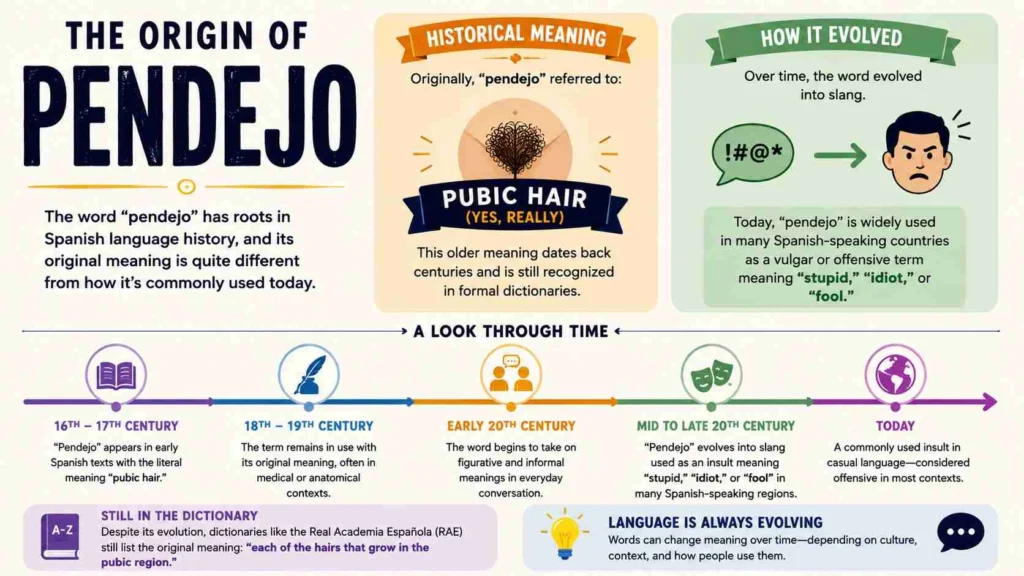
The word “pendejo” has roots in Spanish language history, and its original meaning is quite different from how it’s commonly used today.
Historical Meaning
Originally, “pendejo” referred to:
- Pubic hair (yes, really)
This older meaning dates back centuries and is still recognized in formal dictionaries. Over time, however, the word evolved into slang.
Evolution into Slang
The transition from its literal meaning to an insult likely came from:
- Associating youth or immaturity with inexperience
- Gradually shifting toward calling someone “foolish” or “stupid”
Today, most people use “pendejo” in its slang sense rather than its literal one.
Popularity and Regional Differences
“Pendejo” is widely used across Spanish-speaking countries, but its intensity and meaning can vary depending on the region.
Common Regional Interpretations
| Country/Region | Meaning | Tone |
|---|---|---|
| Mexico | Idiot, fool | Often strong insult |
| Spain | Coward or immature person | Moderate insult |
| Argentina | Naive or silly | Can be lighter |
| Caribbean (e.g., Puerto Rico) | Fool or jerk | Context-dependent |
Key Insight
In Mexico, calling someone “pendejo” is usually more offensive than in other regions. Meanwhile, in casual settings among friends, it can be used jokingly.
How “Pendejo” Is Used in Real Life
The meaning of “pendejo” depends heavily on:
- Tone of voice
- Relationship between speakers
- Situation or context
Let’s break it down.
1. As an Insult 😠
Used to call someone stupid or incompetent.
Example:
- “¡Eres un pendejo!”
(You’re an idiot!)
Tone: Clearly negative and confrontational.
2. Playful or Friendly Banter 😄
Among close friends, it can be lighthearted.
Example:
- “No seas pendejo, era broma.”
(Don’t be dumb, I was joking.)
Tone: Friendly, teasing not meant to offend.
3. Expressing Frustration 😤
Used when someone makes a mistake.
Example:
- “Qué pendejo soy, olvidé las llaves.”
(I’m such an idiot, I forgot the keys.)
Tone: Self-directed, casual.
4. Describing Naivety 🤷
In some regions, it can mean “naive” or “easily fooled.”
Example:
- “Es muy pendejo, cree todo lo que le dicen.”
(He’s very naive, he believes everything he’s told.)
Tone: Mildly critical.
Tone Matters | When It’s Offensive vs Harmless
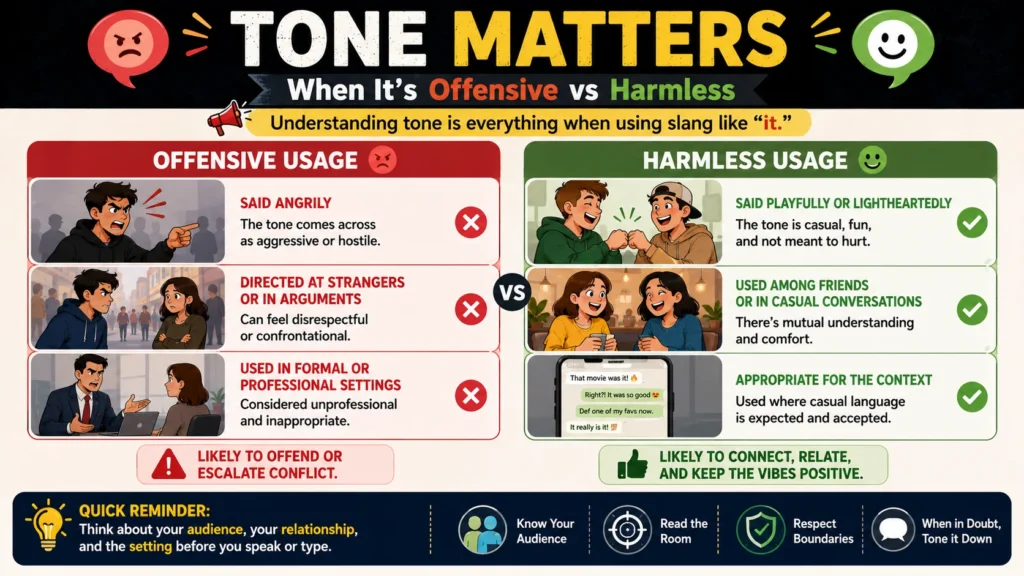
Understanding tone is everything when using slang like “it.”
Offensive Usage
- Said angrily
- Directed at strangers or in arguments
- Used in formal or professional settings
👉 Likely to offend or escalate conflict.
Harmless or Playful Usage
- Between close friends
- Said with a smile or joking tone
- Context clearly shows no harm intended
👉 Seen as teasing or humorous.
Example Table of Usage Context
| Situation | Sentence | Meaning | Tone |
|---|---|---|---|
| Argument | “Eres un pendejo” | You’re an idiot | Offensive |
| Friendly joke | “No seas pendejo 😄” | Don’t be silly | Playful |
| Self-talk | “Soy un pendejo” | I messed up | Casual |
| Observation | “Ese tipo es pendejo” | That guy is naive | Mild insult |
Comparison with Similar Terms
“Pendejo” isn’t the only slang word used to describe foolishness. Let’s compare it with similar terms.
Common Alternatives in Spanish
| Word | Meaning | Strength |
|---|---|---|
| Tonto | Silly or dumb | Mild |
| Idiota | Idiot | Strong |
| Estúpido | Stupid | Very strong |
| Bobo | Foolish | Light |
| Menso | Silly (Mexico) | Mild |
Key Differences
- “It” sits somewhere in the middle.
- It can be strong or mild depending on tone, unlike words like “estúpido,” which are almost always harsh.
Alternate Meanings of “Pendejo”
While the slang meaning dominates today, there are a few alternate interpretations:
1. Literal Meaning (Rarely Used)
- Refers to body hair in formal Spanish
- Mostly outdated in everyday conversation
2. Regional Nuances
- Can imply cowardice in some areas
- May suggest immaturity or irresponsibility
Polite or Professional Alternatives
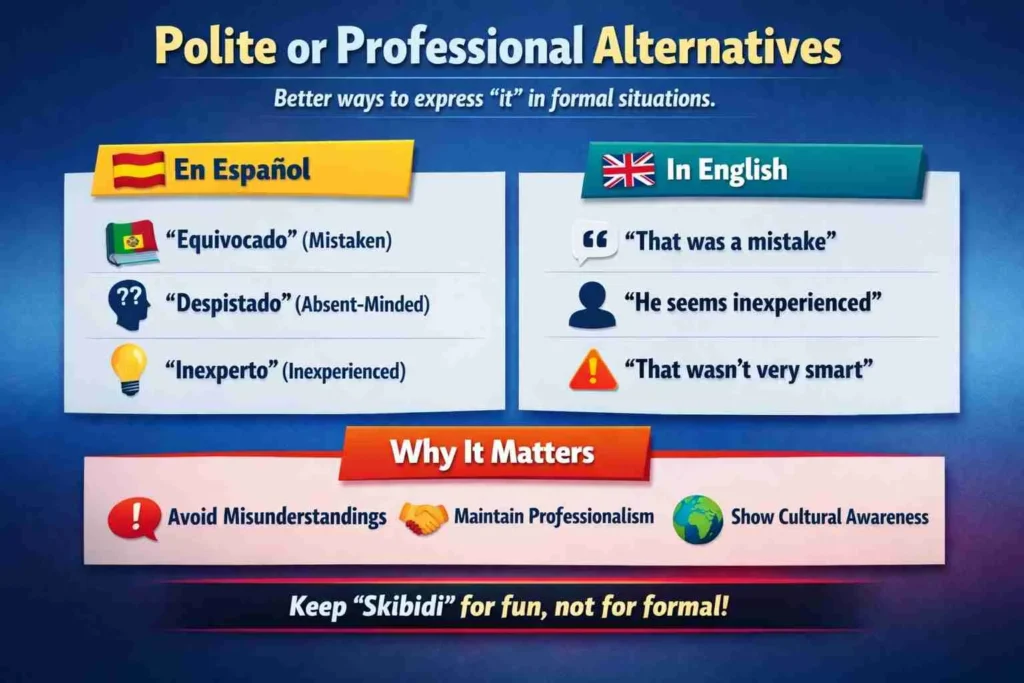
Using “it” in professional or formal settings is generally a bad idea. Here are better alternatives:
In Spanish
- “Equivocado” (mistaken)
- “Despistado” (absent-minded)
- “Inexperto” (inexperienced)
In English
- “That was a mistake”
- “He seems inexperienced”
- “That wasn’t very smart”
Why It Matters
Choosing neutral language helps:
- Avoid misunderstandings
- Maintain professionalism
- Show cultural awareness
Practical Usage Tips
If you’re learning Spanish or interacting with native speakers, keep these tips in mind:
- Avoid using it with strangers
- Listen first before using slang
- Match the tone of the group
- When unsure, don’t use it
A good rule of thumb: If you wouldn’t call someone an “idiot” in English, don’t use “pendejo.”
FAQs
What does pendejo mean in English?
Its generally translates to “idiot,” “fool,” or “dumb person” in English, though the exact meaning depends on tone and context.
Is pendejo a bad word?
Yes, it can be considered offensive, especially when used angrily or toward someone you don’t know well.
Can pendejo be used in a friendly way?
Yes, among close friends it can be used jokingly, similar to calling someone “dummy” in a playful tone.
Is pendejo vulgar?
It’s considered slang and somewhat vulgar, though not the strongest insult in Spanish.
Do all Spanish-speaking countries use pendejo the same way?
No, the meaning and intensity vary by region, with Mexico often using it more harshly than others.
Can you call yourself pendejo?
Yes, it’s commonly used in self-deprecating ways to admit a mistake humorously.
What is a softer alternative to pendejo?
Words like “tonto” or “bobo” are milder and less offensive.
Should non-native speakers use pendejo?
It’s best to be cautious, as misuse can easily offend. Understanding context is essential before using it.
Is pendejo a curse word?
A: Yes, pendejo is generally considered a Spanish insult or mild curse word. Its meaning ranges from “idiot” or “fool” to a stronger insult, depending on the country, tone, and context.
What Is Pendejo?
Pendejo is a Spanish slang term commonly used to mean “idiot,” “fool,” or “jerk.” Its strength and exact meaning vary by country and context, so it can range from a mild insult to a stronger offensive term.
Conclusion
“Pendejo” is a perfect example of how language evolves and how meaning depends heavily on context. While it technically translates to “idiot” or “fool,” its real-world usage ranges from playful teasing to outright insult.
The key takeaway is simple: tone, relationship, and situation matter more than the word itself. Used among friends, it can be harmless fun. Used incorrectly, it can quickly become offensive. is pendejo a slur.
If you’re learning Spanish or navigating cross-cultural conversations, it’s always safer to lean toward respectful language unless you’re completely sure of the context. Understanding words like “pendejo” doesn’t just improve your vocabulary it helps you communicate with awareness and confidence. what does bendejo mean in english.
Discover More Related Articles:
- “TBD” Meaning Slang: What It Means, How to Use It & When It Matters In 2026
- “OMS” Meaning in Slang: How People Use It in Conversations In 2026
- “GNG” Meaning Slang: Everything You Should Understand In 2026