
Definition:
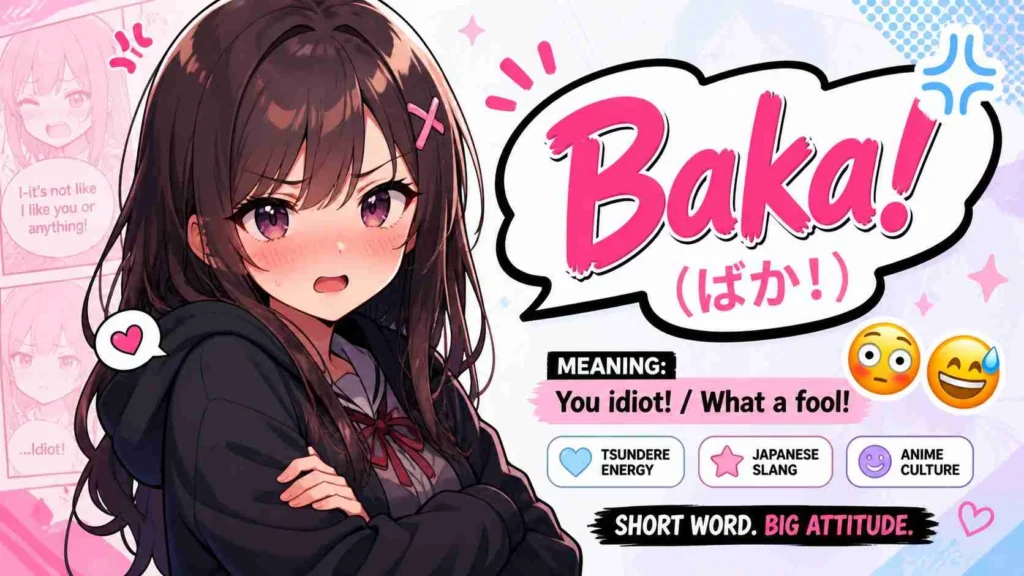
“Baka” (バカ / 馬鹿) is a Japanese word that generally means “fool,” “idiot,” or “silly.” Depending on tone and context, it can range from playful teasing to a serious insult.
If you’ve ever watched anime, read manga, or spent time on Japanese pop culture corners of the internet, you’ve probably heard the word baka. Maybe it was shouted dramatically during an argument, whispered teasingly between friends, or used jokingly online. But what does baka really mean and how should you use it (if at all)?
The truth is, baka isn’t just a simple translation of “idiot.” It carries layers of cultural nuance, emotional tone, and situational meaning that can shift depending on how it’s said. In some contexts, it’s harmless and even affectionate and in others, it can come across as rude or offensive.
In this guide, you’ll learn everything you need to know about baka: its meaning, origins, tone variations, real-world usage, examples, comparisons with similar words, and polite alternatives. Whether you’re curious about anime slang or learning Japanese, this article will give you clear, practical insights.
What Does “Baka” Mean?
At its core, baka translates to:
- Fool
- Idiot
- Dumb person
- Silly
However, context is everything. The same word can feel completely different depending on:
- Tone of voice
- Relationship between speakers
- Situation (casual vs. formal)
For example:
- “You forgot your keys again? Baka 😅” → playful teasing
- “You’re such a baka!” → mild insult
- “Don’t act like a baka.” → criticism
Origin of the Word “Baka”
The word baka (馬鹿) has a long and somewhat debated history in Japan.
Historical Roots
- The kanji characters used for baka literally mean:
- 馬 (uma) = horse
- 鹿 (shika) = deer
Together, they form a phrase historically linked to “foolishness” or “absurdity.”
Cultural Background
One popular origin theory traces back to an ancient Chinese story about someone calling a deer a horse to test loyalty. This idea symbolized delusion or foolishness, which later influenced Japanese usage.
Regional Differences
Interestingly, baka isn’t used the same way across Japan:
- Tokyo/Kanto region → baka is common and relatively mild
- Osaka/Kansai region → can feel stronger or harsher
In Kansai, people often use aho instead, which is similar but carries a different tone locally.
Why Is “Baka” So Popular?
The global popularity of baka largely comes from:
1. Anime and Manga Influence
Anime characters frequently use baka in emotional or comedic moments. This exposure made the word widely recognized outside Japan.
2. Internet Culture
On platforms like TikTok, Reddit, and Discord, baka became:
- A meme
- A playful insult
- A stylized way to tease
3. Easy Pronunciation
Short, catchy, and expressive baka is easy for non-Japanese speakers to pick up and use.
How “Baka” Is Used in Real Life
Understanding how baka is used requires looking at tone and context.
1. Playful or Friendly Use
Among friends, baka can feel lighthearted:
- “You’re such a baka 😂”
- “Baka! That was obvious!”
This usage is similar to calling someone “dummy” in English.
2. Romantic/Teasing Tone
In anime, you’ll often hear:
- “B-baka!” 😳
This usually signals embarrassment, affection, or flustered emotions.
3. Mild Insult
Used more seriously:
- “Don’t be a baka.”
- “He’s acting like a baka.”
This implies someone is being careless or foolish.
4. Harsh or Offensive Tone
Depending on delivery, baka can become insulting:
- Shouting it angrily
- Using it toward strangers
In real-life Japanese society, this can come across as rude.
Examples of “Baka” in Context
Here’s how tone changes meaning:
| Scenario | Example Sentence | Tone | Meaning |
|---|---|---|---|
| Friendly teasing | “You forgot again? Baka 😄” | Light | Silly mistake |
| Romantic anime style | “Baka… I didn’t mean that!” | Playful | Embarrassed affection |
| Mild criticism | “Don’t act like a baka.” | Neutral | Be smarter |
| Argument | “You’re such a baka!” | Negative | Insult |
| Online meme | “Baka energy 😭” | Humorous | Chaotic/silly |
Tone Variations and Emotional Impact
One of the most important things to understand is how tone changes everything.
Tone Spectrum
- 😊 Playful → harmless teasing
- 😅 Embarrassed → affectionate
- 😐 Neutral → mild criticism
- 😠 Angry → insulting
Key Tip
If you’re not fluent in Japanese culture, it’s safer to assume baka might come across stronger than you intend.
Comparison with Similar Terms
To fully understand baka, it helps to compare it with similar words.
| Word | Language | Meaning | Tone |
|---|---|---|---|
| Baka | Japanese | Fool/idiot | Varies widely |
| Aho | Japanese (Kansai) | Fool | Often softer locally |
| Idiot | English | Stupid person | Can be harsh |
| Dummy | English | Silly person | Playful |
| Moron | English | Very stupid | Strong insult |
Key Differences
- Baka is more flexible in tone than English insults
- English words often lean more clearly toward insult
- Japanese relies heavily on context and delivery
Alternate Meanings of “Baka”
While baka mostly means “fool,” it can take on subtle variations:
1. Extreme Emphasis
In phrases like:
- “Baka big” → extremely big
- “Baka fast” → ridiculously fast
Here, baka acts as an intensifier.
2. Affectionate Nickname
In close relationships, it can be used jokingly:
- “You baka 😌”
This can imply closeness rather than insult.
When You Should (and Shouldn’t) Use “Baka”
Safe Situations
- With friends who understand your tone
- In joking or meme contexts
- When referencing anime humor
Risky Situations
- With strangers
- In formal settings
- In professional environments
- When speaking to native Japanese speakers you don’t know well
Polite or Professional Alternatives
If you want to avoid sounding rude, consider softer options.
In English
- “That wasn’t very smart”
- “Silly mistake”
- “You could’ve handled that better”
In Japanese (safer expressions)
- “Chotto…” (a gentle way to express concern)
- “Kangaete” (please think about it)
These options keep communication respectful.
Common Mistakes When Using “Baka”
Avoid these pitfalls:
- ❌ Using it casually with strangers
- ❌ Assuming it always means “cute teasing”
- ❌ Copying anime tone in real-life conversations
- ❌ Overusing it in professional contexts
FAQs
What does baka mean in anime?
In anime, baka usually means “idiot” or “fool,” but it often carries a playful, exaggerated tone depending on the character and situation, sometimes even expressing embarrassment or hidden affection.
Is baka a bad word?
Baka is not inherently a bad word, but it can become offensive depending on tone, context, and relationship between speakers; it ranges from playful teasing to a genuine insult.
Can I use baka with friends?
Yes, you can use baka with friends if the tone is clearly playful and everyone understands the context, but it’s important to be mindful of how others perceive it.
What is the difference between baka and aho?
Both mean “fool,” but baka is more common in Tokyo while aho is widely used in the Kansai region and can feel softer or more casual depending on context.
Why do anime characters say baka so much?
Anime uses baka frequently because it’s a simple, expressive word that conveys emotion quickly, making it perfect for dramatic, comedic, or romantic scenes.
Does baka mean stupid or idiot?
Yes, baka can mean both “stupid” and “idiot,” but its exact meaning depends heavily on tone, ranging from light teasing to harsh criticism.
Is baka offensive in Japan?
It can be offensive if used seriously or toward strangers, especially in formal settings, but among friends it may be harmless or even playful.
Can baka be used romantically?
Yes, in certain contexts especially in anime baka can be used in a teasing or affectionate way, often expressing embarrassment or hidden feelings.
Conclusion
Baka is one of those words that seems simple at first but carries a surprising amount of depth. While it generally means “fool” or “idiot,” its true meaning depends on tone, context, and relationship. In casual or playful situations, it can feel harmless or even affectionate. In more serious contexts, it can come across as rude or insulting.
The key takeaway is this: baka is flexible but not always safe. If you’re using it casually among friends or in online culture, it’s usually fine. But in real-life conversations especially with native speakers or in formal settings it’s best to be cautious.
Understanding not just what words mean, but how they’re used, is what truly helps you communicate effectively across cultures.
Discover More Related Articles:
- “GNG” Meaning Slang: Everything You Should Understand In 2026
- “TBD” Meaning Slang: What It Means, How to Use It & When It Matters In 2026
- “OMS” Meaning in Slang: How People Use It in Conversations In 2026