
Definition
“Habibi” is an Arabic word that means “my love,” “my dear,” or “my darling.” It is commonly used as a term of affection between friends, family members or romantic partners, depending on the tone and context.
If you’ve spent even a few minutes on social media, watched international movies, or chatted with friends from different cultures, chances are you’ve heard the word habibi. It pops up in songs, memes, TikTok captions, and everyday conversations and somehow always sounds warm, expressive, and a little bit charming.
But what exactly does “habibi” mean? Is it romantic? Friendly? Can you use it casually, or does it carry deeper emotional weight?
The truth is, “habibi” is one of those rare words that blends culture, emotion, and flexibility. It can be sweet, playful, respectful, or even sarcastic depending on how it’s used.
In this guide, you’ll learn everything you need to know about the meaning of “habibi,” including its origin, real-life usage, tone variations, examples, and how to use it naturally without sounding awkward.
Origin of “Habibi”
The word “habibi” comes from the Arabic language, one of the oldest and most expressive languages in the world.
- Root word: “Hubb” (حب) – meaning love
- “Habib” (حبيب) – means beloved (masculine)
- “Habibi” (حبيبي) – translates to my beloved or my dear
Gender Variations
Arabic is a gendered language, so the word changes slightly:
- Habibi (حبيبي) → used for males
- Habibti (حبيبتي) → used for females
However, in global or casual usage (especially online), “habibi” is often used universally regardless of gender.
Why “Habibi” Became So Popular
“Habibi” has moved far beyond Arabic-speaking countries and become a global expression of affection.
Reasons for Its Popularity
- 🌍 Globalization & multicultural friendships
- 🎵 Music influence (especially Middle Eastern and international pop)
- 📱 Social media trends and memes
- 🎬 Movies and TV shows
- ✈️ Travel and cultural exchange
People love using “habibi” because it:
- Sounds warm and friendly
- Feels expressive without being too serious
- Adds a cultural flair to conversations
How “Habibi” Is Used in Real Life
One of the most interesting things about “habibi” is how flexible it is. It can be used in many situations depending on tone and relationship.
1. Romantic Use ❤️
Used between partners or someone you’re flirting with.
Example:
- “I miss you, habibi.”
- “Come here, habibi 😘”
Tone: Loving, intimate, affectionate
2. Friendly Use 😊
Used casually between friends (especially in Arab culture).
Example:
- “What’s up, habibi?”
- “Relax, habibi, it’s not a big deal.”
Tone: Warm, casual, caring
3. Family Use 👨👩👧
Commonly used between parents, siblings, or relatives.
Example:
- “Eat your food, habibi.”
- “Good night, habibi.”
Tone: Nurturing, affectionate
4. Playful or Teasing Use 😏
Sometimes used jokingly among friends.
Example:
- “You think you’re smart, habibi?”
- “Calm down, habibi 😂”
Tone: Light sarcasm or humor
5. Slightly Sarcastic or Dismissive 😬
In certain contexts, tone can flip the meaning.
Example:
- “Yeah, sure, habibi…”
- “Relax, habibi, you’re overreacting.”
Tone: Depends on voice and context (can feel dismissive)
Example Table: How “Habibi” Changes With Context
| Context | Example Sentence | Tone | Meaning |
|---|---|---|---|
| Romantic | “I love you, habibi.” | ❤️ Loving | My love |
| Friendly | “What’s up, habibi?” | 😊 Casual | My friend / buddy |
| Family | “Come here, habibi.” | 👨👩👧 Caring | My dear |
| Playful | “Relax, habibi 😂” | 😏 Teasing | Light joke |
| Sarcastic | “Okay, habibi…” | 😬 Dismissive | Depends on tone |
Tone Matters: How to Use “Habibi” Correctly
Using “habibi” is easy but tone is everything.
Tips for Natural Use
- ✔ Use it with people you’re comfortable with
- ✔ Match the tone (friendly vs romantic)
- ✔ Avoid using it in formal situations
- ✔ Pay attention to cultural sensitivity
When NOT to Use It
- ❌ In professional emails
- ❌ With strangers in serious settings
- ❌ When tone could be misunderstood
Comparison With Similar Terms
“Habibi” isn’t the only affectionate term out there. Let’s compare it with similar expressions:
| Term | Meaning | Language | Usage Style |
|---|---|---|---|
| Habibi | My love / my dear | Arabic | Romantic + Friendly |
| Babe | Romantic partner | English | Mostly romantic |
| Bro | Friend | English | Casual, non-romantic |
| Amigo | Friend | Spanish | Friendly |
| Darling | Loved one | English | Formal or romantic |
Key Difference
“Habibi” stands out because it works in multiple contexts romantic, friendly, and family while many English terms are more limited.
Alternate Meanings and Interpretations
While “habibi” mainly means my love, its interpretation can vary:
- Affectionate nickname
- Friendly greeting
- Cultural expression of warmth
- Playful sarcasm (context-based)
In some cases, people use it just because it sounds cool or trendy, even if they don’t fully understand its meaning.
Polite or Professional Alternatives
If you’re in a formal or professional setting, “habibi” might not be appropriate. Here are better alternatives:
Professional Alternatives
- Dear
- Sir / Ma’am
- Colleague
- Friend
Polite Casual Alternatives
- Hey
- Hi there
- My friend
- Buddy
Examples of “Habibi” in Conversations
Friendly Chat
- “Don’t worry, habibi, I’ve got you.”
Romantic Text
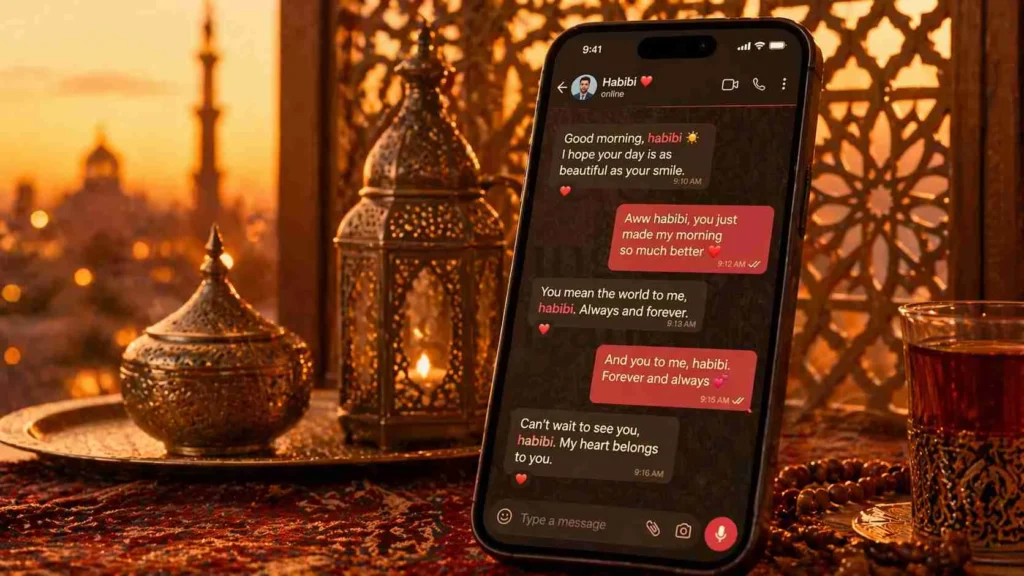
- “Good morning, habibi ❤️”
Playful Banter
- “You really thought that would work, habibi? 😂”
Family Context
- “Sleep well, habibi.”
FAQs
What does habibi mean in English? Habibi translates to “my love,” “my dear,” or “my beloved” in English, and it’s used to express affection in both romantic and friendly contexts depending on tone.
Is habibi only used for romantic partners? No, habibi is widely used for friends, family members, and even casually in conversations, not just for romantic relationships.
Can girls say habibi to guys? Yes, girls can say habibi to guys, but traditionally “habibti” is used for females while “habibi” is masculine, though modern usage is more flexible.
What is the difference between habibi and habibti? Habibi is used for males while habibti is used for females, as Arabic grammar distinguishes gender in words.
Is it okay to use habibi if you’re not Arabic? Yes, but it’s best to use it respectfully and understand the meaning and context to avoid sounding inappropriate or forced.
Can habibi be used sarcastically? Yes, depending on tone and context, habibi can sound playful or even slightly sarcastic, especially in casual conversations.
Is habibi formal or informal? Habibi is considered informal and is best used in casual, friendly, or personal conversations rather than professional settings.
Why do people use habibi in memes and social media? People use habibi online because it sounds expressive, catchy, and adds a fun cultural vibe to conversations and captions.
Conclusion
At its core, “habibi” is more than just a word it’s a feeling. It carries warmth, connection, and emotional closeness, you’re talking to a partner, a friend, or a family member. That’s what makes it so powerful and widely loved across cultures.
The beauty of “habibi” lies in its flexibility. It can be romantic, playful, comforting, or even teasing depending on how you say it. But with that flexibility comes responsibility tone and context matter more than the word itself.
If you’re planning to use “habibi,” keep it natural. Use it with people you’re comfortable with, match the tone to the situation, and avoid forcing it into formal conversations. When used right, it can make your communication feel warmer, more expressive, and culturally rich.
Discover More Related Articles:
- “BTS” Meaning: For in Text and Online Conversations In 2026
- “BBW” Meaning: In Conversations & Online Chats In 2026
- “TS” Mean in Chat: What It Means & When People Use It In 2026