
Definition
Namaste is a respectful greeting commonly used in India and Nepal that means “I bow to you” or “I honor the divine in you.” It is typically accompanied by a slight bow with palms pressed together in front of the chest.
You’ve probably heard the word Namaste in yoga classes, travel videos, or conversations about Indian culture. But here’s the thing Namaste isn’t just a word. It carries centuries of tradition, spiritual meaning, and cultural respect packed into a simple gesture and phrase.
In a world where greetings are often rushed or casual (“hey,” “hi,” “what’s up”), Namaste stands out. It slows things down and it adds intention. It acknowledges the person in front of you on a deeper level.
So what exactly does Namaste mean, where does it come from, and how should you use it correctly? Let’s break it all down in a clear, friendly, and practical way.
Origin of Namaste
The word Namaste comes from the ancient language Sanskrit, which is the root of many Indian languages.
Breakdown of the Word
- “Namah” = bow, reverence, or respect
- “Te” = to you
👉 Combined, Namaste literally translates to:
“I bow to you.”
Cultural Roots
- Deeply rooted in Hindu, Buddhist, and Jain traditions
- Common in countries like India and Nepal
- Often used in both spiritual and everyday social contexts
Originally, Namaste wasn’t just about greeting someone it was about recognizing the divine energy or soul within another person.
Spiritual and Cultural Meaning
Beyond the literal translation, Namaste carries a deeper philosophical meaning:
“The divine in me honors the divine in you.”
This idea reflects concepts from Eastern philosophy, especially:
- Unity of all beings
- Respect for others
- Inner peace and mindfulness
Why It Matters
Using Namaste isn’t just polite it’s intentional. It:
- Shows humility
- Encourages respect
- Promotes emotional connection
How Namaste Is Used in Real Life
1. As a Greeting
Used when meeting someone:
- “Namaste 🙏, how are you?”
2. As a Farewell
Used when leaving:
- “Namaste, see you tomorrow.”
3. In Yoga and Meditation
Often said at the end of a session:
- Instructor: “Namaste 🙏”
- Students: “Namaste”
4. In Formal or Respectful Situations
- Greeting elders
- Cultural or religious ceremonies
The Namaste Gesture (Anjali Mudra)
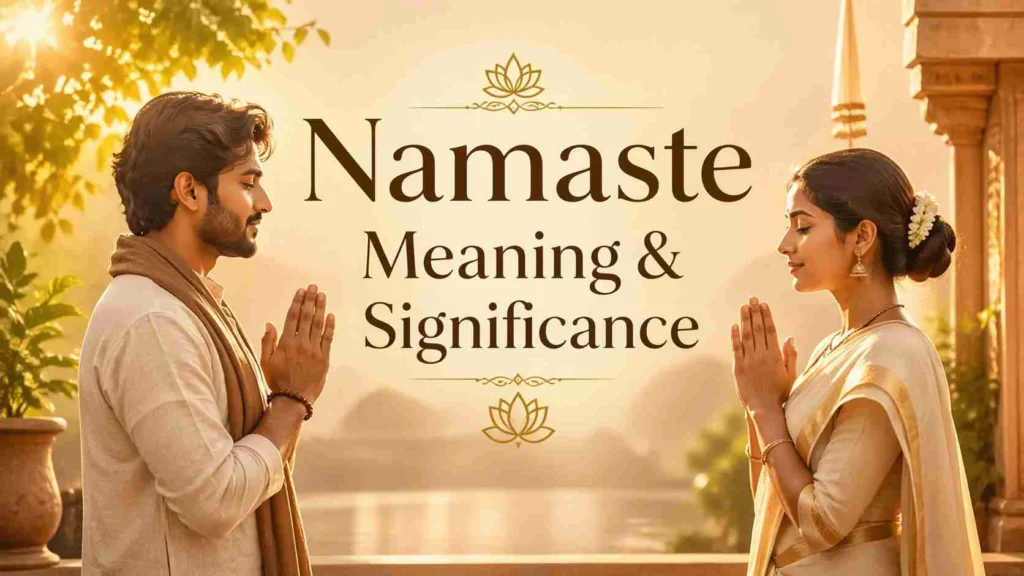
The word is usually paired with a gesture:
How to Do It
- Press your palms together
- Place hands near your chest
- Slightly bow your head
This gesture is called Anjali Mudra and adds sincerity to the greeting.
Examples of Namaste in Different Contexts
| Situation | Example | Tone |
|---|---|---|
| Friendly greeting | “Namaste! Long time no see 😊” | Warm & welcoming |
| Formal setting | “Namaste, sir. It’s a pleasure to meet you.” | Respectful |
| Yoga class | “Thank you for practicing today. Namaste 🙏” | Calm & spiritual |
| Travel interaction | “Namaste! Can you help me?” | Polite |
| Cultural ceremony | “Namaste” with bow | Traditional |
Tone and Interpretation
Although Namaste is almost always positive, tone can slightly change depending on context.
Friendly Tone 😊
- Warm smile
- Casual conversation
Respectful Tone 🙏
- Formal setting
- Speaking to elders
Spiritual Tone 🧘
- Meditation or yoga
- Calm, slow delivery
Can It Be Negative?
Not really. Namaste is rarely used sarcastically or negatively. Misuse usually comes from:
- Overusing it casually without understanding
- Using it in inappropriate cultural contexts
Popularity of Namaste Around the World
Global Spread
- Popularized through yoga culture
- Common in wellness communities
- Used internationally as a symbol of peace and respect
During COVID-19
- Became a preferred greeting over handshakes
- Promoted as a hygienic alternative
Namaste vs Similar Greetings
Here’s how Namaste compares to other greetings:
| Greeting | Meaning | Region | Formality |
|---|---|---|---|
| Namaste | I bow to you | India/Nepal | Formal & respectful |
| Hello | General greeting | Global | Neutral |
| Salaam | Peace be upon you | Middle East/South Asia | Respectful |
| Sat Sri Akal | God is eternal | Sikh community | Formal |
| Hi | Casual greeting | Global | Informal |
Namaste vs Namaskar
Many people confuse these two.
Namaste
- More common in everyday speech
- Slightly informal but still respectful
Namaskar
- More formal
- Often used in official or ceremonial settings
Alternate Meanings (If Any)
While Namaste mainly refers to a greeting:
- In yoga, it can symbolize closure and gratitude
- In spiritual contexts, it represents unity and connection
There are no slang or negative meanings associated with it.
Polite or Professional Alternatives
If you’re in a multicultural or professional setting, here are some alternatives:
Formal Alternatives
- “Good morning”
- “Greetings”
- “It’s a pleasure to meet you”
Friendly Alternatives
- “Hello 😊”
- “Hi there”
- “Hey!”
Culturally Similar
- “Salaam”
- “Peace be with you”
Usage Tips: When and How to Use Namaste
Do’s
- Use with respect 🙏
- Pair with the hand gesture
- Use in appropriate cultural settings
Don’ts
- Don’t use mockingly
- Avoid overusing in casual Western slang
- Don’t mispronounce intentionally
Pronunciation
👉 Nuh-muh-stay
Namaste in Digital Communication
You’ll often see Namaste used online with emojis:
- “Namaste 🙏 everyone!”
- “Ending the session with gratitude. Namaste 🙏✨”
It keeps the tone respectful even in digital spaces.
FAQs
What does Namaste literally mean?
Namaste literally means “I bow to you,” derived from Sanskrit, where “namah” means bow and “te” means to you, symbolizing respect and humility.
Is Namaste a religious word?
Namaste has roots in Hindu, Buddhist, and Jain traditions, but today it is widely used as a cultural greeting beyond strictly religious contexts.
Can anyone say Namaste?
Yes, anyone can say Namaste as long as it is used respectfully and with an understanding of its cultural significance.
When should you use Namaste?
Namaste is appropriate when greeting someone respectfully, during yoga sessions, or in formal and cultural interactions.
Is Namaste formal or informal?
Namaste sits between formal and semi-formal; it is respectful but still commonly used in everyday conversations.
What is the difference between Namaste and Namaskar?
Namaste is more commonly used in daily life, while Namaskar is considered more formal and ceremonial.
Why do people say Namaste in yoga?
In yoga, Namaste is used to express gratitude, respect, and acknowledgment of shared energy at the end of a session.
Is it okay to use Namaste in emails or messages?
Yes, Namaste can be used in messages or emails, especially in culturally appropriate or respectful communication contexts.
Conclusion
Namaste is far more than a simple greeting it’s a meaningful expression of respect, humility, and connection. Rooted in ancient Sanskrit and widely used across South Asia, it carries both cultural depth and modern relevance.
Spoken in a yoga studio, used in a formal meeting, or shared in a friendly conversation, Namaste adds a sense of intention that many everyday greetings lack.
By understanding its origin, proper usage, and deeper meaning, you can use Namaste confidently and respectfully in the right contexts while appreciating the rich tradition behind it.
Discover More Related Articles:
- “BBW” Meaning: In Conversations & Online Chats In 2026
- “TS” Mean in Chat: What It Means & When People Use It In 2026
- “BTS” Meaning: For in Text and Online Conversations In 2026