Quick Answer 🔥
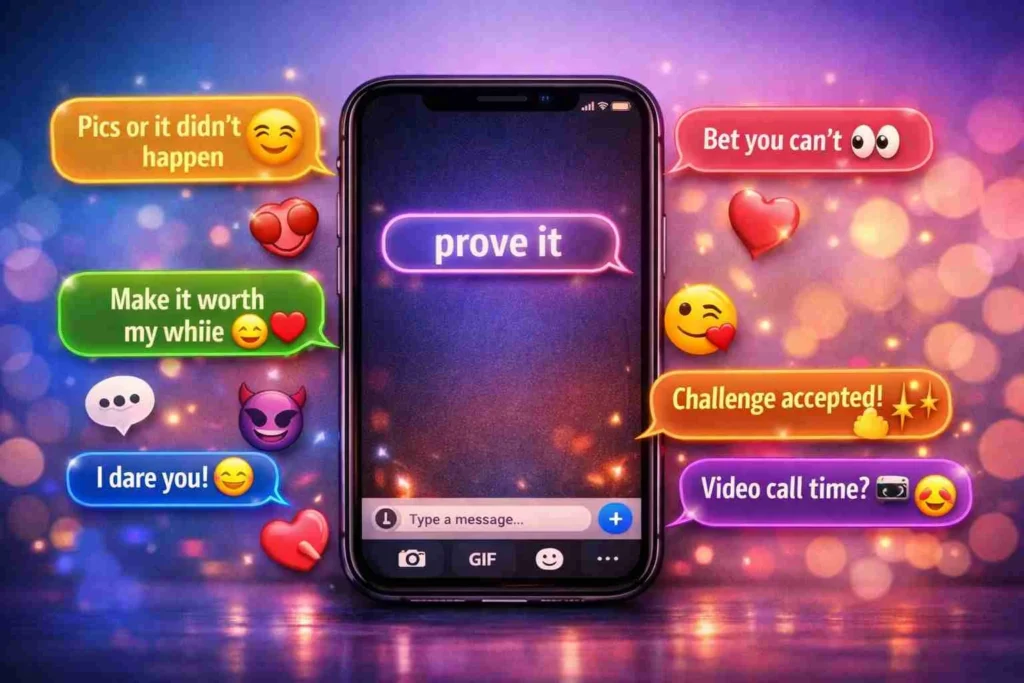
When someone says “prove it,” they’re usually testing your confidence, teasing you, or challenging your words. The best responses depend on your vibe and the situation.
Top replies:
“Challenge accepted,” “Watch me,” “Actions loading…,” “Give me a second,” “I already am.”
You’ve definitely heard it before. You say something bold, sweet, or confident… and boom, they hit you with “prove it.” It’s in texts, DMs, with your crush, friends, or even coworkers, this tiny phrase can flip the whole vibe of a conversation. It’s playful, sometimes flirty, sometimes challenging, and occasionally a straight-up test.
Knowing how to respond to “prove it” matters more than you think. The right reply can make you sound confident, funny, charming, or even irresistible. The wrong one can make things awkward or fall flat. That’s why having a go-to list of clever, text-ready comebacks helps you stay smooth in any situation.
Let’s level up your reply game with responses that actually hit.
Funny Responses
- “I left my proof at home.”
Example: When you want to keep things light during a playful chat.
Meaning: You’re jokingly dodging the challenge. - “Proof is in the pudding, but I ate it.”
Example: When someone playfully questions you.
Meaning: You’re being silly and unserious. - “I would, but it’s classified.”
Example: When teasing a friend or crush.
Meaning: Adds mystery in a humorous way. - “My lawyer said no.”
Example: When joking with friends.
Meaning: You’re mock-serious for laughs. - “Give me 5 business days.”
Example: Casual texting moment.
Meaning: Playfully delaying the challenge. - “Loading… 99% complete.”
Example: Tech-style humor in chats.
Meaning: You’re stalling in a fun way. - “Proof expired.”
Example: When joking in a convo.
Meaning: You’re brushing it off humorously. - “You can’t handle the proof.”
Example: Dramatic joking moment.
Meaning: Mock confidence for laughs. - “It’s under construction.”
Example: Casual playful reply.
Meaning: You’re not taking it seriously. - “Ask me again tomorrow.”
Example: Lazy or chill vibe.
Meaning: Avoiding the challenge humorously. - “I forgot the script.”
Example: When acting dramatic.
Meaning: Breaking the fourth wall jokingly. - “Let me Google it first.”
Example: Internet humor moment.
Meaning: Playfully unsure. - “Proof? In this economy?”
Example: Trendy joke reply.
Meaning: Using meme humor. - “I’ll send it via pigeon.”
Example: Random funny response.
Meaning: Being absurd on purpose. - “Proof is buffering.”
Example: Casual chat humor.
Meaning: Delaying in a fun way.
Flirty Responses
- “Come closer and find out.”
Example: When flirting with a crush.
Meaning: Inviting intimacy playfully. - “I’d rather show you than tell you.”
Example: Romantic texting moment.
Meaning: Suggestive and confident. - “Careful, you might fall for me.”
Example: Light flirting.
Meaning: Playful confidence. - “You ready for that?”
Example: Teasing your crush.
Meaning: Building anticipation. - “Only if you can handle it.”
Example: Flirty challenge.
Meaning: Turning the test back on them. - “Bet you’ll be impressed.”
Example: Confident flirt.
Meaning: Showing self-assurance. - “Say less.”
Example: Smooth texting moment.
Meaning: Confident agreement. - “Don’t tempt me.”
Example: Flirty tension.
Meaning: Suggestive and playful. - “You might regret asking.”
Example: Teasing tone.
Meaning: Building intrigue. - “I’ll make it worth your while.”
Example: Romantic vibe.
Meaning: Promise of effort. - “Watch me make you smile.”
Example: Sweet flirt.
Meaning: Gentle and charming. - “I was hoping you’d say that.”
Example: Flirty conversation.
Meaning: Shows interest. - “I like a challenge.”
Example: Confident flirting.
Meaning: You’re intrigued. - “Only if you’re watching.”
Example: Playful moment.
Meaning: Attention-seeking in a fun way. - “Let me impress you.”
Example: Direct flirt.
Meaning: Confident and bold.
Savage Responses
- “I don’t perform on demand.”
Example: When someone pushes you.
Meaning: Setting boundaries confidently. - “Not everything needs your approval.”
Example: Assertive moment.
Meaning: You don’t seek validation. - “Believe it or don’t.”
Example: Straightforward reply.
Meaning: You don’t care either way. - “That sounds like a you problem.”
Example: Slightly harsh tone.
Meaning: Dismissing the challenge. - “I’m not here to convince you.”
Example: Calm but firm.
Meaning: You value your own truth. - “Stay curious.”
Example: Short and bold.
Meaning: Leaving them hanging. - “I already did.”
Example: Confident tone.
Meaning: You believe your actions speak. - “Keep doubting.”
Example: Sharp response.
Meaning: You’re unfazed. - “Not worth the effort.”
Example: Dismissive tone.
Meaning: You’re uninterested. - “Try harder.”
Example: Turning it around.
Meaning: Challenging them instead. - “You’re not my judge.”
Example: Defensive moment.
Meaning: Rejecting authority. - “I don’t owe you proof.”
Example: Serious reply.
Meaning: Setting boundaries. - “Watch quietly.”
Example: Confident statement.
Meaning: Actions will speak later. - “You’ll see.”
Example: Calm confidence.
Meaning: Let time prove it. - “Wait for it.”
Example: Dramatic tone.
Meaning: Building suspense.
Polite Responses
- “I’ll try my best to show you.”
Example: Respectful setting.
Meaning: Willing to demonstrate. - “Give me a moment.”
Example: Calm response.
Meaning: You’re preparing. - “I’ll explain properly.”
Example: Professional tone.
Meaning: Clarifying your point. - “Let me demonstrate.”
Example: Work situation.
Meaning: Showing competence. - “I understand your concern.”
Example: Formal setting.
Meaning: Acknowledging doubt. - “I’ll back it up.”
Example: Neutral tone.
Meaning: Ready to support your claim. - “That’s fair, let me show you.”
Example: Respectful reply.
Meaning: Accepting the challenge. - “I’ll provide details.”
Example: Professional talk.
Meaning: Offering clarity. - “Let’s go through it.”
Example: Team setting.
Meaning: Collaborative approach. - “I’ll walk you through it.”
Example: Work environment.
Meaning: Clear explanation. - “I can explain further.”
Example: Calm tone.
Meaning: Open to discussion. - “Let me clarify that.”
Example: Professional reply.
Meaning: Avoiding misunderstanding. - “I appreciate the question.”
Example: Formal setting.
Meaning: Staying polite. - “I’ll support it with facts.”
Example: Logical discussion.
Meaning: Evidence-based reply. - “Let me show you how.”
Example: Helpful tone.
Meaning: Demonstrating clearly.
Sarcastic Responses
- “Oh yes, let me grab my evidence folder.”
Example: Eye-roll moment.
Meaning: Mocking the demand. - “Because I live to impress you.”
Example: Sarcastic tone.
Meaning: Playful annoyance. - “Sure, let me write a report.”
Example: Casual sarcasm.
Meaning: Over-exaggerating. - “Hold on, calling my fans.”
Example: Funny sarcasm.
Meaning: Mock confidence. - “Right away, boss.”
Example: Slight attitude.
Meaning: Not serious. - “You want slides too?”
Example: Work sarcasm.
Meaning: Overdoing it jokingly. - “Let me schedule that.”
Example: Chill sarcasm.
Meaning: Delaying humorously. - “As you wish, your majesty.”
Example: Dramatic sarcasm.
Meaning: Mock respect. - “I’ll submit it in writing.”
Example: Dry humor.
Meaning: Making fun of seriousness. - “Should I bring receipts?”
Example: Trendy sarcasm.
Meaning: Overplaying proof. - “Let me get my team.”
Example: Joke tone.
Meaning: Acting important. - “You’re funny.”
Example: Dismissive sarcasm.
Meaning: Not taking it seriously. - “Breaking news coming soon.”
Example: Meme reply.
Meaning: Delayed humor. - “I’ll send a press release.”
Example: Overdramatic tone.
Meaning: Mocking the situation. - “Sure, give me a stage.”
Example: Playful sarcasm.
Meaning: Acting theatrical.
Cute Responses
- “Okay but be nice about it.”
Example: Soft tone.
Meaning: Gentle and playful. - “Only if you smile first.”
Example: Sweet interaction.
Meaning: Light flirting. - “Don’t laugh at me though.”
Example: Shy moment.
Meaning: Playful vulnerability. - “I’ll try my cutest effort.”
Example: Cute vibe.
Meaning: Lighthearted. - “You’re making me nervous.”
Example: Soft tone.
Meaning: Sweet nervousness. - “Fine, but you owe me a smile.”
Example: Cute deal.
Meaning: Playful exchange. - “Okay but no judging.”
Example: Friendly chat.
Meaning: Seeking comfort. - “I’ll do it for you.”
Example: Affectionate tone.
Meaning: Sweet gesture. - “You’re too demanding.”
Example: Cute complaint.
Meaning: Playful teasing. - “Only because it’s you.”
Example: Warm reply.
Meaning: Special attention. - “Aww, you doubt me?”
Example: Soft teasing.
Meaning: Light emotional tone. - “Watch me try.”
Example: Gentle confidence.
Meaning: Effort-focused. - “Be patient with me.”
Example: Cute tone.
Meaning: Asking kindness. - “I’ll make you proud.”
Example: Sweet moment.
Meaning: Seeking approval. - “Just don’t tease me after.”
Example: Cute concern.
Meaning: Playful request.
Confident Responses
- “Watch this.”
Example: Bold moment.
Meaning: Strong self-belief. - “Already ahead of you.”
Example: Quick reply.
Meaning: Confidence in action. - “Say less.”
Example: Cool tone.
Meaning: No explanation needed. - “Done.”
Example: Short reply.
Meaning: Immediate confidence. - “I’ve got this.”
Example: Assured tone.
Meaning: Self-trust. - “Easy.”
Example: Calm reply.
Meaning: Effortless confidence. - “You’ll see soon.”
Example: Future promise.
Meaning: Patience with certainty. - “Consider it handled.”
Example: Professional confidence.
Meaning: Capability. - “Already proving it.”
Example: Subtle tone.
Meaning: Actions in motion. - “Trust me.”
Example: Direct reply.
Meaning: Confidence in yourself. - “Leave it to me.”
Example: Responsible tone.
Meaning: Taking charge. - “I don’t miss.”
Example: Bold statement.
Meaning: High confidence. - “That’s light work.”
Example: Casual confidence.
Meaning: Easy task. - “Say no more.”
Example: Smooth tone.
Meaning: Fully ready. - “Bet.”
Example: Trendy slang.
Meaning: Accepting challenge confidently.
Chill And Casual Responses
- “Alright, give me a sec.”
Example: Relaxed tone.
Meaning: Taking it easy. - “We’ll see.”
Example: Neutral vibe.
Meaning: Not overcommitting. - “Maybe.”
Example: Casual reply.
Meaning: Uncertain but chill. - “Let’s find out.”
Example: Light tone.
Meaning: Open to it. - “I’ll try.”
Example: Honest reply.
Meaning: Effort without pressure. - “Okay okay.”
Example: Friendly tone.
Meaning: Agreeing casually. - “No rush.”
Example: Calm vibe.
Meaning: No pressure. - “We’ll get there.”
Example: Easygoing tone.
Meaning: Gradual effort. - “Give me time.”
Example: Chill reply.
Meaning: Not immediate. - “I got you.”
Example: Friendly tone.
Meaning: Reassurance. - “Working on it.”
Example: Casual response.
Meaning: Progress happening. - “Soon.”
Example: Short reply.
Meaning: Slight delay. - “Let’s see how it goes.”
Example: Relaxed tone.
Meaning: No pressure outcome. - “I’ll manage.”
Example: Calm tone.
Meaning: Self-reliant. - “All good.”
Example: Friendly reply.
Meaning: No stress.
Dramatic Responses
- “You dare challenge me?”
Example: Playful drama.
Meaning: Theatrical tone. - “This is my moment.”
Example: Big energy.
Meaning: Embracing the challenge. - “Witness greatness.”
Example: Bold humor.
Meaning: Exaggerated confidence. - “Prepare to be amazed.”
Example: Dramatic flair.
Meaning: Building hype. - “History will remember this.”
Example: Funny drama.
Meaning: Over-the-top reaction. - “The stage is mine.”
Example: Theatrical tone.
Meaning: Taking spotlight. - “Watch closely.”
Example: Intense vibe.
Meaning: Serious focus. - “This changes everything.”
Example: Dramatic tone.
Meaning: Overstatement. - “Let the show begin.”
Example: Fun energy.
Meaning: Entertaining response. - “I won’t disappoint.”
Example: Serious tone.
Meaning: Promise of effort. - “This is destiny.”
Example: Overdramatic.
Meaning: Joke intensity. - “You asked for it.”
Example: Bold tone.
Meaning: Accepting challenge. - “The legend begins now.”
Example: Funny drama.
Meaning: Mock confidence. - “No turning back.”
Example: Intense reply.
Meaning: Commitment. - “Watch history unfold.”
Example: Epic tone.
Meaning: Exaggerated impact.
Emotional Responses
- “I’ll show you I mean it.”
Example: Serious moment.
Meaning: Genuine intention. - “I want you to believe me.”
Example: Honest tone.
Meaning: Seeking trust. - “I’ll prove it through actions.”
Example: Deep conversation.
Meaning: Commitment. - “Give me a chance.”
Example: Vulnerable moment.
Meaning: Asking for trust. - “I care enough to try.”
Example: Emotional tone.
Meaning: Effort matters. - “You’ll see my effort.”
Example: Calm sincerity.
Meaning: Showing dedication. - “I’m serious about this.”
Example: Honest reply.
Meaning: Emphasizing importance. - “I won’t let you down.”
Example: Trust moment.
Meaning: Reassurance. - “I’ll earn your trust.”
Example: Deep tone.
Meaning: Long-term effort. - “Just watch me try.”
Example: Soft confidence.
Meaning: Effort-focused. - “I’ll make it right.”
Example: Apology situation.
Meaning: Fixing things. - “I’m trying my best.”
Example: Honest tone.
Meaning: Effort acknowledgment. - “You matter to me.”
Example: Emotional context.
Meaning: Showing care. - “I’ll show you, not just say it.”
Example: Deep convo.
Meaning: Actions over words. - “Trust takes time.”
Example: Real talk.
Meaning: Patience.
Clever Responses
- “Evidence is in progress.”
Example: When you want to sound smart but playful.
Meaning: You’re subtly confident and composed. - “Connecting dots as we speak.”
Example: During a witty conversation.
Meaning: You’re building your case intelligently. - “Conclusion pending, stay tuned.”
Example: When teasing someone intellectually.
Meaning: You’re creating suspense with a smart twist. - “Results will speak louder.”
Example: When keeping things mature.
Meaning: You trust outcomes over words. - “Let the data roll in.”
Example: Casual but clever tone.
Meaning: You’re framing it like an experiment. - “Hypothesis accepted.”
Example: Nerdy or smart humor moment.
Meaning: You’re engaging playfully with logic. - “Give it time to unfold.”
Example: Calm conversation.
Meaning: You believe proof comes naturally. - “I’ll let reality handle that.”
Example: Confident and smart tone.
Meaning: You rely on truth itself. - “Watch the pattern.”
Example: Observational tone.
Meaning: You’re hinting at consistency. - “You’ll connect the dots soon.”
Example: Slightly mysterious tone.
Meaning: Understanding will come later. - “I don’t rush proof.”
Example: Calm and collected vibe.
Meaning: You value patience. - “Observe closely.”
Example: Focused moment.
Meaning: Encouraging attention to detail. - “It’s already in motion.”
Example: Confident subtle reply.
Meaning: Things are happening behind the scenes. - “Let outcomes do the talking.”
Example: Mature tone.
Meaning: Results matter most. - “Proof reveals itself.”
Example: Deep or thoughtful moment.
Meaning: Truth doesn’t need forcing.
Sweet Responses
- “I’ll show you in my own way.”
Example: Gentle conversation with someone close.
Meaning: You’re sincere and caring. - “Because you matter, I will.”
Example: Emotional connection moment.
Meaning: You value the person deeply. - “I want you to feel it, not just see it.”
Example: Romantic or heartfelt tone.
Meaning: You emphasize emotions. - “I’ll make you believe me.”
Example: Soft reassurance.
Meaning: You’re committed to proving yourself. - “Just trust me a little.”
Example: Vulnerable moment.
Meaning: Asking for faith. - “I’ll prove it with care.”
Example: Sweet tone.
Meaning: Gentle and thoughtful effort. - “You’ll see how much I mean it.”
Example: Emotional connection.
Meaning: Showing sincerity. - “I’ll make it obvious.”
Example: Soft confidence.
Meaning: You’ll express clearly. - “Because it’s you, I’ll try harder.”
Example: Special moment.
Meaning: Extra effort for them. - “I’ll show you slowly.”
Example: Calm emotional tone.
Meaning: Taking time to prove. - “I’ll make it count.”
Example: Meaningful reply.
Meaning: Quality over speed. - “You deserve the effort.”
Example: Caring tone.
Meaning: Respect and value. - “I’ll prove it with actions.”
Example: Honest moment.
Meaning: Actions over words. - “I won’t rush it.”
Example: Calm reassurance.
Meaning: Thoughtful approach. - “I’ll make you smile first.”
Example: Sweet playful tone.
Meaning: Starting with positivity.
FAQs
What does “prove it” mean?
It means someone wants evidence, action, or confirmation of what you said.
Is “prove it” flirty or serious?
It can be both. With the right tone, it’s playful and flirty, but it can also be a real challenge.
How do you respond professionally?
Use calm and clear replies like “Let me demonstrate” or “I’ll provide details.”
What if you don’t actually mean it?
Keep it light with humor or vague replies like “We’ll see” or “Maybe.”
Is humor a good response?
Yes, humor makes conversations engaging and keeps things fun and relaxed.
Conclusion
At the end of the day, how you respond to “prove it” says a lot about your personality. You go funny, flirty, savage, or sincere, your reply shapes the vibe of the entire conversation. The key is to match your tone with the situation and stay authentic.
Don’t overthink it. Sometimes a simple confident reply hits harder than a long explanation. Mix it up, experiment with different styles, and find what feels natural for you.
Save this list, reuse your favorites, and keep your conversations sharp, fun, and unforgettable. Now next time someone says “prove it,” you’ll be more than ready.
Discover More Related Articles:
- 356 “Epic Reactions” For Every Mood: That Always Get Likes In 2026
- 500 Respond When a Guy Says He Wants to “Spoil You”: In a Genuine Way In 2026
- 490 How to Respond to Being Called “Good Girl”: In a Playful Way In 2026