
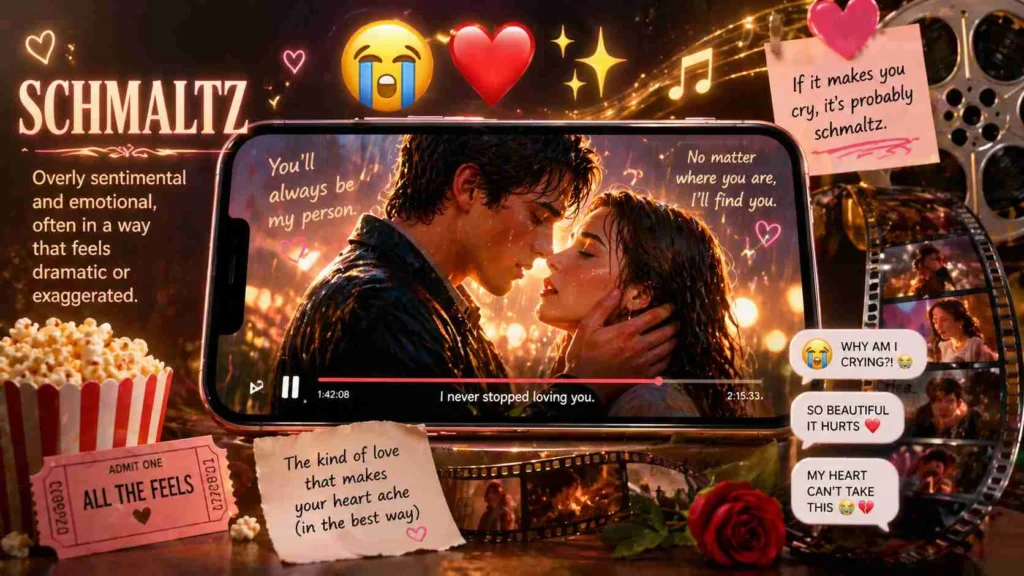

Definition
Schmaltz refers to something that is overly sentimental, emotional, or excessively sweet often in a way that feels exaggerated, cheesy, or lacking sincerity. It can describe music, movies, writing, or behavior that tries too hard to evoke feelings.
Ever watched a movie scene that felt just a little too emotional like the music swelled, the tears flowed, and suddenly it all felt a bit forced? That’s where the word schmaltz comes in.
From heartfelt love stories to dramatic speeches, schmaltz is everywhere in modern culture. Sometimes it’s comforting and nostalgic; other times, it crosses into eye-roll territory. But what exactly does schmaltz meaning involve, and how should you use it correctly?
In this detailed guide, you’ll learn everything from its origins and real-life usage to tone nuances, examples, comparisons, and professional alternatives.
What Does Schmaltz Mean?
At its core, schmaltz is about excessive sentimentality.
Simple Breakdown:
- Positive context: Warm, emotional, nostalgic feelings ❤️
- Negative context: Over-the-top, cheesy, or manipulative emotion 😬
Key Characteristics:
- Highly emotional tone
- Often exaggerated
- Can feel artificial or forced
- Common in entertainment and storytelling
Origin of Schmaltz
The word schmaltz has a fascinating history rooted in culture and language.
Etymology:
- Derived from the Yiddish word “shmaltz”
- Originally meant rendered chicken fat
- Used in traditional Jewish cooking
How It Became Figurative:
Over time, the meaning shifted from food to emotion:
- Literal meaning: Rich, fatty substance
- Figurative meaning: Emotional richness (sometimes too rich)
Think of it like this:
Just as too much fat can make food heavy, too much emotion can make content feel overwhelming.
How Schmaltz Became Popular
The term gained traction in English during the 20th century, especially in:
- Hollywood films 🎬
- Romantic music 🎶
- Television dramas 📺
- Literature and storytelling
Why It Stuck:
- Easy to describe emotional exaggeration
- Adds humor or critique
- Widely relatable in pop culture
Today, schmaltz meaning is commonly used in reviews, casual conversations, and social media commentary.
Real-World Usage of Schmaltz
You’ll often see schmaltz used to describe:
1. Movies
- Romantic films with dramatic endings
- Tear-jerking scenes with emotional music
Example:
“That movie had a good story, but the ending was pure schmaltz.”
2. Music
- Songs that are overly emotional or dramatic
Example:
“I like love songs, but this one is way too schmaltzy.”
3. Writing & Speech
- Overly sentimental language
Example:
“His speech was heartfelt, but slightly schmaltzy.”
4. Social Media Content
- Posts that try too hard to be emotional
Example:
“That caption felt a bit schmaltz, not gonna lie 😅”
Tone and Context of Schmaltz
Understanding tone is crucial when using this word.
1. Friendly / Playful Tone 😊
Used lightly, without harsh criticism.
Example:
“That movie was cheesy and full of schmaltz but I loved it!”
2. Neutral Tone 😐
Used descriptively without strong judgment.
Example:
“The film relies heavily on schmaltz to connect with audiences.”
3. Negative / Dismissive Tone 🙄
Used to criticize something as overly emotional.
Example:
“That speech was pure schmaltz completely overdone.”
Example Table: Schmaltz in Different Contexts
| Context | Example Sentence | Tone |
|---|---|---|
| Movie Review | “Too much schmaltz ruined the ending.” | Negative |
| Music | “A schmaltzy love ballad from the 90s.” | Neutral |
| Conversation | “Okay, that was kinda schmaltzy but cute!” | Friendly |
| Writing | “The novel leans heavily on schmaltz.” | Neutral |
| Social Media | “That post is full-on schmaltz 😂” | Playful |
Schmaltz vs Similar Words
Many words overlap with schmaltz meaning, but each has subtle differences.
Comparison Table
| Word | Meaning | Tone Difference |
|---|---|---|
| Schmaltz | Overly sentimental | Slightly humorous or critical |
| Cheesy | Predictable or cliché | More casual, less emotional |
| Corny | Old-fashioned or silly | Lighthearted |
| Sentimental | Emotional in a genuine way | Neutral/positive |
| Melodramatic | Exaggerated emotional expression | Strongly negative |
Key Insight:
- Schmaltz = emotional excess
- Cheesy = predictable cliché
- Sentimental = genuine feeling
Examples of Schmaltz in Sentences
Here are some realistic examples to help you use the term naturally:
Casual Conversation
- “That ending was so schmaltzy, but it made me cry 😭”
- “I love a little schmaltz in movies it’s comforting.”
Social Media
- “This reel is pure schmaltz but I’m here for it 💖”
- “Okay, that caption is peak schmaltz 😂”
Professional Use
- “The narrative occasionally leans into schmaltz, which may divide audiences.”
- “Critics noted the film’s reliance on schmaltzy elements.”
Alternate Meanings of Schmaltz
While the emotional meaning is most common, there’s another definition:
1. Culinary Meaning 🍗
- Rendered chicken or goose fat
- Used in traditional cooking
2. Slang Meaning
- Emotional exaggeration (modern usage)
When to Use Schmaltz (and When Not To)
Use It When:
- Describing emotional exaggeration
- Reviewing movies, music, or writing
- Adding humor or critique
Avoid It When:
- Writing formal academic papers
- Addressing sensitive emotional topics
- Giving professional feedback (unless carefully worded)
Polite or Professional Alternatives
If schmaltz feels too informal, here are better options:
Alternatives:
- Overly sentimental
- Emotionally exaggerated
- Highly emotional
- Dramatically expressive
- Nostalgic tone
Example:
Instead of:
“This presentation is schmaltzy”
Say:
“This presentation feels overly sentimental”
Why People Like Schmaltz
Despite its criticism, schmaltz isn’t always bad.
Reasons People Enjoy It:
- Evokes strong emotions
- Creates nostalgia
- Feels comforting
- Easy to connect with
Sometimes, people want that emotional intensity.
Why Schmaltz Can Be Criticized
On the flip side, too much schmaltz can feel:
- Manipulative
- Unrealistic
- Forced
- Cliché
Balance is key.
FAQs
What does schmaltz mean in simple words? Schmaltz means something that is overly emotional or sentimental, often in a way that feels exaggerated or cheesy.
Is schmaltz a negative word? Schmaltz can be both positive and negative depending on tone; it can describe something sweet or criticize something as overly emotional.
Where does the word schmaltz come from? Schmaltz comes from Yiddish and originally referred to rendered chicken fat before evolving into a term for emotional excess.
How is schmaltz used in a sentence? You can say, “That movie ending was pure schmaltz,” to describe something overly sentimental.
Is schmaltz the same as cheesy? Not exactly; schmaltz focuses on emotional exaggeration, while cheesy refers more to clichés or predictability.
Can schmaltz be positive? Yes, in a lighthearted or nostalgic context, schmaltz can be enjoyable and comforting.
What is a schmaltzy movie? A schmaltzy movie is one that relies heavily on emotional scenes, dramatic music, and sentimental storytelling.
What are alternatives to schmaltz? Alternatives include overly sentimental, emotional, melodramatic, or nostalgic depending on context.
Conclusion
Schmaltz is one of those words that perfectly captures a feeling we’ve all experienced when emotion crosses the line from heartfelt to a bit too much. You’re describing a tear-jerking movie, a dramatic song, or a sentimental speech, understanding schmaltz meaning helps you express that nuance clearly.
Used thoughtfully, it can add humor, critique, or even appreciation to your language. The key is knowing the tone because sometimes a little schmaltz is exactly what people want, and other times, it’s just too much.
Discover More Related Articles:
- “POV” Meaning: How to Use It & Why It’s Everywhere Online In 2026
- “FWIW” Meaning: What It Means, How to Use It & When It Sounds Right In 2026
- “Solfege” Meaning: Improves Pitch & Ear Training Skills In 2026