

Definition
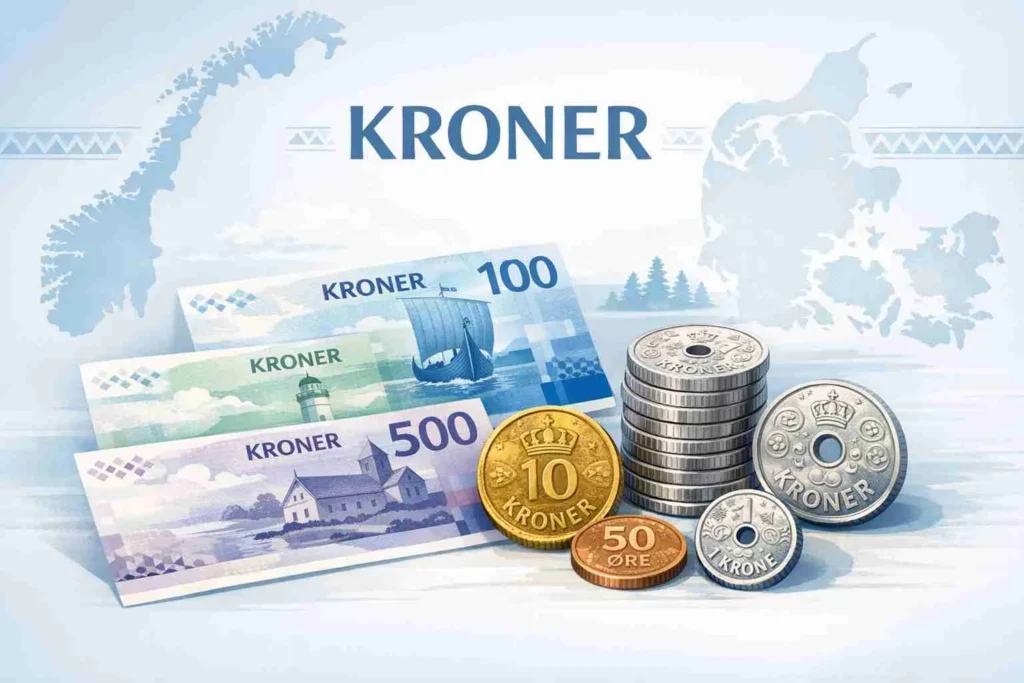
“Kroner” is the plural form of “krone,” which is the official currency unit used in several Scandinavian countries, including Denmark and Norway. It refers to money in general within those nations, similar to how “dollars” or “euros” are used in other parts of the world.
If you’ve ever traveled to Scandinavia, browsed international prices online, or read about Nordic economies, you’ve likely come across the term “kroner.” At first glance, it might seem like just another foreign currency name but there’s more to it than that.
Understanding what kroner means isn’t just helpful for travelers it also gives insight into global finance, cultural identity, and even language. You’re planning a trip, studying currencies, or simply curious, this guide breaks everything down in a simple, friendly, and informative way.
Origin of the Word “Kroner”
The term “kroner” originates from the word “krone,” which literally means “crown” in several Scandinavian languages.
Historical Background
- The concept dates back to the Scandinavian Monetary Union (1873–1914).
- Denmark, Norway, and Sweden agreed to use a shared currency system based on gold.
- The name “krone” (crown) symbolized monarchy and unity.
Even though the union dissolved, the countries continued using their own versions of the krone/kroner.
Countries That Use “Kroner”
Here are the main countries where kroner is used today:
| Country | Currency Name | Code | Symbol |
|---|---|---|---|
| Denmark | Danish krone | DKK | kr |
| Norway | Norwegian krone | NOK | kr |
Sweden uses a similar term, “krona” (plural: kronor), which is closely related but spelled differently.
What Does “Kroner” Mean in Everyday Use?
In practical terms, “kroner” simply means money but specifically within the context of Scandinavian currencies.
Example Usage in Real Life
- “This jacket costs 500 kroner.”
- “I exchanged dollars for Norwegian kroner.”
- “Dinner in Oslo was around 300 kroner.”
It functions just like saying “dollars” or “pounds” in English.
How “Kroner” Is Used in Different Contexts
1. Travel and Tourism
When visiting Denmark or Norway, you’ll deal with kroner daily:
- Paying for food, transport, and shopping
- Converting your home currency into kroner
- Understanding price differences
💡 Example:
“Coffee here costs 40 kroner 😅 a bit pricey, but worth it!”
2. Online Shopping
Some international websites display prices in kroner:
- Scandinavian brands
- Nordic e-commerce stores
- Travel booking platforms
3. Finance and Economics
“Kroner” is commonly used in:
- Exchange rate discussions
- Global trade analysis
- Investment reports
Example:
“The Norwegian kroner strengthened against the euro this quarter.”
Tone and Usage: Is “Kroner” Formal or Casual?
The word “kroner” is neutral in tone. It’s used in both formal and informal contexts without any change in meaning.
Tone Breakdown
| Context | Example Sentence | Tone |
|---|---|---|
| Casual | “I spent 200 kroner on snacks 😄” | Friendly |
| Neutral | “The item costs 150 kroner.” | Standard |
| Formal | “The price is listed in Danish kroner.” | Professional |
Unlike slang terms, kroner does not carry emotional or cultural tone shifts it’s purely informational.
Examples of “Kroner” in Sentences
Here are some real-world examples with different tones:
Friendly Tone 😊
- “I only had 50 kroner left, so I grabbed a quick snack!”
- “These souvenirs are just 100 kroner such a good deal!”
Neutral Tone
- “The train ticket costs 120 kroner.”
- “Prices are listed in Norwegian kroner.”
Slightly Negative/Dismissive Tone 😬
- “Why is everything so expensive? 80 kroner for coffee?”
- “That’s way too many kroner for something so small.”
Comparison with Similar Currency Terms
To better understand kroner meaning, let’s compare it with other popular currency terms:
| Currency Term | Region | Meaning | Plural Form |
|---|---|---|---|
| Dollar | USA, others | Base currency unit | Dollars |
| Euro | Europe | European Union currency | Euros |
| Pound | UK | British currency | Pounds |
| Yen | Japan | Japanese currency | Yen |
| Krone | Scandinavia | Currency unit | Kroner |
Key Takeaway
- “Kroner” is just like “dollars” or “euros” it’s plural and refers to money.
- The difference lies in geography and exchange value.
Exchange Rates and Value of Kroner
The value of kroner changes depending on global markets.
Example Approximate Rates (may vary)
| Currency | Value in Kroner |
|---|---|
| 1 USD | ~10 NOK |
| 1 EUR | ~11 NOK |
| 1 GBP | ~12–13 NOK |
💡 Tip: Always check live exchange rates before traveling or converting money.
Alternate Meanings of “Kroner”
While “kroner” primarily refers to currency, there are a few related interpretations:
1. Symbol of Royalty 👑
Because “krone” means “crown,” it can symbolize monarchy or authority in historical contexts.
2. Cultural Identity
In Scandinavian countries, kroner represents economic independence and tradition.
3. Linguistic Variation
- Danish/Norwegian: krone → kroner
- Swedish: krona → kronor
Polite or Professional Alternatives
If you want to avoid repeating “kroner,” especially in formal writing, you can use:
- “local currency”
- “Danish/Norwegian currency”
- “monetary value”
- “price in NOK/DKK”
Example
Instead of:
“The cost is 500 kroner”
You can say:
“The cost is 500 NOK in local currency”
Common Mistakes When Using “Kroner”
1. Confusing Singular and Plural
- Correct: 1 krone, 10 kroner
- Incorrect: 10 krone ❌
2. Mixing with Swedish “Kronor”
- Denmark/Norway = kroner
- Sweden = kronor
3. Assuming Same Value Across Countries
Even though the name is similar, Danish and Norwegian kroner have different values.
FAQs
What does kroner mean in simple terms?
Kroner means the plural form of “krone,” which is the official currency used in countries like Denmark and Norway, similar to how “dollars” or “euros” are used elsewhere.
Which countries use kroner as currency?
Denmark and Norway use kroner, while Sweden uses a closely related term called “kronor,” all derived from the same root word meaning “crown.”
Which countries use kroner as currency?
Denmark and Norway use kroner, while Sweden uses a closely related term called “kronor,” all derived from the same root word meaning “crown.”
Is kroner the same as kronor?
No, kroner and kronor are not exactly the same, although they are related; “kroner” is used in Denmark and Norway, while “kronor” is used in Sweden.
What is the symbol for kroner?
The symbol for kroner is “kr,” and it is placed either before or after the amount depending on the country’s formatting style.
How much is one kroner worth?
The value of one kroner depends on exchange rates, but generally, it is weaker than the US dollar or euro and fluctuates daily based on the global market.
Can I use euros instead of kroner in Scandinavia?
In most cases, euros are not accepted in Denmark or Norway, so you will need to use local kroner or pay via card for transactions.
Why is it called kroner?
The term comes from the word “krone,” meaning “crown,” reflecting the historical and royal influence in Scandinavian countries.
Is kroner used in online pricing?
Yes, many Scandinavian websites and international stores display prices in kroner, especially if they are based in Denmark or Norway.
Conclusion
Understanding the kroner meaning is surprisingly useful, you’re traveling, shopping internationally, or learning about global currencies. At its core, “kroner” is simply the plural of “krone,” used as the official currency in Denmark and Norway.
But beyond that, it carries historical significance, cultural identity, and practical importance in everyday life. The key takeaway is simple: treat “kroner” just like “dollars” or “euros” a standard way to refer to money in a specific region.
You’re budgeting for a trip or reading international prices, a little knowledge about kroner goes a long way.
Discover More Related Articles:
- “POV” Meaning: How to Use It & Why It’s Everywhere Online In 2026
- “FWIW” Meaning: What It Means, How to Use It & When It Sounds Right In 2026
- “Solfege” Meaning: Improves Pitch & Ear Training Skills In 2026