


Definition
Future endeavours meaning refers to a polite and professional phrase used to express someone’s upcoming plans, goals, or activities they intend to pursue after a current stage ends. It is commonly used in formal communication to wish success in someone’s future efforts or to describe what a person will do next in their personal or professional journey.
In simple words, “future endeavours” means what someone plans to do next in life, work, or studies after finishing something current. Future endeavor meaning.
You’ve probably heard someone say, “Wishing you success in your future endeavours” in emails, speeches, job resignations, or farewell messages. It sounds formal, polished, and respectful but what exactly does it mean, and why is it so widely used?
The phrase “future endeavours” has become a standard part of professional communication, especially in workplaces, academic environments, and formal letters. It’s not just a fancy expression it’s a polite way of acknowledging someone’s next step in life while showing goodwill and respect.
You’re writing a resignation letter, sending a farewell message, or reading a graduation note, understanding this phrase helps you communicate more confidently and professionally. Future endeavour meaning.
Origin and Popularity of “Future Endeavours”

The word “endeavour” comes from the Middle English word endeveren, meaning “to strive or attempt.” It originally carried the sense of effort, ambition, and hard work toward a goal.
Over time, especially in British English, “endeavour” became associated with formal writing and polite expressions. The phrase “future endeavours” gained popularity in:
- Corporate communication
- Academic farewell speeches
- Professional emails
- Official resignation letters
- Award ceremonies
Today, it is widely used across English-speaking countries because it sounds respectful, neutral, and inclusive.
Instead of directly saying “good luck with your next job,” people prefer “future endeavours” because it feels more polished and less casual.
Real-World Usage of Future Endeavours
The phrase is mostly used in formal or semi-formal contexts, especially when someone is transitioning from one phase of life to another. Future endeavors meaning.
Common situations include:
- Job resignation emails
- Farewell speeches
- LinkedIn posts
- Academic graduation messages
- Retirement wishes
- Professional recommendation letters
Example sentence:
- “We wish you all the best in your future endeavours.”
This sentence simply means: We hope you succeed in whatever you do next.
Examples of “Future Endeavours” in Different Tones
Understanding tone is important because this phrase can be used in slightly different emotional contexts.
1. Professional Tone
- “Thank you for your contribution to the company. We wish you success in your future endeavours.”
2. Friendly Tone
- “It’s been great working with you! Best of luck in your future endeavours 😊”
3. Formal Farewell
- “We sincerely appreciate your service and wish you prosperity in all your future endeavours.”
4. Neutral Statement
- “She left the organization to focus on her future endeavours.”
5. Slightly Dismissive (rare usage)
- “He decided to pursue other future endeavours.”
(This can sometimes feel emotionally distant depending on context.)
Table | Usage Examples of Future Endeavours
| Context | Example Sentence | Meaning |
|---|---|---|
| Job Resignation | “We wish you success in your future endeavours.” | Good luck in your next job or career |
| Academic | “Congratulations and best wishes for your future endeavours.” | Success in higher studies or career |
| Friendly Farewell | “Good luck in your future endeavours, my friend!” | Hope for personal happiness |
| Formal Letter | “The company supports your future endeavours.” | Professional encouragement |
| Retirement | “Enjoy your retirement and future endeavours.” | Life after work |
Comparison with Similar Terms
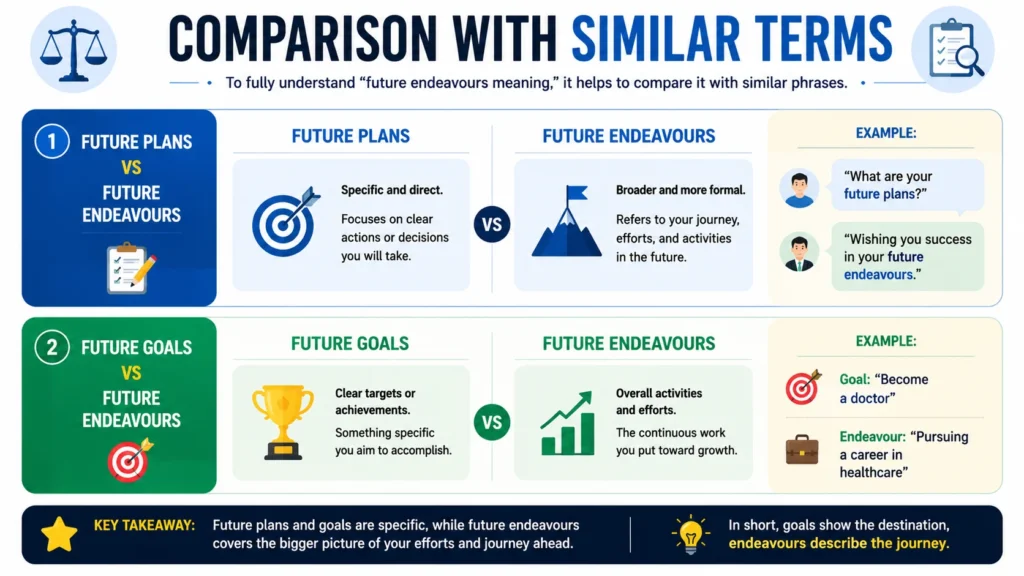
To fully understand “future endeavours meaning,” it helps to compare it with similar phrases.
1. Future Plans vs Future Endeavours
- Future plans → specific and direct (what you will do)
- Future endeavours → broader and more formal (your journey ahead)
👉 Example:
- “What are your future plans?” (casual)
- “Wishing you success in your future endeavours.” (formal)
2. Future Goals vs Future Endeavours
- Future goals → clear targets or achievements
- Future endeavours → overall activities and efforts
👉 Example:
- Goal: “Become a doctor”
- Endeavour: “Pursuing a career in healthcare”
3. Next Steps vs Future Endeavours
- Next steps → immediate actions
- Future endeavours → long-term journey
4. Career Path vs Future Endeavours
- Career path = structured professional journey
- Future endeavours = broader life and work direction
Polite Alternatives to “Future Endeavours”
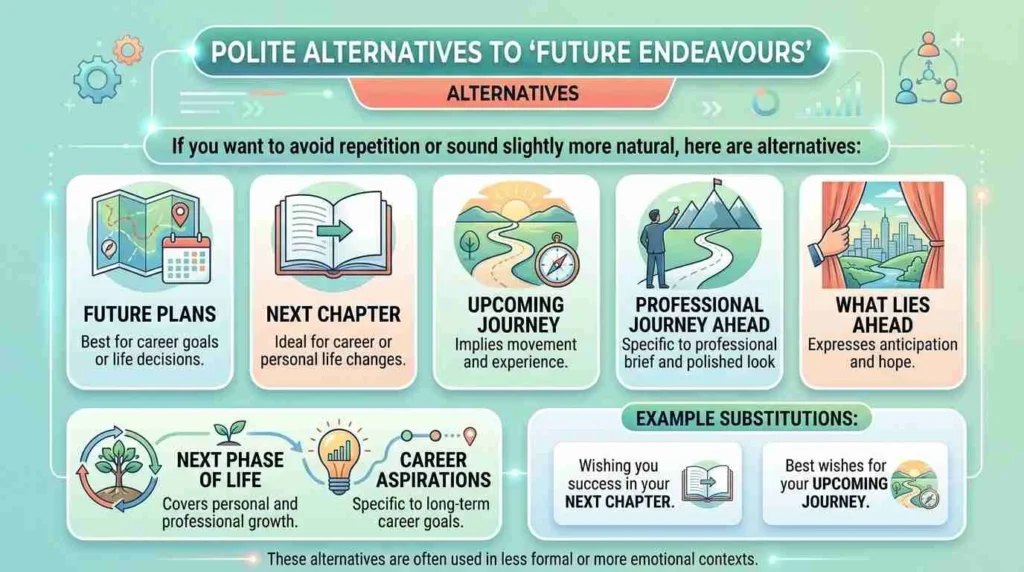
If you want to avoid repetition or sound slightly more natural, here are alternatives:
- Future plans
- Next chapter
- Upcoming journey
- Future goals
- Professional journey ahead
- What lies ahead
- Next phase of life
- Career aspirations
Example substitutions:
- “Wishing you success in your next chapter.”
- “Best wishes for your upcoming journey.”
These alternatives are often used in less formal or more emotional contexts.
Best Wishes for Future Endeavours Meaning
“Best wishes for future endeavours” is a polite expression used to wish someone success, happiness, and good luck in whatever they do next. It is commonly used when someone is leaving a job, graduating, retiring, changing careers, or moving on to a new opportunity.
The phrase conveys respect and encouragement, letting the person know you hope their future plans and goals turn out well. It is often included in farewell messages, resignation responses, recommendation letters, and professional emails.
Example:
“Thank you for your hard work and dedication. We wish you all the best in your future endeavours.”
In simple terms, “best wishes for future endeavours” means “I hope you succeed in everything you do next.” It is a warm, professional, and widely accepted way to express goodwill when someone begins a new chapter in life.
Future Endeavors Meaning in English
“Future endeavors” means the activities, goals, projects, or opportunities that a person plans to pursue in the future. The word “endeavor” refers to a serious effort or attempt to achieve something, while “future” indicates that these efforts will happen later.
The phrase is commonly used in professional, academic, and personal settings to refer to someone’s next steps in life or career. It often appears in farewell messages, graduation speeches, resignation letters, and recommendation letters.
Examples:
- We wish you success in your future endeavors.
- Good luck with all your future endeavors.
- She is excited about her future endeavors after graduating from college.
In simple English, “future endeavors” means the things you plan to do or achieve in the future, such as a new job, business, education, or personal goals.
Is “Future Endeavours” Always Formal?
Yes, mostly. This phrase is considered formal and professional, but it can still appear in friendly communication depending on tone.
However, in casual texting or chatting, people rarely use it. Instead, they say:
- “Good luck!”
- “All the best!”
- “Take care!”
So, if you’re writing a professional email, “future endeavours” works perfectly. But if you’re texting a friend, it might sound too serious.
Why Do People Use “Future Endeavours” Instead of Simple Words?
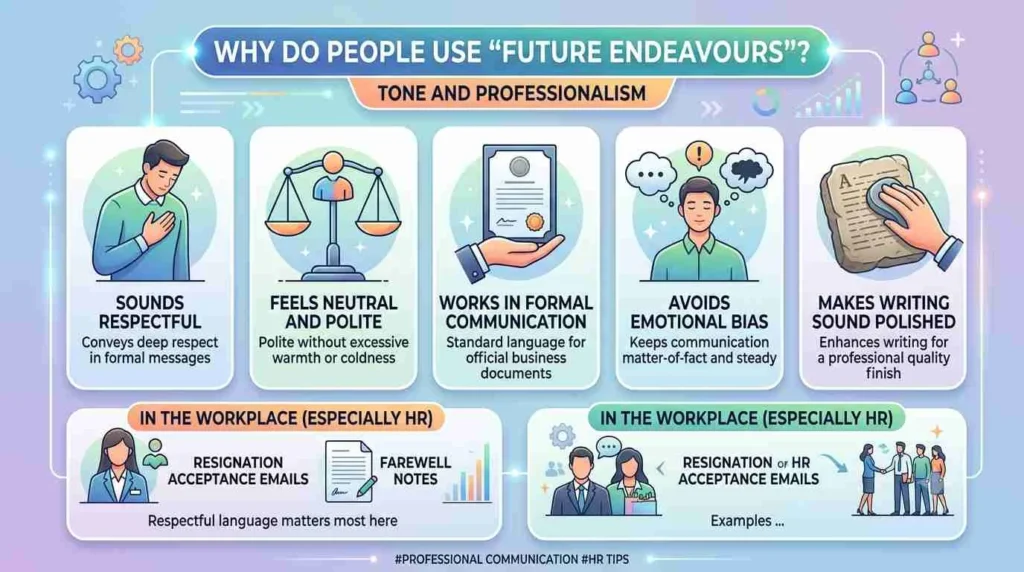
Great question and the answer is surprisingly simple: tone and professionalism.
People use this phrase because it:
- Sounds respectful
- Feels neutral and polite
- Works in formal communication
- Avoids emotional bias
- Makes writing sound polished
In workplaces, especially HR communication, using respectful language matters a lot. That’s why “future endeavours” is commonly used in resignation acceptance emails or farewell notes.
Common Mistakes People Make
Even though the phrase is simple, people sometimes misuse it.
1. Using it in casual texting
❌ “Good luck in your future endeavours bro 😂”
✔ Better: “Good luck with your plans!”
2. Overusing in informal writing
❌ “See you in your future endeavours at lunch”
✔ Better: “See you later!”
3. Mixing grammar
❌ “Your future endeavour’s success”
✔ Correct: “Success in your future endeavours”
FAQs
What does future endeavours mean in simple words?
It means the plans or activities someone will pursue after leaving a job, school, or current situation, usually referring to their next stage in life.
How do you use future endeavours in a sentence?
You can use it in formal writing like, “We wish you success in your future endeavours,” which means you hope someone does well in their next journey.
Is future endeavours formal or informal?
It is a formal phrase mainly used in professional communication such as emails, letters, and speeches, rather than casual conversation or texting.
What is another word for future endeavours?
Alternatives include future plans, next chapter, career goals, upcoming journey, or professional aspirations depending on the context.
Can I use future endeavours in a resignation letter?
Yes, it is commonly used in resignation letters or acceptance emails to politely wish someone success in their next job or career path.
Why do people say future endeavours instead of future plans?
Because it sounds more professional, respectful, and broader, making it suitable for formal communication like workplace or academic settings.
Is future endeavours British English?
It is more commonly used in British English formal writing, but it is widely accepted in global professional communication as well.
What is the meaning of wishing you success in your future endeavours?
It is a polite way of saying you hope someone achieves success and happiness in whatever they choose to do next in life or career.
What does “future endeavors” mean?
“Future endeavors” refers to the plans, goals, projects, or activities a person intends to pursue in the future. The phrase is often used to wish someone success as they move on to a new job, continue their education, start a business, or begin another stage of life.
Conclusion
Understanding the phrase “future endeavours meaning” helps you communicate more confidently in formal situations. It simply refers to someone’s next steps, goals, or plans after completing a current phase in life.
It’s used in a resignation letter, academic farewell, or professional email, the phrase carries a tone of respect, encouragement, and positivity. In everyday communication, you may not need to use it often, but recognizing its meaning allows you to better understand formal English messages.
If you want to sound professional, polished, and respectful, “future endeavours” is a powerful phrase to include in your vocabulary.
Discover More Related Articles:
- “TBD” Meaning Slang: What It Means, How to Use It & When It Matters In 2026
- “OMS” Meaning in Slang: How People Use It in Conversations In 2026
- “GNG” Meaning Slang: Everything You Should Understand In 2026