
Definition
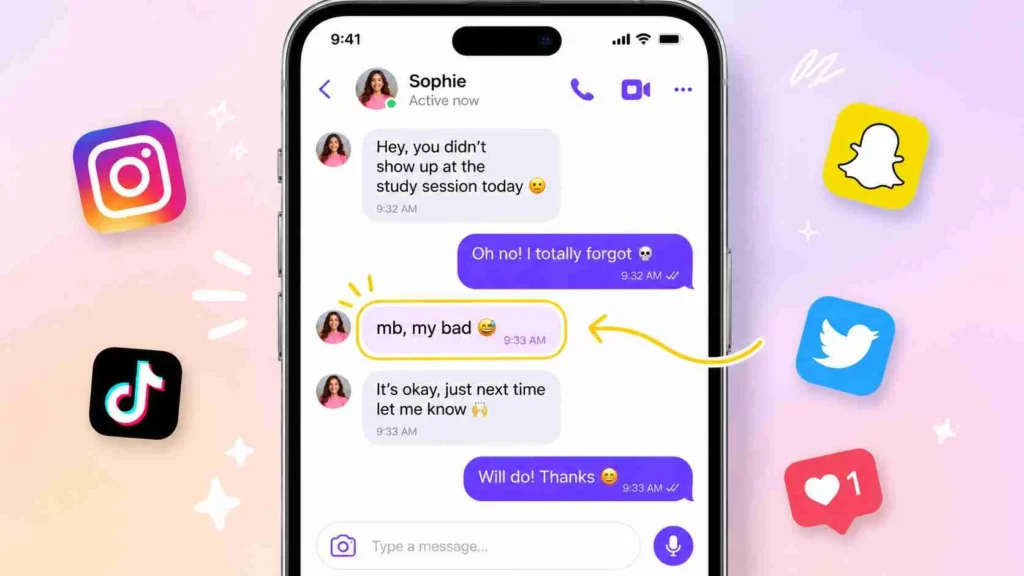
MB in text usually means “My Bad.” It’s a casual abbreviation used in texting and online conversations to admit a small mistake, apologize quickly, or acknowledge responsibility in an informal way.
If you’ve ever received a quick “mb” in a message and wondered what it meant, you’re not alone. In today’s fast-paced digital world, abbreviations dominate our conversations. From “lol” to “brb,” people rely on short forms to communicate quickly and “mb” is one of those tiny yet powerful expressions.
You’re chatting with friends, gaming online, or scrolling through social media, you’ll likely encounter “mb.” But here’s the thing: while it usually means “my bad,” its tone, context, and even alternative meanings can vary depending on how and where it’s used.
In this comprehensive guide, you’ll learn everything about “mb” in text its meaning, origin, usage, tone variations, examples, comparisons, and even professional alternatives. By the end, you’ll not only understand “mb” but also know exactly when (and when not) to use it.
What Does MB Mean in Text?
At its core, MB stands for “My Bad.” It’s a quick, informal way to say:
- “I made a mistake.”
- “Sorry about that.”
- “That’s on me.”
It’s commonly used in casual conversations where a full apology might feel unnecessary or too formal.
Key Characteristics of “MB”:
- Informal and relaxed
- Common in texting, gaming, and social media
- Usually used for small or minor mistakes
- Often replaces a longer apology
Origin and Popularity of MB
The phrase “my bad” didn’t start with texting it actually dates back decades.
Where Did “My Bad” Come From?
- The expression became popular in American slang during the late 20th century
- It’s often associated with basketball culture, where players would say “my bad” after making a mistake during a game
- Over time, it spread into everyday speech
Transition into Texting
With the rise of mobile phones and messaging apps:
- “My bad” became shortened to “mb”
- It gained popularity on platforms like:
- SMS texting
- Snapchat
- Online gaming chats
Why It Became Popular
- Saves time
- Feels casual and friendly
- Fits modern communication style
- Works across different age groups
Today, “mb” is widely understood, especially among younger users and digital communities.
How MB Is Used in Real Conversations
“MB” is versatile and can be used in various everyday situations. However, the tone depends heavily on context.
Common Situations Where MB Is Used:
- Making a small mistake
- Sending the wrong message
- Forgetting something minor
- Responding late
- Misunderstanding someone
Examples of MB in Text (With Tone)
Here’s how “mb” can appear in real conversations, along with tone explanations:
1. Friendly Tone 😊
- “mb, I forgot to reply earlier!”
- “Oops mb, I sent that to the wrong chat lol”
👉 Tone: Light, casual, and friendly
2. Neutral Tone 😐
- “mb, I misunderstood your message”
- “mb, I’ll fix it now”
👉 Tone: Straightforward and calm
3. Slightly Dismissive Tone 😬
- “mb I guess…”
- “mb, whatever”
👉 Tone: Can feel careless or insincere depending on context
4. Gaming Context 🎮
- “mb team, I missed the shot”
- “mb guys, that was my fault”
👉 Tone: Responsible but casual
Example Table: MB in Different Contexts
| Scenario | Example Message | Tone | Meaning |
|---|---|---|---|
| Forgot to reply | “mb, just saw this!” | Friendly | Apologizing casually |
| Wrong info shared | “mb, that was incorrect” | Neutral | Acknowledging mistake |
| Gaming mistake | “mb team, my fault” | Responsible | Admitting error |
| Late response | “mb, was busy” | Casual | Quick apology |
| Argument context | “mb I guess” | Dismissive | Half-hearted apology |
Tone Matters: When MB Works (and When It Doesn’t)
Even though “mb” is convenient, it’s not always appropriate.
When It Works Well:
- Casual chats with friends
- Informal group conversations
- Gaming or online communities
- Minor mistakes
When to Avoid It:
- Professional emails
- Serious apologies
- Formal communication
- Sensitive situations
👉 Example:
- ❌ “mb for the inconvenience caused” (too casual for professional use)
- ✅ “I apologize for the inconvenience” (better alternative)
Comparison With Similar Text Abbreviations
“MB” isn’t the only abbreviation used for apologies or mistakes. Here’s how it compares to similar terms:
| Abbreviation | Meaning | Tone | Usage Context |
|---|---|---|---|
| MB | My Bad | Casual | Minor mistakes |
| SRY / SRY | Sorry | Casual | General apology |
| MY APOLOGIES | Full phrase | Formal | Professional settings |
| OOPS | Mistake | Playful | Light-hearted situations |
| MY FAULT | Responsibility | Neutral | Slightly more serious |
Key Difference:
- “MB” is quicker and more relaxed
- “Sorry” can feel more genuine depending on tone
- “My fault” sounds more direct and responsible
Alternate Meanings of MB
While “mb” most commonly means “my bad,” it can have other meanings depending on context.
Other Possible Meanings:
- Megabyte (MB) – Used in technology
- Example: “This file is 20 MB”
- Maybe (rare usage)
- Example: “mb I’ll come later”
- Message Back (less common)
- Example: “mb when you’re free”
👉 Tip: Always rely on context to understand the meaning correctly.
Polite and Professional Alternatives to MB
If you want to sound more professional or respectful, consider using these alternatives instead of “mb”:
Better Alternatives:
- “I’m sorry about that.”
- “My apologies.”
- “That was my mistake.”
- “I take responsibility for that.”
- “I appreciate your patience.”
Example Comparison:
- Casual: “mb, I missed your email”
- Professional: “I apologize for missing your email earlier.”
Usage Tips for MB
To use “mb” effectively, keep these tips in mind:
Do’s:
- Use it in casual conversations
- Pair it with context when needed
- Keep tone friendly
Don’ts:
- Don’t use in formal communication
- Avoid using it in serious situations
- Don’t overuse it can feel lazy
FAQs
What does MB mean in texting?
In texting, MB typically means “my bad,” which is a casual way of admitting a mistake or saying sorry for something minor in a conversation.
Is MB rude in text messages?
MB is not inherently rude, but it can come across as dismissive or insincere if used in serious situations or without proper context.
Can MB mean something other than my bad?
Yes, MB can also mean “megabyte” in technical contexts or occasionally “maybe,” but “my bad” is the most common meaning in casual texting.
When should I use MB in a conversation?
You should use MB in informal chats when you want to quickly acknowledge a small mistake without making a big deal out of it.
Is MB appropriate for professional communication?
No, MB is too casual for professional settings; it’s better to use phrases like “I apologize” or “my mistake” instead.
What is the difference between MB and sorry?
MB is more casual and relaxed, while “sorry” can feel more sincere and is suitable for both casual and semi-formal situations.
Do people still use MB in 2025?
Yes, MB is still widely used in texting, social media, and online gaming due to its simplicity and quick tone.
Can MB be used sarcastically?
Yes, depending on the tone and context, MB can be used sarcastically or dismissively, especially if followed by phrases like “I guess” or “whatever.”
Conclusion
“MB” might be just two letters, but it carries a lot of meaning in modern communication. Most commonly standing for “my bad,” it’s a quick, casual way to admit mistakes and keep conversations flowing without unnecessary formality.
However, like many texting abbreviations, its effectiveness depends on context. It works best in relaxed, informal settings and for minor issues. In more serious or professional situations, switching to a more thoughtful and complete apology can make a better impression.
The key takeaway is simple: use “mb” wisely. When used appropriately, it keeps your conversations smooth, friendly, and natural. But knowing when not to use it is just as important as knowing what it means.
Discover More Related Articles:
- “ABG” Meaning Slang: What It Really Means on Social Media In 2026
- “Drip” Meaning Slang: What It Really Means in Fashion Culture In 2026
- “Snow Bunny” Meaning Slang: What It Really Refers To In 2026