
Definition
“Agree” in text means to express approval, acceptance, or the same opinion as someone else in a conversation. It is commonly used in digital communication such as chats, social media, and emails to show alignment, support, or acknowledgment of a statement.
In today’s fast-paced digital world, communication has evolved far beyond traditional face-to-face conversations. You’re texting a friend, replying in a group chat, or commenting on social media, short and simple expressions often carry powerful meaning. One such word is “agree.”
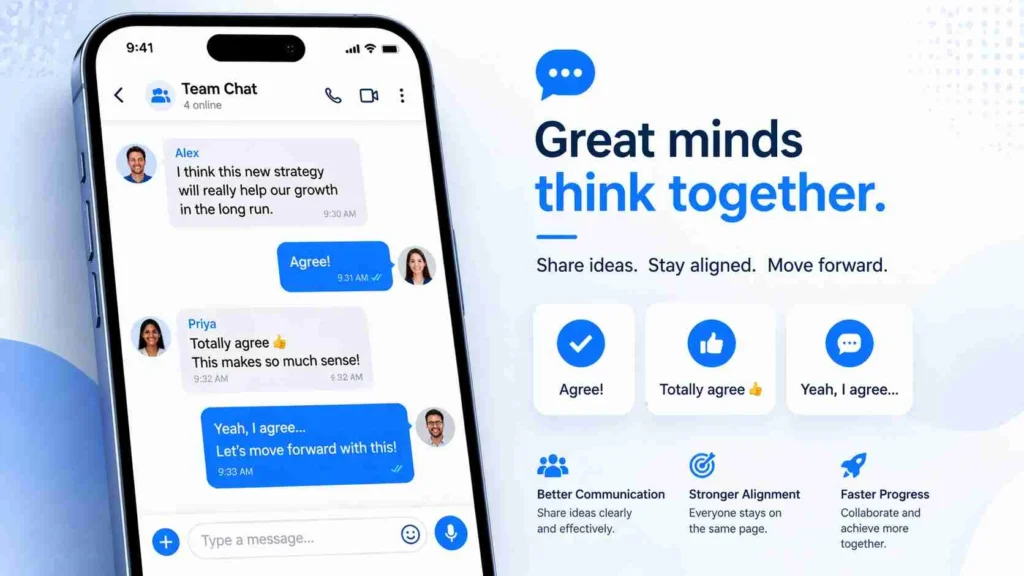
At first glance, it may seem like a basic term but in texting culture, agree can take on multiple tones, intentions, and interpretations depending on context, punctuation, and even emojis. From a quick “agree 👍” to a more passive “yeah, I agree…”, the way you use it can subtly shift how your message is received.
This guide dives deep into the meaning of “agree” in text, its origin, how it’s used in real-life conversations, and how it compares to other similar expressions. By the end, you’ll not only understand it fully but also know how to use it naturally and effectively in any situation.
What Does “Agree” Mean in Text?
At its core, “agree” in text simply means you share the same opinion or feeling as someone else. It signals that you support or accept what the other person has said.
However, tone plays a huge role in how it’s interpreted. For example:
- “I agree!” → Enthusiastic and supportive
- “Agree.” → Neutral and straightforward
- “Yeah, I agree…” → Slightly hesitant or unsure
In digital communication, where body language and vocal tone are missing, even a simple word like agree can carry emotional nuance.
Origin and Evolution of “Agree” in Messaging
The word “agree” itself comes from Old French agreer, meaning “to please or accept.” Traditionally, it was used in spoken and written language to indicate harmony or shared understanding.
With the rise of texting, messaging apps, and social media platforms, “agree” transitioned into a quick-response expression. Instead of writing full sentences like:
- “I completely agree with your point,”
people now simply type:
- “Agree”
- “Agreed”
- “Totally agree”
This shift reflects the broader trend toward brevity and efficiency in digital communication.
Why It Became Popular
- Saves time in fast conversations
- Clearly shows alignment without extra explanation
- Works across both casual and professional settings
- Easy to pair with emojis for added tone
Today, “agree” is widely used across platforms like WhatsApp, Instagram, Twitter (X), and workplace tools like Slack.
How “Agree” Is Used in Text Conversations
The meaning of “agree” changes slightly depending on how it’s written and the situation it’s used in. Let’s break it down into common usage styles.
1. Simple Agreement
Used to confirm you share the same opinion.
Example:
- Friend: “That movie was amazing.”
- You: “Agree!”
Tone: Friendly and positive
2. Strong Agreement
Adding emphasis shows enthusiasm.
Examples:
- “Totally agree!”
- “100% agree 🔥”
- “Agree!!”
Tone: Excited, supportive, energetic
3. Neutral Agreement
Short and direct without emotion.
Examples:
- “Agree.”
- “Agreed.”
Tone: Professional or slightly distant
4. Hesitant Agreement
Suggests partial agreement or uncertainty.
Examples:
- “Yeah, I agree…”
- “I guess I agree”
Tone: Unsure, cautious
5. Passive or Dismissive Agreement
Sometimes used to end a conversation quickly.
Examples:
- “Agree whatever”
- “Yeah agree”
Tone: Disengaged or uninterested
Real-Life Examples with Context
Understanding context is key. Here are some realistic examples across different tones:
Friendly Tone 😊
- “Agree! That was the best part of the trip.”
- “Totally agree 😂 you always say that!”
Neutral Tone 😐
- “Agree. Let’s move forward with that plan.”
- “Agreed. That seems reasonable.”
Negative or Dismissive Tone 😒
- “Yeah agree… if you say so.”
- “Agree whatever”
Example Table: How “Agree” Changes Meaning
| Text Response | Tone Type | Meaning/Interpretation |
|---|---|---|
| Agree! | Friendly | Clear and positive agreement |
| Totally agree | Enthusiastic | Strong support and excitement |
| Agree. | Neutral | Formal or emotionless acknowledgment |
| Yeah, I agree… | Hesitant | Partial or unsure agreement |
| Agree whatever | Dismissive | Lack of interest or passive response |
| Agreed 👍 | Casual Friendly | Light and easy-going agreement |
Variations and Similar Terms
In texting, people don’t always use “agree.” There are many alternatives that convey the same idea but with slightly different tones.
Common Variations
- Agreed – Slightly more formal
- Exactly – Strong confirmation
- True – Casual agreement
- Same – Relating personally
- Facts – Popular slang for strong agreement
- For real – Emphasized agreement
Comparison with Similar Expressions
Let’s compare “agree” with related texting terms to understand when to use each.
| Term | Meaning | Tone | Best Used When |
|---|---|---|---|
| Agree | Same opinion | Neutral/Flexible | General conversations |
| Agreed | Confirmed agreement | Formal | Work or serious discussions |
| True | Statement is correct | Casual | Informal chats |
| Facts | Strong agreement | Trendy/Slang | Social media or younger audiences |
| Exactly | Perfect alignment | Emphatic | When stressing correctness |
| Same | Shared experience/opinion | Relatable | Casual and personal chats |
When to Use “Agree” in Text
Using “agree” effectively depends on the situation. Here’s when it works best:
Use It When:
- You want to quickly confirm alignment
- You support someone’s opinion
- You don’t need to elaborate further
- You’re in a fast-paced conversation
Avoid It When:
- A deeper explanation is expected
- The conversation is sensitive
- You need to show strong emotion (use more expressive phrases instead)
Polite and Professional Alternatives
In formal or professional settings, “agree” alone might feel too short. Here are better alternatives:
Professional Options
- “I agree with your point.”
- “That makes sense to me.”
- “I share the same perspective.”
- “I support this idea.”
Polite Casual Options
- “Yeah, I agree with that 😊”
- “That’s true, I agree”
- “Good point, I agree”
These variations help maintain clarity while sounding more thoughtful.
Alternate Meanings of “Agree”
While “agree” mostly means alignment, it can have slightly different meanings depending on context:
1. Agreement in Decisions
- “We agreed to meet at 5.”
Meaning: Mutual decision
2. Compatibility
- “This plan agrees with our goals.”
Meaning: Matches or fits
3. Acceptance
- “She agreed to help.”
Meaning: Willingness to do something
In texting, however, it almost always refers to sharing the same opinion.
Common Mistakes When Using “Agree”
Even simple words can be misunderstood. Here are a few mistakes to avoid:
1. Being Too Brief
2. Wrong Tone
- Using “Agree whatever” may come across as rude
3. Overusing It
- Repeating “agree” without adding value can make conversations dull
4. Ignoring Context
- Agreeing without understanding the full message can lead to confusion
Tips for Using “Agree” Naturally
- Add emojis to soften tone 😊
- Use punctuation to express emotion (!!)
- Combine with short phrases for clarity
- Match the tone of the conversation
- Avoid using it as a conversation ender unless intentional
FAQs
What does agree mean in text messages?
Agree in text messages means you share the same opinion or support what someone else has said. It’s a quick and simple way to show alignment in digital conversations.
Is saying agree rude in texting?
Not necessarily, but it can feel blunt if used alone. Adding context or emojis makes it sound friendlier and more natural.
What is the difference between agree and agreed in text?
Agree is more casual and flexible, while agreed sounds slightly more formal and is often used in professional or structured conversations.
How do you respond to agree in a chat?
You can respond by continuing the conversation, adding your thoughts, or acknowledging it with something like “Exactly!” or “Glad you think so.”
Can agree be used sarcastically?
Yes, depending on tone and context. For example, “Yeah, agree…” can sometimes imply doubt or sarcasm.
What are slang alternatives for agree?
Common slang alternatives include “facts,” “true,” “same,” and “exactly,” each adding a slightly different tone or emphasis.
Is agree formal or informal?
It can be both. “Agree” is flexible and works in casual chats, while “I agree” or “Agreed” fits more formal communication.
Why do people use agree instead of full sentences?
Because texting culture favors speed and simplicity, using “agree” saves time while still clearly expressing the intended message.
Conclusion
The phrase “agree” in text may seem simple, but it carries a surprising amount of nuance. From enthusiastic support to neutral acknowledgment or even subtle dismissal the way it’s used can completely change its meaning.
Understanding tone, punctuation, and context is key to using it effectively. You’re chatting with friends, commenting online, or communicating professionally, knowing when and how to say “agree” can make your responses feel more natural, clear, and engaging.
In a world where every word counts, mastering small expressions like this can significantly improve how you communicate digitally. So next time someone shares an opinion don’t just agree, agree smartly.
Discover More Related Articles:
- 150 Best Responses To “You Got This” That Sound Confident for 2026
- 180 Best Responses to a TBH on Instagram / Snapchat for 2026