
Definition
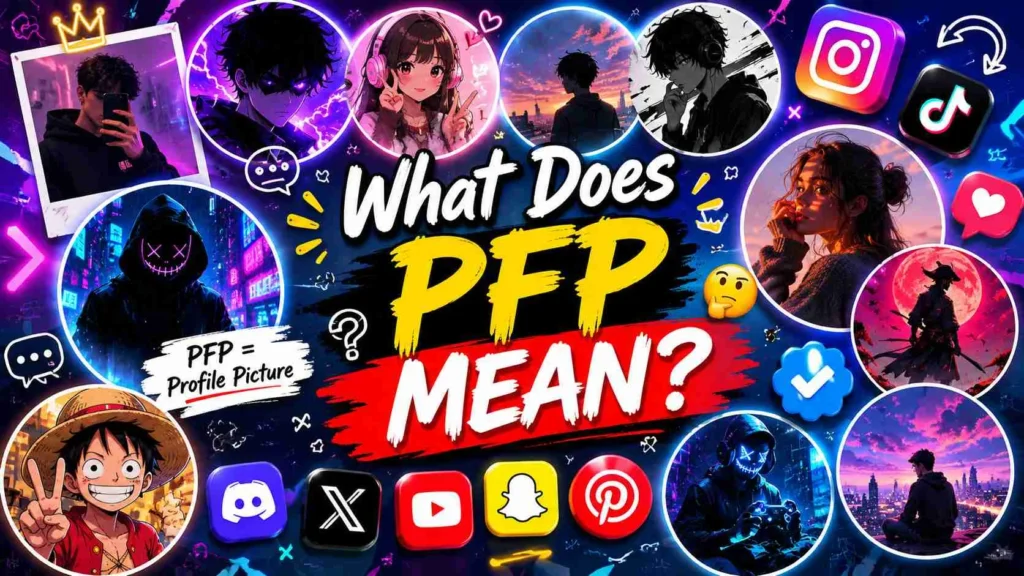
PFP means “Profile Picture.” It is internet slang used to describe the image or avatar displayed on a social media account, messaging platform or online profile.
If you spend time on social media, gaming platforms, Discord servers, TikTok comments, or messaging apps, you have probably seen someone say “Nice PFP” or “Change your PFP.” For many people, especially beginners online, the term can feel confusing at first. But once you understand it, you will notice it everywhere across the internet.
In simple words, PFP is one of the most commonly used internet slang terms today. It is connected to online identity, social media profiles, gaming culture, and personal branding. You use Instagram, TikTok, Snapchat, X, Discord, WhatsApp, or YouTube, your PFP represents how people recognize you online.
This guide explains the full meaning of PFP, where it came from, how people use it in conversations, examples with different tones, alternate meanings, comparisons with related terms, and practical tips for choosing a good PFP. By the end, you will fully understand what “PFP mean” actually refers to and how to use the term naturally online.
What Does PFP Mean?
PFP stands for “Profile Picture.”
It refers to the image or photo someone uses on their social media account, gaming profile, messaging app, or online platform. Your PFP is the small image people see beside your username or account name.
People often use “PFP” casually in conversations online, especially among younger users and gaming communities.
Examples:
- “Your PFP looks cool.”
- “I changed my PFP today.”
- “That anime PFP is awesome.”
- “Why is your PFP blank?”
The term is now widely recognized across platforms like Instagram, TikTok, Discord, Snapchat, WhatsApp, Twitch, and X.
Origin of the Term PFP
The abbreviation PFP became popular as internet culture evolved and social media platforms grew rapidly.
Originally, people commonly used the full phrase “profile picture.” But as texting, gaming chats, and online communities became faster and more casual, shorter abbreviations started replacing longer phrases.
PFP became especially popular in:
- Gaming communities
- Anime fandoms
- Discord servers
- Twitter/X culture
- TikTok comments
- Meme communities
Around the late 2010s and early 2020s, the term exploded in popularity because users constantly discussed profile aesthetics, avatars, and online identity.
Today, PFP is considered standard internet slang and is understood globally.
Why PFP Is Important Online
A PFP is more than just an image. It becomes part of a person’s digital identity.
People often judge accounts based on profile pictures because it creates the first impression online. A PFP can communicate:
- Personality
- Interests
- Humor
- Mood
- Aesthetic style
- Professional branding
- Gaming identity
- Fan interests
For example:
- Anime fans often use anime PFPs
- Gamers use gaming avatars
- Businesses use logos
- Influencers use professional photos
- Meme pages use funny images
In many online spaces, your PFP says a lot about you before people even read your username.
Common Places Where PFP Is Used
The term appears almost everywhere online.
Social Media Platforms
People use PFP frequently on:
- TikTok
- Snapchat
- X
- Threads
Gaming Platforms
Gamers commonly discuss PFPs on:
- Discord
- Twitch
- Steam
- Xbox
- PlayStation
- Roblox
Messaging Apps
You may also hear it on:
- Telegram
- Messenger
Online Communities
Forums and fandom spaces also heavily use the term.
Different Types of PFPs
People choose profile pictures for different reasons. Some want to look professional, while others want to appear funny or mysterious.
Table: Popular Types of PFPs
| PFP Type | Description | Common Users |
|---|---|---|
| Selfie PFP | Real personal photo | Influencers, friends |
| Anime PFP | Anime character image | Anime fans, gamers |
| Aesthetic PFP | Stylish artistic image | TikTok and Instagram users |
| Meme PFP | Funny meme image | Meme pages |
| Logo PFP | Brand or company logo | Businesses |
| Avatar PFP | Cartoon or digital avatar | Gamers |
| Pet PFP | Cat, dog, or pet photo | Casual users |
| Couple PFP | Matching profile pictures | Couples and friends |
Examples of PFP in Conversations
Understanding context helps you use the term naturally.
Friendly Tone Examples
- “Your new PFP is adorable 😊”
- “I love your anime PFP.”
- “That cat PFP matches your vibe perfectly.”
Neutral Tone Examples
- “Please upload a PFP before joining the group.”
- “Users can customize their PFP in settings.”
- “Your PFP is currently visible to everyone.”
Negative or Dismissive Tone Examples
- “Why is your PFP so blurry?”
- “That edgy PFP is embarrassing.”
- “People with fake PFPs seem suspicious.”
Tone depends entirely on the conversation and platform.
What Makes a Good PFP?
A strong profile picture usually reflects personality clearly.
Tips for Choosing a Good PFP
- Use a high quality image
- Avoid blurry photos
- Match your personality or brand
- Keep the image recognizable
- Choose good lighting
- Avoid too much clutter
- Stay authentic
For professional accounts:
- Use a clean headshot
- Smile naturally
- Use simple backgrounds
For gaming or fun accounts:
- Use creative avatars
- Pick recognizable characters
- Match your online style
Anime PFP Meaning
One of the most searched phrases online is “anime PFP.”
An anime PFP simply means someone uses an anime character as their profile picture.
Anime PFPs are extremely common on:
- Discord
- TikTok
- X
- Gaming communities
People choose anime profile pictures because they:
- Love certain characters
- Express personality
- Match aesthetics
- Join fandom culture
Sometimes anime PFPs are jokingly stereotyped online, but many users simply enjoy anime art and characters.
Matching PFP Meaning
Matching PFPs happen when two or more people use connected profile pictures.
These are popular among:
- Couples
- Best friends
- Gaming partners
- Fan groups
Examples include:
- Split anime scenes
- Matching cartoon characters
- Coordinated colors
- Romantic illustrations
Matching PFPs are often used to show friendship or relationships online.
Comparison Between PFP and Related Terms
Many internet abbreviations are similar to PFP. Here is how they differ.
Table: PFP vs Related Internet Terms
| Term | Meaning | Difference |
|---|---|---|
| PFP | Profile Picture | General online image |
| DP | Display Picture | Older term, still popular in some countries |
| Avatar | Digital representation | Often animated or virtual |
| Icon | Small account image | Sometimes interchangeable |
| Username | Account name | Text identity, not image |
| Handle | Social media ID | Used for tagging |
In some countries, especially South Asia, people still commonly say “DP” instead of “PFP.”
PFP vs DP – Which Is More Popular?
Both terms mean nearly the same thing, but usage differs by region and platform.
Table: PFP vs DP Comparison
| Feature | PFP | DP |
|---|---|---|
| Full Form | Profile Picture | Display Picture |
| Popular On | Discord, TikTok, X | WhatsApp, Facebook |
| Modern Slang | More modern | Slightly older |
| Gaming Usage | Very common | Less common |
| Professional Usage | Increasingly common | Less formal |
Younger internet users now prefer “PFP” more frequently.
Alternate Meanings of PFP
Although “Profile Picture” is the most common meaning, PFP can occasionally have other meanings depending on context.
Some alternate meanings include:
- Picture For Proof
- Pay For Performance
- Partnership For Peace
However, online slang conversations almost always use PFP to mean profile picture.
Professional Alternatives to Saying PFP
In formal or business settings, some people avoid internet slang.
Professional alternatives include:
- Profile photo
- Profile image
- Account picture
- User image
- Display image
Example:
Instead of:
“Upload your PFP.”
Professional version:
“Please upload a profile photo.”
Why People Change Their PFP Often
Many users update profile pictures regularly because online identity constantly changes.
Reasons include:
- Mood changes
- Trends
- New selfies
- Seasonal themes
- Relationship updates
- Fan culture
- Gaming identity changes
- Branding updates
Some people even treat their PFP as a reflection of emotions or personality shifts.
Psychological Impact of PFPs
Profile pictures can influence how others perceive someone online.
Research and online behavior suggest people often associate profile pictures with:
- Trustworthiness
- Confidence
- Humor
- Attractiveness
- Authenticity
For example:
- Clear smiling photos often appear friendlier
- Dark anonymous PFPs may seem mysterious
- Cartoon avatars feel playful
- Professional headshots build credibility
This is why businesses and creators carefully choose profile pictures.
How Brands and Influencers Use PFPs
Brands use PFPs strategically for recognition and trust.
Common branding strategies include:
- Using logos consistently
- Keeping colors recognizable
- Updating for seasonal campaigns
- Matching social media themes
Influencers usually prefer:
- Bright close-up photos
- High contrast images
- Clean backgrounds
- Recognizable facial expressions
Strong profile pictures help accounts stand out in crowded feeds.
Funny and Viral PFP Trends
Internet culture constantly creates viral PFP trends.
Popular examples include:
- Cartoon filter PFPs
- AI-generated avatars
- Meme reaction images
- Celebrity edits
- Matching friend groups
- Pixel art avatars
Some trends become so popular that thousands of users temporarily use similar PFP styles at once.
Common Phrases Related to PFP
You may encounter phrases like:
- “Nice PFP”
- “Rate my PFP”
- “Matching PFPs”
- “Anime PFP detected”
- “New PFP alert”
- “PFP reveal”
These expressions are extremely common in online communities.
Mistakes People Make With PFPs
Some profile pictures create negative impressions unintentionally.
Common mistakes include:
- Extremely blurry photos
- Offensive images
- Overedited selfies
- Hard-to-see faces
- Inappropriate content
- Random low quality screenshots
A clean and recognizable image usually works best.
FAQs
What does PFP mean in texting?
In texting, PFP means “Profile Picture.” People use it to talk about someone’s account image on social media or messaging apps.
What is a PFP on TikTok?
On TikTok, a PFP is the profile image users display on their account. It helps people recognize creators and personal accounts quickly.
What does anime PFP mean?
Anime PFP means someone uses an anime character or anime artwork as their profile picture online.
Is PFP the same as DP?
Yes, both usually refer to a profile picture. However, PFP is more modern internet slang, while DP is an older term still popular in some regions.
Why do people care about PFPs?
People care about PFPs because they represent online identity, personality, aesthetics, and first impressions on social media.
What makes a good PFP?
A good PFP is clear, high quality, visually recognizable, and reflects personality or branding effectively.
Can businesses use PFPs too?
Yes, businesses commonly use logos or branded images as their PFPs to improve recognition and professionalism online.
What does “nice PFP” mean?
“Nice PFP” is a compliment that means someone likes your profile picture or thinks it looks attractive, cool, or creative.
Conclusion
PFP simply means “Profile Picture,” but its role in modern internet culture goes far beyond a basic image. Today, profile pictures represent identity, personality, branding, humor, fandoms, and online presence across social media, gaming, and messaging platforms. Someone uses a real selfie, anime character, aesthetic artwork, meme image, or professional logo, their PFP becomes part of how others recognize and remember them online.
The term became popular because internet communication favors short and fast expressions, especially in gaming chats, TikTok comments, Discord servers, and social media conversations. Over time, PFP replaced longer phrases like “profile picture” for many users, especially younger audiences and online communities.
Discover More Related Articles:
- “GNG” Meaning in Slang: What It Really Means & How to Use It In 2026
- “MK” Mean in Text: How It’s Used in Everyday Conversations In 2026
- “DW” Meaning in Texting: Everything You Need to Know In 2026