
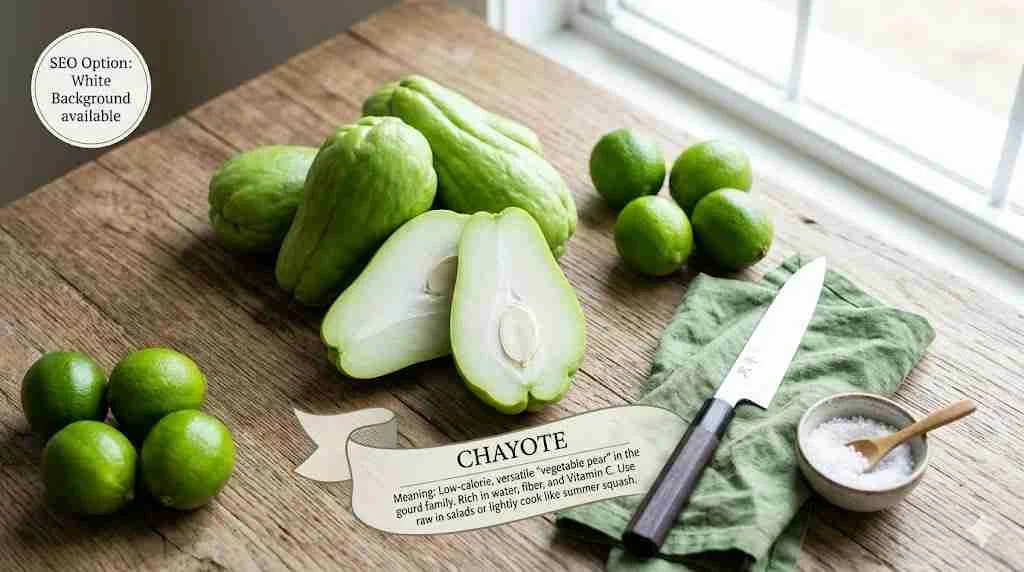

Chayote (Sechium edule) is a mild, pear-shaped green gourd from the squash family. Botanically a fruit but cooked like a vegetable, it contains one large flat seed and offers a crisp texture with only about 20 calories per serving.
You’ve seen it before. A pale green lump sitting quietly next to the zucchinis. Wrinkled like an old apple. Shaped like a pear but definitely not sweet.
That’s chayote.
Most people walk right past it. They don’t know its name. They can’t pronounce it. And they have no idea to roast it, eat it raw, or leave it alone.
Let’s fix that.
This guide gives you the complete chayote meaning from its Aztec name to your dinner plate. You’ll learn what it tastes like, how to cook it, and why millions of people eat this strange green fruit every single day.
What Is Chayote?
The chayote definition starts with science.
Chayote (Sechium edule) belongs to the Cucurbitaceae family. That’s the same group as pumpkins, cucumbers, melons, and squash. A perennial vine produces this edible gourd. The plant climbs fast. It covers fences. One healthy vine can grow over 30 feet in a single season.
But here’s what you really need to know.
Chayote looks like a wrinkled pear. Its skin is thin. Sometimes it’s smooth. Other times you’ll find small spines or ridges. Inside? One single flat seed. Not a handful of tiny seeds like a zucchini. One big white seed right in the center. That seed is edible by the way. Don’t throw it away.
The flesh is pale green or white. Crisp like a water chestnut when raw. Soft like a cooked potato when heated.
So what is the meaning of chayote in plain English?
It’s a mild, watery, crunchy fruit that cooks like a vegetable.
Fruit or Vegetable? End the Confusion Now
This question starts arguments in kitchens everywhere.
Botanically: Chayote is a fruit. It develops from a flower. It contains seeds. That’s the scientific definition of a fruit.
Culinarily: We treat chayote like a vegetable. You put it in soups. You stir-fry it with garlic. And you stuff it with meat or cheese. No one serves chayote for dessert. No one adds it to a fruit salad.
| Aspect | Chayote’s Classification |
|---|---|
| Botany | Fruit |
| Cooking | Vegetable |
| Taste | Neutral (not sweet) |
| Seed structure | One large flat seed |
| Common confusion | Often called squash |
So when someone asks “is chayote a fruit or vegetable?” the honest answer is both. But in real life? Call it a vegetable. No one will correct you.
How to Pronounce Chayote Without Embarrassment
Let’s clear this up immediately.
Say it like this: chah-YOH-teh
Four syllables. Stress on the second part.
Here’s the breakdown:
- chah – like the first part of “chop” but softer
- YOH – rhymes with “dough”
- teh – short and soft, like “te” in “ten” without the N
Common mistakes people make:
- “chay-ote” (like coyote) – wrong
- “sha-YO-tee” – wrong
- “chay-OAT” – very wrong
The word comes from Spanish. Spanish keeps vowels crisp. So the final “e” is not silent. It’s short but present.
Practice saying it five times out loud. Chah-YOH-teh. Chah-YOH-teh. Chah-YOH-teh. Now you’ve got it.
Where Does the Word “Chayote” Come From?
The chayote origin story is older than you think.
The Aztecs called it chayohtli in their language Nahuatl. That word meant “spiny gourd” a perfect description for wild chayote varieties covered in small spines.
When Spanish colonizers arrived in Mexico, they heard the Nahuatl name. They adapted it to Spanish pronunciation. Chayohtli became chayote.
From Mexico, the plant traveled the world.
- Spanish ships carried it to Europe.
- Portuguese traders brought it to Africa and India.
- Colonial networks spread it to the Philippines and Southeast Asia.
Today you’ll find chayote growing on every continent except Antarctica. That’s not an exaggeration. People grow it in greenhouses even in cold climates.
Chayote translation across languages tells a fascinating story. The plant kept moving. And every new place gave it a new name.
The Many Names of Chayote Around the World
One vegetable. Dozens of names.
This alone proves how widely people eat chayote. You don’t get fifteen different nicknames for a vegetable nobody wants.
Here’s the complete list of chayote common names by region:
| Country or Region | Name |
|---|---|
| Mexico | Chayote |
| United States (Louisiana) | Mirliton |
| France | Christophine |
| French Caribbean | Christophine |
| Haiti | Mirliton |
| Dominican Republic | Tayota |
| Brazil | Chuchu |
| Peru | Chayote |
| Colombia | Chayote or Guatila |
| Costa Rica | Chayote or Pataste |
| Guatemala | Güisquil |
| El Salvador | Güisquil |
| Venezuela | Chayota |
| Italy | Zucca centenaria |
| India | Chow chow / Seema kumbala |
| Nepal | Ishkus |
| Philippines | Sayote |
| Indonesia | Labu siam (Siam squash) |
| Australia / NZ | Choko |
| South Africa | Choko |
| Jamaica | Cho-cho |
| English-speaking markets | Vegetable pear / Pear squash |
Notice the pattern. Most names describe the shape (pear) or sound like chayote itself. But mirliton (Louisiana) and christophine (France) stand out. Those names came from French colonists who saw the plant differently.
So when someone asks for the meaning of chayote in Spanish it’s still chayote. But a Guatemalan might call it güisquil. A Venezuelan says chayota. Same plant. Different words.
What Does Chayote Taste Like? Real Answer
No hype. No exaggeration.
Chayote tastes mild. Very mild.
Think of a cucumber that forgot to be sour. Or a jicama with less crunch. Or a raw potato that’s actually pleasant to bite into.
Raw chayote:
- Crisp and watery
- Slightly sweet but barely
- Refreshing like a green apple without the tartness
Cooked chayote:
- Soft but not mushy
- Absorbs whatever you cook it with
- Takes on garlic, onion, chili, or herb flavors easily
Here’s the secret. Chayote doesn’t fight for attention. It plays a supporting role. You add it to a spicy curry it tastes spicy. You stir-fry it with soy sauce it tastes savory. And you boil it in chicken broth it tastes like chicken.
That neutrality is a superpower. Not every vegetable needs a strong personality.
Does chayote taste like zucchini?
Close but not identical. Zucchini has a slightly grassier flavor. Chayote is more neutral and stays crunchier when raw.
Does chayote taste like cucumber?
Similar texture. Cucumber has more water and a distinct refreshing note. Chayote is denser and less bitter.
Can you eat chayote raw?
Absolutely. Slice it thin. Add it to a salad. Dip it in hummus. Treat it like a radish or a carrot stick.
Chayote Nutritional Value| Numbers Don’t Lie
Let’s look at the chayote nutrition facts for one cup (about 150g) of raw chayote.
| Nutrient | Amount | % Daily Value (approx) |
|---|---|---|
| Calories | 24 | 1% |
| Carbohydrates | 6g | 2% |
| Fiber | 2.5g | 9% |
| Protein | 1g | 2% |
| Fat | 0.1g | 0% |
| Vitamin C | 11mg | 18% |
| Folate | 45mcg | 11% |
| Potassium | 200mg | 5% |
| Manganese | 0.2mg | 8% |
| Vitamin B6 | 0.1mg | 6% |
| Magnesium | 18mg | 4% |
| Water content | 135g | 90%+ |
Key takeaways from these chayote health benefits numbers.
First, chayote is incredibly low in calories. 24 calories per cup. You could eat four cups and still consume fewer calories than a single banana. That makes it a dream food for weight management.
Second, the fiber is real. 2.5 grams per cup might not sound huge. But combine that with 90% water. You get a food that fills your stomach without filling your calorie budget.
Third, vitamin C content is impressive. 18% of your daily needs from one cup. Not bad for a vegetable most people ignore.
Fourth, chayote contains folate. Pregnant women take note. Folate supports healthy fetal development. Chayote won’t replace your prenatal vitamin. But it’s a helpful addition.
Fifth, potassium levels help balance sodium. If you eat a lot of salty processed foods, chayote can help regulate blood pressure.
No fat. No cholesterol. Almost no sodium. Chayote is about as clean as food gets.
Health Benefits That Actually Matter
Let’s move beyond nutrition labels. What do these numbers mean for your body?
Hydration support
90% water content means chayote hydrates you. Most people don’t drink enough water. Eating water-rich vegetables helps.
Digestive health
The combination of water and fiber keeps things moving. Constipation? Add chayote to your diet. The fiber bulks up stool. The water softens it.
Blood sugar control
Chayote has a low glycemic index. The fiber slows down sugar absorption. Some animal studies show chayote extract may improve insulin sensitivity. Human research is limited. But the basic nutrition profile suggests chayote won’t spike your blood sugar.
Heart health
Potassium lowers blood pressure. Fiber lowers cholesterol. Zero saturated fat. Three wins for your heart in one green package.
Antioxidant effects
Chayote contains vitamin C and various flavonoids. These compounds fight oxidative stress. That means less cellular damage over time. Less inflammation. Lower risk of chronic diseases.
Pregnancy support
Folate reduces neural tube defects. One cup of chayote gives you 11% of your daily folate needs. Eat it alongside leafy greens and beans for even more.
Weight loss friendly
Volume eating works. You fill your plate with low-calorie, high-water foods. You feel full. And you eat fewer calories overall. Chayote is a volume eater’s best friend.
No miracle claims here. Chayote won’t cure cancer or melt belly fat overnight. But as part of a balanced diet? It pulls its weight.
How to Eat Chayote| From Raw to Roasted
The chayote uses list is longer than you expect.
Raw preparations
Salads
Slice chayote thinly. Toss with lime juice, cilantro, red onion, and salt. Let it sit for ten minutes. The acid softens the crunch slightly. You get a tangy, refreshing slaw.
Crudité platter
Cut chayote into sticks. Serve with hummus, guacamole, or yogurt dip. The mild flavor won’t compete with your dips.
Pickled chayote
Slice thin. Pack into a jar. Cover with vinegar, water, salt, sugar, and spices like peppercorns and garlic. Refrigerate overnight. You have crunchy pickles by morning.
Cooked preparations
Boiled or steamed
Simple and classic. Peel the chayote (or don’t). Cut into chunks. Boil in salted water until fork-tender. Drain. Mash with butter like potatoes. Or serve as a side with salt and pepper.
Roasted
Cut into wedges. Toss with olive oil, salt, garlic powder, and paprika. Roast at 400°F (200°C) for 20-25 minutes. The edges brown. The inside stays creamy. This is most people’s favorite method.
Stir-fried
Slice chayote thinly. Heat oil in a wok. Add garlic and ginger. Toss in chayote and cook for 3-4 minutes. Add soy sauce, oyster sauce, or chili paste. Finish with sesame oil. Serve over rice.
Stuffed chayote
Cut chayote in half lengthwise. Boil until slightly soft. Scoop out the center, leaving a shell. Mix the scooped flesh with cooked meat, cheese, breadcrumbs, and spices. Stuff back into shells. Bake until golden. This is a classic Louisiana mirliton recipe.
In soups
Chayote absorbs broth flavors beautifully. Add cubed chayote to chicken soup, vegetable soup, or curry. It won’t fall apart like potatoes. It holds its shape while turning soft.
In stews
Same principle as soups. Throw chayote into any braised dish. Beef stew. Pork chili. Lentil curry. Chayote adds bulk without changing the flavor profile.
Regional Cooking Traditions
Different cultures prepare chayote differently. Here’s a quick tour.
Mexico
Chayote a la crema sliced chayote cooked with onions, garlic, and cream. Served as a side dish for grilled meats. Also added to caldo de res (beef soup).
Louisiana
Mirliton casserole. Shrimp, breadcrumbs, and chayote baked together. Thanksgiving tables in New Orleans feature this dish. Also pickled mirliton for poboy sandwiches.
Brazil
Chuchu refogado sliced chayote sautéed with garlic, onions, and parsley. Served alongside rice and beans. Brazilians also add chuchu to salads and meat stews.
Philippines
Sayote is everywhere. Stir-fried with egg and ground pork. Boiled in chicken soup (tinola). Pickled for appetizers. Filipinos eat sayote multiple times per week.
India
Chow chow curry. The vegetable cooks with coconut, mustard seeds, curry leaves, and turmeric. Sometimes mashed into a stir-fry (poriyal). Sometimes added to sambar (lentil stew).
Indonesia
Labu siam in sayur asem a sour tamarind vegetable soup. Also stir-fried with shrimp paste and chili.
France
Christophine gratinée. Boiled chayote halves topped with cheese and breadcrumbs. Baked until bubbly. French home cooks treat it like a zucchini gratin.
Chayote vs Zucchini vs Cucumber| Stop the Confusion
People confuse these three all the time. Here’s the complete comparison table.
| Feature | Chayote | Zucchini | Cucumber |
|---|---|---|---|
| Shape | Pear-like, wider at bottom | Cylindrical, even width | Cylindrical, often tapered |
| Skin texture | Wrinkled or smooth with ridges | Smooth, sometimes slightly ribbed | Smooth or bumpy (pickling types) |
| Skin color | Pale green to white | Dark green to yellow | Dark green to light green |
| Internal seeds | One large flat seed | Many small soft seeds | Many small wet seeds |
| Seed edibility | Yes, the whole seed | Yes, but texture is soft | Yes, but often removed |
| Raw texture | Very crisp, dense | Crisp but more tender | Very crisp, high water content |
| Cooked texture | Holds shape, turns soft | Becomes mushy quickly | Not typically cooked |
| Water content | 90-93% | 94-95% | 96-97% |
| Flavor | Mild, slightly sweet | Mild, grassy | Refreshing, slightly bitter |
| Best raw? | Yes | Yes (in salads) | Yes (the default) |
| Best cooked? | Yes (roast, stir-fry, soup) | Yes (grill, sauté, bread) | No (becomes slimy) |
| Skin edible? | Yes | Yes | Yes (waxed ones are bitter) |
The biggest difference? That single seed inside chayote. Cut open a zucchini and you find dozens of tiny seeds. Cut open a chayote and you find one large flat oval. You can’t miss it.
Growing Chayote| For Gardeners
Want to grow your own? Here’s the real deal.
Climate needs
Chayote is a tropical perennial. It needs warm weather. No frost. Ideal temperatures are 60-85°F (15-30°C). In USDA zones 8-11, it grows outdoors year-round. In colder zones, grow it in a large pot and move it indoors for winter.
Planting method
Here’s the weird part. You don’t plant seeds. You plant the whole fruit.
Take a mature chayote fruit. Bury it sideways in soil. Leave the top third exposed. Keep the soil moist. Within a few weeks, a sprout emerges from the seed inside. The fruit itself decomposes and feeds the young plant.
Growing conditions
Chayote needs full sun. At least six hours per day. The vine climbs anything – fences, trellises, trees, walls. Give it strong support. The vine can reach 30-50 feet in one season.
One plant produces 50 to 100 fruits. Sometimes more. That’s not a typo. A healthy mature chayote vine is ridiculously productive.
Time to harvest
Plant in spring after the last frost. Fruits appear in late summer. Harvest continues until first frost. Pick chayote when it’s 3-6 inches long. Smaller fruits are tender. Larger ones get tougher skin but remain edible.
Pests and problems
Aphids love chayote. So do squash bugs and cucumber beetles. Check under leaves regularly. Use insecticidal soap or neem oil if you see an infestation. Powdery mildew can appear in humid weather. Good air circulation helps prevent it.
Storing chayote
Fresh chayote keeps for 2-4 weeks in a cool, dry place. Not the refrigerator that causes chill damage. Store it like you store winter squash or potatoes. A basement or pantry works perfectly.
Chayote Varieties
Most grocery stores sell only one type. But gardeners have options.
Green chayote
The standard type. Pale green skin. Sometimes smooth. Sometimes wrinkled. Mild flavor. Crisp texture. This is what you’ll find 99% of the time.
White chayote
Paler skin. Almost ivory. Sweeter flavor. Less fibrous texture. More common in home gardens than commercial farms.
Spiny chayote
Covered in small soft spines. Wild type closer to the original Aztec plant. The spines brush off easily. Flavor is slightly more complex a little nutty. Hard to find outside of Mexico and Central America.
Round chayote
More spherical than pear-shaped. Rare. Grown mostly in South America. Same taste as standard chayote.
Yellow chayote
Ripens to yellow instead of green. Slightly sweeter. Extremely rare outside of specialty seed catalogs.
Most gardeners grow the standard green variety. It works. It produces. And it tastes good. No need to chase rarities unless you’re a collector.
FAQs
Is chayote the same as vegetable pear?
Yes. That’s just an English nickname. No pear flavor. The name describes the shape.
Can dogs eat chayote?
Yes. Plain cooked or raw chayote is safe for dogs. No seasonings. No salt. And no onion or garlic. Just the vegetable.
Do you have to peel chayote?
No. The skin is edible. Older chayotes might have tough skin. Rub off any spines with a paper towel. Rinse and cook or eat as is.
Does chayote cause gas?
Some people report mild gas from chayote. The fiber and raffinose (a complex sugar) can cause digestive upset in sensitive individuals. Start with a small portion.
Is chayote keto-friendly?
Yes. 6g carbs per cup with 2.5g fiber. Net carbs = 3.5g. That fits within keto limits easily.
Can you freeze chayote?
Yes. Blanch sliced chayote in boiling water for 2 minutes. Transfer to ice water. Drain. Freeze in bags. Frozen chayote works best in soups and stews. Raw thawed chayote becomes mushy.
Why is my chayote bitter?
Sometimes chayote develops cucurbitacins bitter compounds. Usually from stress during growing (heat, drought, poor soil). Don’t eat very bitter chayote. It can cause stomach upset.
Does chayote need to be cooked?
No. Raw chayote is perfectly safe and delicious. Slice thin for salads or eat like a crunchy snack.
Conclusion
The chayote meaning runs deeper than a simple dictionary entry. This pear-shaped green gourd carries an Aztec name, chayohtli, that survived Spanish colonization and spread across the globe. You call it mirliton in Louisiana, christophine in France, or sayote in the Philippines, you’re talking about the same versatile plant.
Botanically a fruit but cooked like a vegetable, chayote delivers crisp texture, mild flavor, and serious nutrition all for about 20 calories per cup. It hydrates you with 90% water. It fills you with fiber. And it gives you vitamin C, folate, and potassium without any fat or cholesterol.
So next time you spot that wrinkled green lump at the grocery store, don’t walk past it. Grab one. Eat it raw in a salad. Roast it with garlic and paprika. Toss it into a soup or stir-fry. Chayote won’t fight for attention – but it will quietly make every meal better, cheaper, and healthier. Now you know what it means, how to say it, and exactly what to do with it. That’s the real meaning of chayote.
Discover More Related Articles:
- “DND” Meaning in Slang: What It Really Means in Messages In 2026
- “PFP” Meaning in Texting: What You Should Know Today In 2026
- “KYS” Meaning : Internet Slang You Should Be Careful With In 2026