
Definition
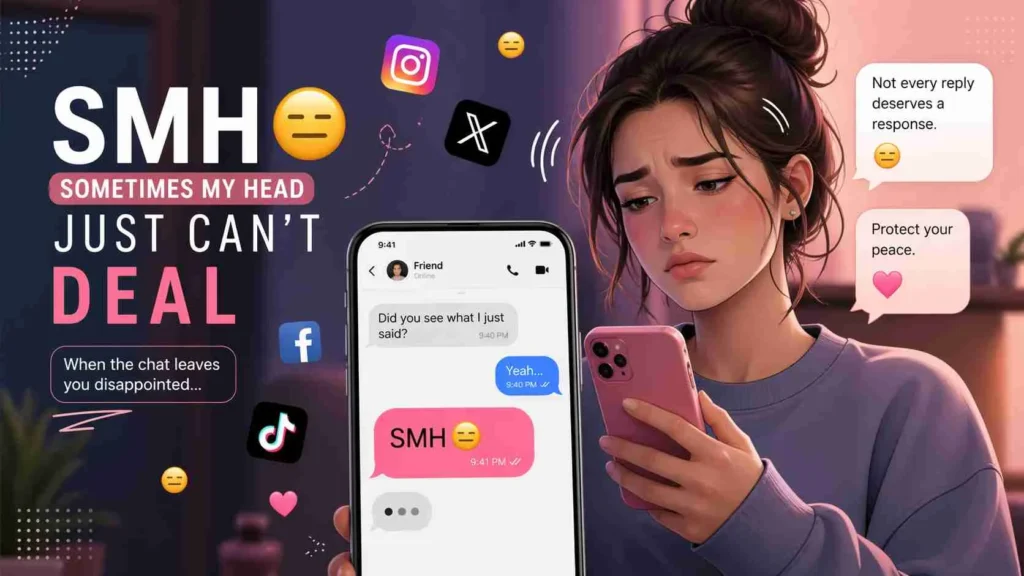
SMH stands for “shaking my head.” It’s an internet slang abbreviation used to express disbelief, disappointment, frustration, or mild disapproval toward something someone said or did.
Ever read a message, sighed deeply, and thought, “Wow… seriously?” That exact feeling is perfectly captured in one short, widely used internet expression: SMH. If you’ve seen it in texts, tweets, or comments and wondered what it means or how to use it correctly you’re in the right place.
What Does SMH Mean in Simple Terms?
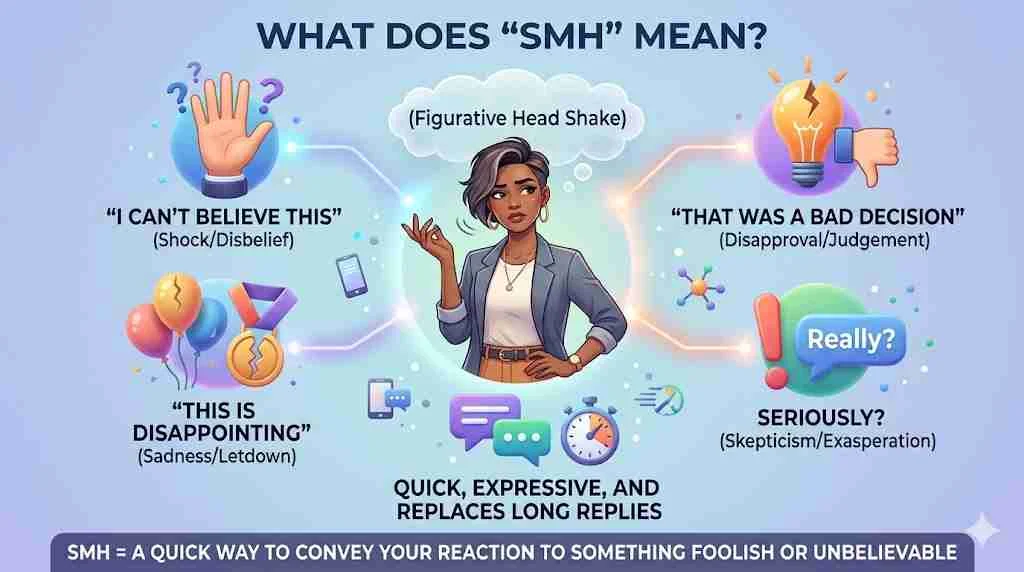
At its core, SMH meaning is straightforward. It reflects a reaction where words feel unnecessary just a figurative shake of the head says it all. Instead of typing out a long response, people use “SMH” to convey:
- “I can’t believe this.”
- “This is disappointing.”
- “That was a bad decision.”
- “Seriously?”
It’s quick, expressive, and often carries a tone that depends heavily on context.
Origin and Rise of SMH
Like many internet slang terms, SMH didn’t just appear overnight it evolved with online communication.
Where Did SMH Come From?
- SMH originated in early online forums and chatrooms in the late 1990s and early 2000s.
- It gained popularity alongside texting culture when character limits encouraged shorter expressions.
- Social media platforms like Twitter, Facebook, and Reddit helped spread it globally.
Why Did It Become So Popular?
Several factors contributed to the rise of SMH:
- Efficiency: Short and easy to type.
- Relatability: Everyone understands the gesture of shaking their head.
- Versatility: Works in many emotional contexts from light humor to serious disappointment.
Today, SMH is a staple in digital communication, especially among younger audiences, though it’s widely understood across age groups.
How SMH Is Used in Everyday Conversations
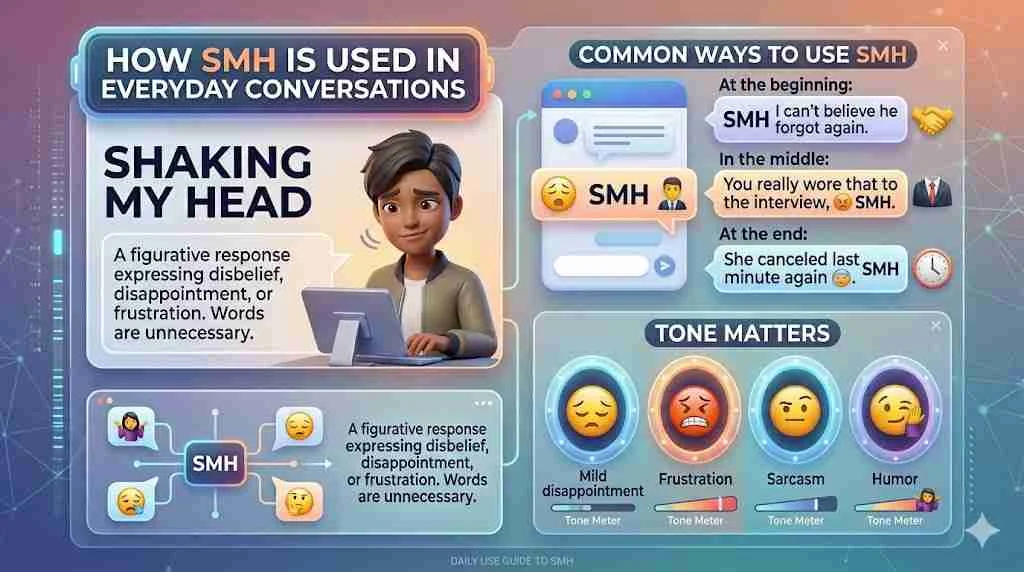
Understanding how to use SMH is just as important as knowing what it means. It can appear in different parts of a sentence and carry slightly different tones.
Common Ways to Use SMH
- At the beginning:
SMH, I can’t believe he forgot again. - In the middle:
You really wore that to the interview, SMH. - At the end:
She canceled last minute again SMH.
Tone Matters
SMH can express different feelings depending on context:
- Mild disappointment
- Frustration
- Sarcasm
- Humor
Real-Life Examples of SMH (With Tone Breakdown)
Here’s a closer look at how SMH works in different tones:
Friendly or Playful Tone 😊
- You ate my fries again? SMH 😂
- You still haven’t watched that movie? SMH haha
👉 Here, SMH is lighthearted and teasing not serious.
Neutral or Casual Tone 😐
- SMH, people really don’t read instructions.
- He missed the meeting again SMH.
👉 This tone shows mild annoyance or observation.
Negative or Dismissive Tone 😑
- SMH, that was a terrible decision.
- You lied about that? SMH.
👉 In this case, SMH expresses disappointment or disapproval.
Example Table: SMH Usage by Context
| Situation | Example Sentence | Tone Type |
|---|---|---|
| Friend forgets plans | SMH, you always forget 😂 | Playful |
| Coworker misses deadline | SMH, this is getting frustrating | Neutral/Serious |
| Poor decision by someone | SMH, that made no sense | Negative |
| Funny mistake | You locked yourself out again SMH 😂 | Humorous |
| Online comment reaction | SMH at these comments | Casual |
SMH vs Other Internet Slang
SMH isn’t the only abbreviation people use to react emotionally online. Let’s compare it with similar terms:
| Abbreviation | Meaning | Tone/Usage |
|---|---|---|
| SMH | Shaking my head | Disappointment or disbelief |
| LOL | Laughing out loud | Humor or amusement |
| OMG | Oh my God | Surprise or shock |
| WTF | What the… (strong reaction) | Anger, shock, confusion |
| BRB | Be right back | Informational |
| Facepalm | Gesture of frustration | Similar to SMH, but more dramatic |
Key Difference
- SMH vs Facepalm:
SMH is subtle and passive. Facepalm implies stronger embarrassment or frustration. - SMH vs WTF:
SMH is milder, while WTF is more intense and often inappropriate in formal settings.
When Should You Use SMH?
While SMH is widely accepted, it’s not suitable for every situation.
Best Situations to Use SMH
- Casual texting with friends
- Social media posts
- Informal chats
- Reacting to minor annoyances
Situations to Avoid
- Professional emails
- Formal writing
- Academic work
- Serious or sensitive discussions
Professional and Polite Alternatives to SMH
If you’re in a formal setting, using SMH might seem unprofessional. Here are better alternatives:
- “That’s disappointing.”
- “I find that concerning.”
- “That doesn’t seem appropriate.”
- “I’m surprised by that outcome.”
- “That could have been handled better.”
These options convey similar emotions but maintain professionalism.
Alternate Meanings of SMH
While “shaking my head” is the most common meaning, SMH can occasionally have other interpretations depending on context:
- “So much hate” – Rare and less common
- “Scratch my head” – Occasionally used humorously
However, these meanings are not widely recognized, so sticking to the standard meaning is safest.
Tips for Using SMH Correctly
To avoid misunderstandings, keep these tips in mind:
- Use SMH in casual conversations only
- Pair it with emojis to clarify tone (😂 😑 😒)
- Avoid overusing it it can lose impact
- Consider your audience before using slang
- Make sure the context clearly shows your intent
Why SMH Works So Well in Digital Communication
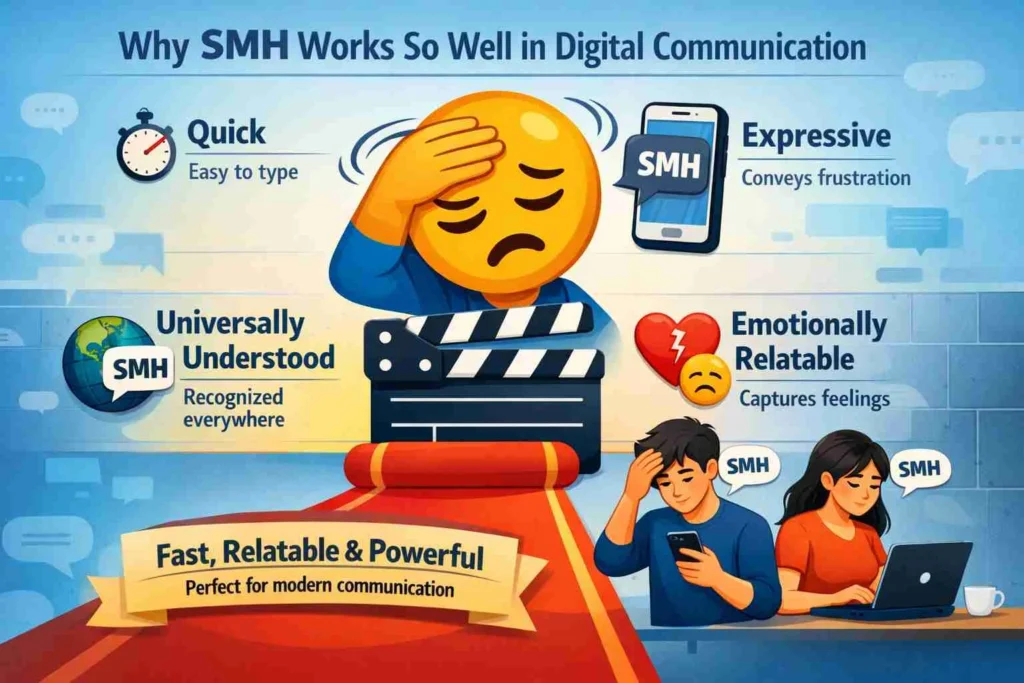
SMH has lasted this long because it mirrors real-life body language. When words fall short, people rely on gestures and SMH captures that perfectly in text form.
It’s:
- Quick
- Expressive
- Universally understood
- Emotionally relatable
In a world of fast communication, that combination makes SMH incredibly powerful.
FAQs
1. What does SMH mean in texting?
SMH in texting means “shaking my head,” and it’s used to show disappointment, disbelief, or frustration. It often replaces longer reactions and helps convey emotion quickly in casual conversations.
2. Is SMH rude or offensive?
SMH is not inherently rude, but it can come across as dismissive or judgmental depending on how it’s used. In playful contexts, it’s harmless, but in serious conversations, it might feel critical.
3. Can I use SMH in professional communication?
It’s best to avoid SMH in professional settings like emails or work chats. Instead, use more formal language such as “That’s concerning” or “I’m surprised by that.”
4. What is the difference between SMH and facepalm?
SMH suggests mild disappointment or disbelief, while facepalm indicates stronger frustration or embarrassment. Facepalm is more dramatic in tone.
5. Does SMH always mean something negative?
Not always. While it often shows disappointment, it can also be used humorously or playfully among friends, especially when paired with emojis.
6. How do you respond to someone who says SMH?
It depends on context. You can respond with humor, clarification, or acknowledgment. For example: “Haha okay fair,” or “What did I do now?”
7. Is SMH still popular in 2026?
Yes, SMH remains widely used across social media and texting platforms. While new slang emerges constantly, SMH continues to be relevant and understood.
8. What are similar slang terms to SMH?
Similar terms include “facepalm,” “WTF,” and “ugh.” Each has a slightly different tone, with SMH being one of the milder and more versatile options.
Conclusion
SMH is more than just an abbreviation it’s a compact way to express a universal human reaction. You’re reacting to a funny mistake, a frustrating situation, or something that simply doesn’t make sense, SMH helps you communicate emotion quickly and effectively.
Understanding SMH meaning, its tone variations, and when to use it can make your digital communication feel more natural and expressive. SMH what does it mean.
Just remember to use it appropriately keep it casual, consider your audience, and pair it with context for clarity. When used right, SMH adds personality and relatability to your messages without saying too much.
Discover More Related Articles:
- Namaste Meaning: Cultural & Spiritual Significance In 2026
- “Habibi” Meaning: What It Really Means & How to Use It In 2026
- “IYKYK” Meaning: What It Stands For & How It’s Used In 2026